Father’s Day


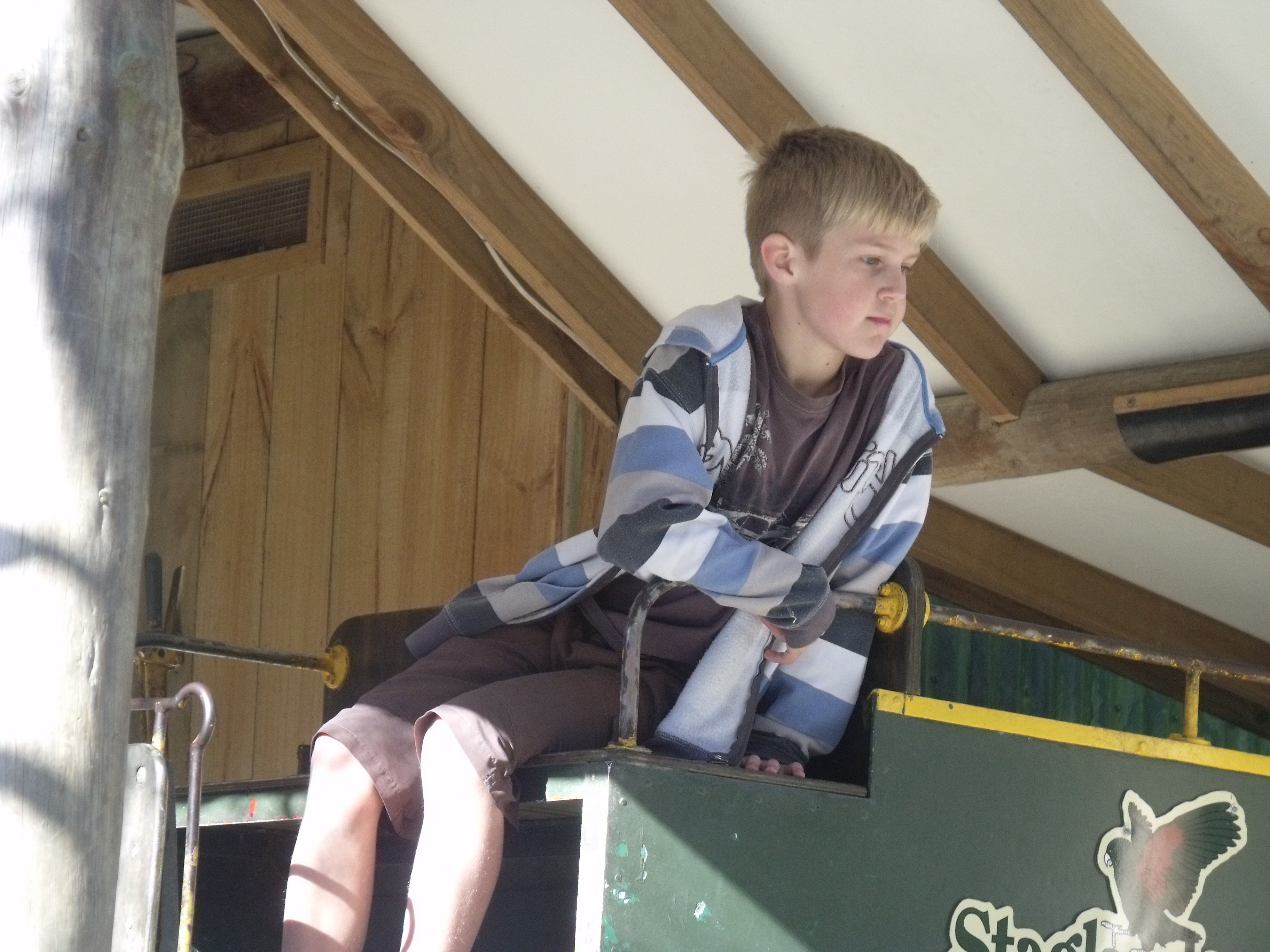
Photo taken by me as an example of a stay at h...
Photo taken by me as an example of a stay at home dad and kids. (Photo credit: Wikipedia)

(I’m going to try writing this post from my Android tablet. It should be interesting!)

Father’s Day is a day of celebration of fatherhood, obviously! It’s of recent origin Wikipedia tells me, introduced in the early 1900s to complement Mother’s Day.

Mother's Day cake
Mother’s Day cake (Photo credit: Wikipedia)

As an aside, I looked up Mother’s Day and found that I was wrong in thinking that it was related to Mothering Sunday (a Christian holiday celebrating women and originally the Mother Church) or to the Christian rite of the Churching of Women (which was a blessing of those who had given birth).

c. 1470
c. 1470 (Photo credit: Wikipedia)

In fact Mother’s Day was introduced also in the early 1900s to celebrate mothers independently of the religious events that I mentioned.

Both events, while they initially included church links and sermons were quickly secularised and even commercialised.

English: Mother's Day card
English: Mother’s Day card (Photo credit: Wikipedia)

In particular, commercial suppliers of items which were associated with fathers, such as smoking pipe retailers and tobacconists, jumped on the bandwagon.

(From this point I am going to revert to using the PC. While using the tablet is possible, it is not as easy as doing it on the PC. One big loss on the tablet is the word count, so I can’t see how I’m going!)

English: I took this picture myself.
English: I took this picture myself. (Photo credit: Wikipedia)

Also, greeting card companies joined in in a big way. Special Father’s Day (and Mother’s Day) cards are created and snapped up by eager consumers. There are TV and press adverts not to mention and even adverts on the latest communication channels, web sites including Twitter and Facebook.

While many may abhor this “crass commercialisation” of Father’s Day (along with the “crass commercialisation” of Valentines Day, Christmas Day, Easter, and so on and on), having a special day for fathers does serve to direct the attention of offspring, who may be thousands of kilometres away, to their father and their unique bond with him.

English: James M Masters as a baby in his fath...
English: James M Masters as a baby in his father’s arms (Photo credit: Wikipedia)

It may be that the child doesn’t particularly want to remember the father, perhaps because an unhappy relationship between them, but in most cases I’d expect that the children enjoy strengthening the bonds with their father.

These days, with the decline of smoking as a pastime the commercialisation of the day is mostly, it seems, related to DIY. Power tools seem to be a favourite suggestion, and other “blokey” things like barbecues and car tools and parts. None of these would have much appeal to me!

Drill2
Drill2 (Photo credit: Wikipedia)

Secularisation of holidays (the word means “holy days” after all) goes hand in hand with commercialisation. About the only Christian holiday that I can think of which has been secularised but not commercialised is the Whit Monday holiday. This is not now celebrated in the UK, having been replaced by Spring Bank Holiday.

English: Return Whit-Monday Excursion from Wes...
English: Return Whit-Monday Excursion from Weston-super-Mare at Bristol Temple Meads, with unusual locomotive View southward from No. 9 Up platform, towards Weston-super-Mare and Taunton: ex-GW London and the North – Taunton – Exeter etc. main lines. The train is at No. 7 Up platform and is probably bound for South Wales as it is – unusually – headed by a Churchward ‘4200’ 2-8-0T, No. 4283 (built 6/20). (Photo credit: Wikipedia)

Of course commercialisation of holy days and religion matters is not new. The Bible tells of Jesus throwing the money changers and suppliers of animals for sacrifice out of the temple. Parents with small children at Christmas or Easter are likely to see his point.

While there may be an element of cynicism in commercially creating a Father’s Day to balance the idea of Mother’s Day, it appears that both Mother’s Day and Father’s Day originated at about the same time. It also appears that while the Church did not originate either celebration, it gladly assisted in the celebrations.

Jesus casting out the money changers from the ...
Jesus casting out the money changers from the Temple by Giotto, 14th century (Photo credit: Wikipedia)

Commercial Father’s day cards come in two main styles. They are the humorous style and the mawkish. Often a card will combine both styles. Very few Father’s Day cards could be classified as sincere, in my opinion.

This is different from the Mother’s Day cards, which often fall into the mawkish or humorous classifications, but a significant number can, in my opinion, be considered sincere.

Silly string in action
Silly string in action (Photo credit: Wikipedia)

Well, let me expand on that a little. I think that because a child is more likely to say “I love you” to his or her mother and have his or her mother respond with a hug and kisses, while a father would tend not to be as demonstrative in response to such a declaration. I don’t mean that fathers would not reciprocate, as most would, I believe. They just would not do it as enthusiastically as the mother would.

US Navy 030506-N-0685W-004 Aviation Anti-Subma...
US Navy 030506-N-0685W-004 Aviation Anti-Submarine Warfare Specialist 1st Class Ron Hoefer, from Alfa, Okla., holds his son in his arms for the first time (Photo credit: Wikipedia)

So Father’s Day cards tend to be a little more sheepish, have fewer roses and other flowers on them. They tend to the uplifting rather than the overtly affectionate. One example I have in front of me says “You taught me how to believe in myself. You showed me how to be the best person that I could be”.

Mother’s day cards, on the other tend to have slogans like “Beautiful, gentle, understanding, forgiving, my mother’s love“. However, it is only a tendency, as you will discover if you go through the 15 quotes in that link.

English: A young girl kisses a baby on the cheek.
English: A young girl kisses a baby on the cheek. (Photo credit: Wikipedia)

It can probably be expected that there are also special days for siblings, parents, grand-parents and so on. These haven’t really caught on like Mother’s Day and Father’s Day, fortunately. There is a Children’s Day, but that has a slightly different focus to the others, in that it is directed at children in general, and child poverty in particular, and not directed at children in the family.

That’s possibly because children in the family are celebrated at Christmas and to a lesser extent at Easter. At least from the secular point of view Christmas is mainly about the kids. OK, the parents get to have a holiday and eat and drink more than they should, but the kids’ excitement over presents and the whole Father Christmas thing drives the celebrations.

English: Santa Claus with a little girl Espera...
English: Santa Claus with a little girl Esperanto: Patro Kristnasko kaj malgranda knabino Suomi: Joulupukki ja pieni tyttö (Photo credit: Wikipedia)

So, when Father’s Day rolls around, you could probably guess from the above that I am somewhat of a sceptic about it. Although it is a tradition, it is a very young one, and much of the impetus in supporting it comes from commercial interests. That doesn’t stop me enjoying the Father’s Day cards and gifts from my children, and even a slightly off the mark gift from my granddaughter!
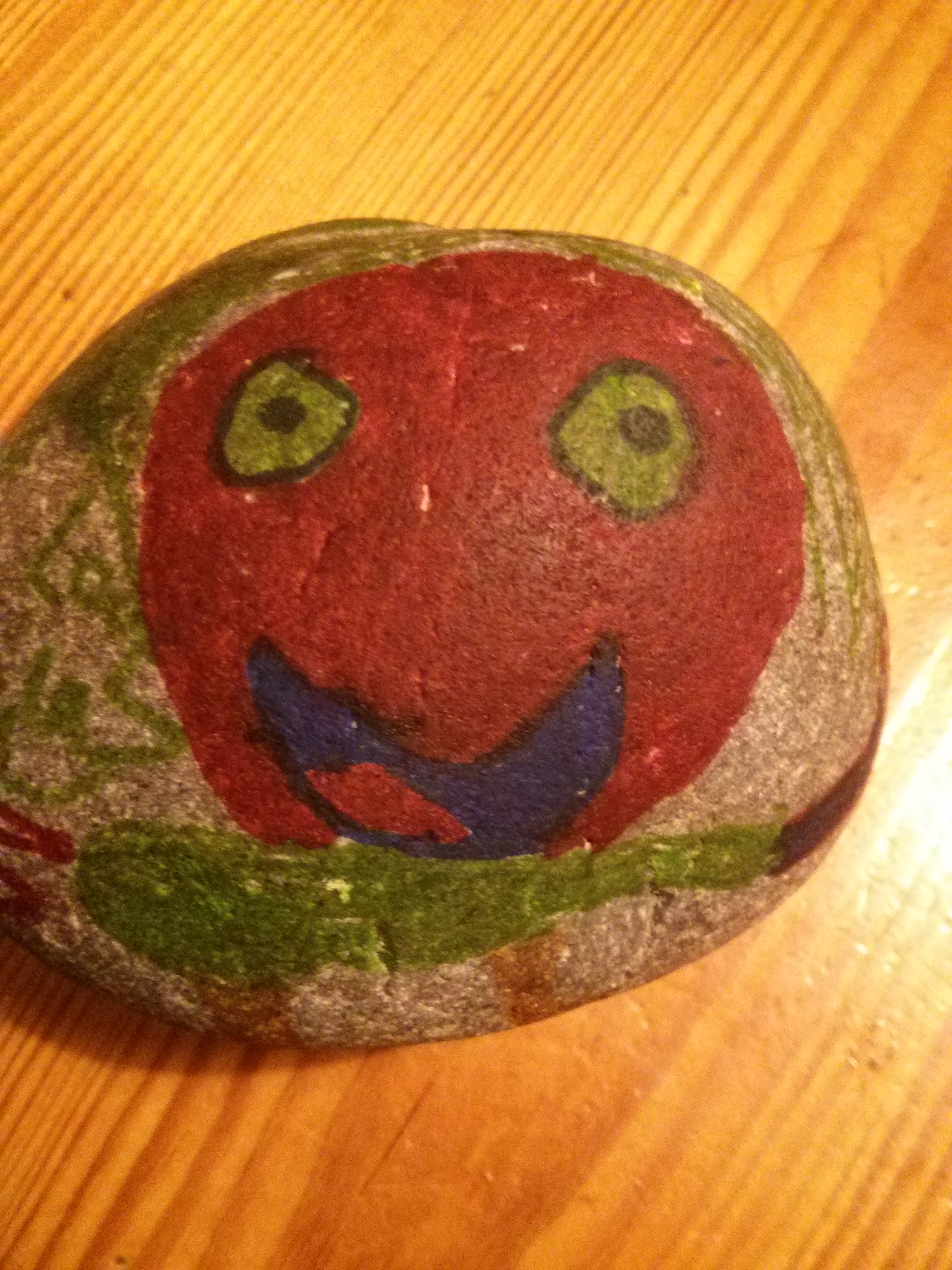
Louise's Father's Day Stone
Louise’s Father’s Day Stone

Related articles


Grand kids

English: A typical Deutsche Bahn railway stati...
English: A typical Deutsche Bahn railway station clock (Photo credit: Wikipedia)

This post may be a little late this week, as we took the grand kids to a local “wildlife park”. Which leads me not so subtly into the topic of the week.

Peacock sitting on grass. Photo taken in Stagl...
Peacock sitting on grass. Photo taken in Staglands Wildlife Reserve, New Zealand. (Photo credit: Wikipedia)

As kids we used to go to Granny and Grandpa’s house quite frequently. I recall sleeping over at one time, and in later years my sister lived with my Granny. I recall it being fun, but that was mostly because we could poke around in their house and garden. They had a long garden with a goldfish pond, a few apple trees, a garden and a large wooden shed.

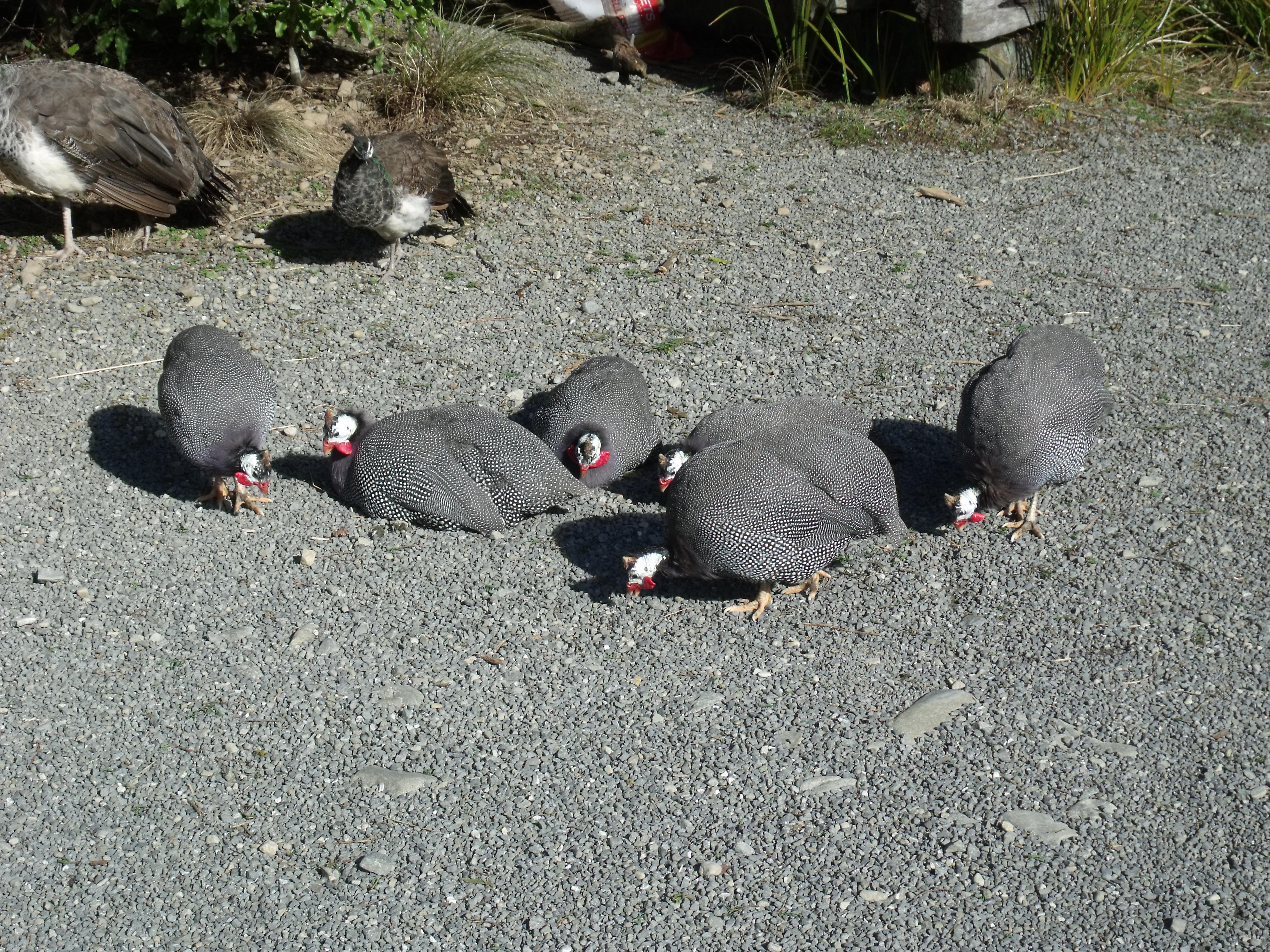
Guinea Fowl at Staglands

What I don’t remember is being taken out to “wildlife parks” or similar by my grand parents. In fact, I don’t remember going out with my grand parents anywhere. I’m pretty sure that we must have gone out with them, but it must have been rare and we probably only walked around the block or something.

We did use to have big family parties and I do remember my Granny being at my Uncles and Aunties’ houses during family parties. My Grandpa died fairly young so I don’t remember him at them.

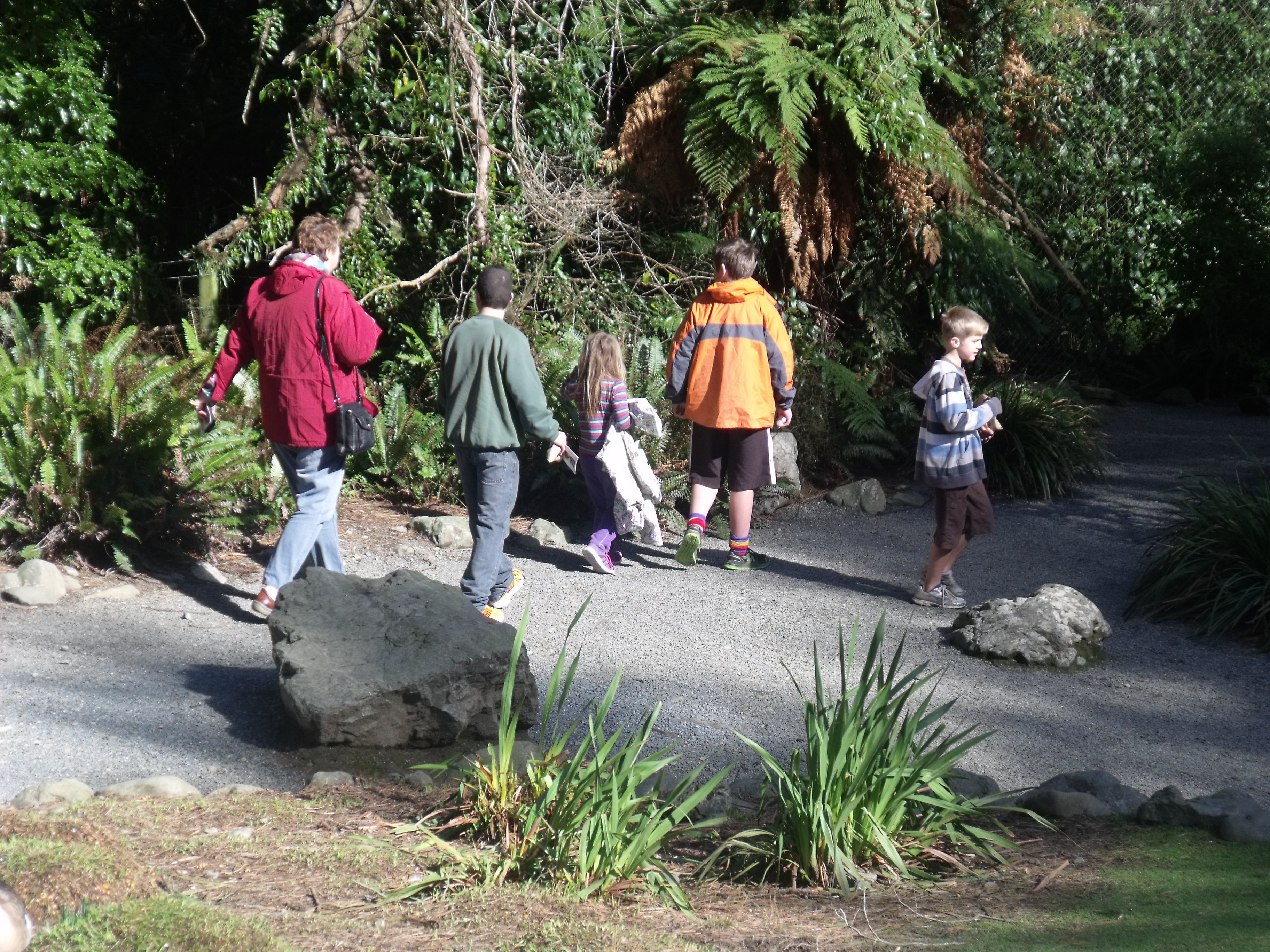
Part of the park.
Part of the park.

It’s different with our grand kids. I don’t know if it is because we are much more active than my grand parents were or because we are able to drive them to places. Neither of my grand parents drove that I can remember.

In contrast we fairly often drive our grand kids on trips to various places, sometimes in conjunction with their parents, sometimes without.

Kaz, Tim, Louise, Hamish, Duncan

On Sunday, their uncle (my son) and his wife decided to take my grand kids to a local “wildlife park”, called Staglands. I went along and so did my daughter, their mother. Staglands is a fair way out of town, in a beautiful picturesque valley. My daughter drove the kids there, and I drove my son and daughter-in-law.

The sole survivor of presumably a brood of ducklings.

We didn’t stop to take photos of the valley on the way there, as we travelled independently and didn’t want to keep them waiting. As it turned out, we got there first. The road is a secondary route between a major north-south valley (the Hutt Valley) and the  Coast Road.

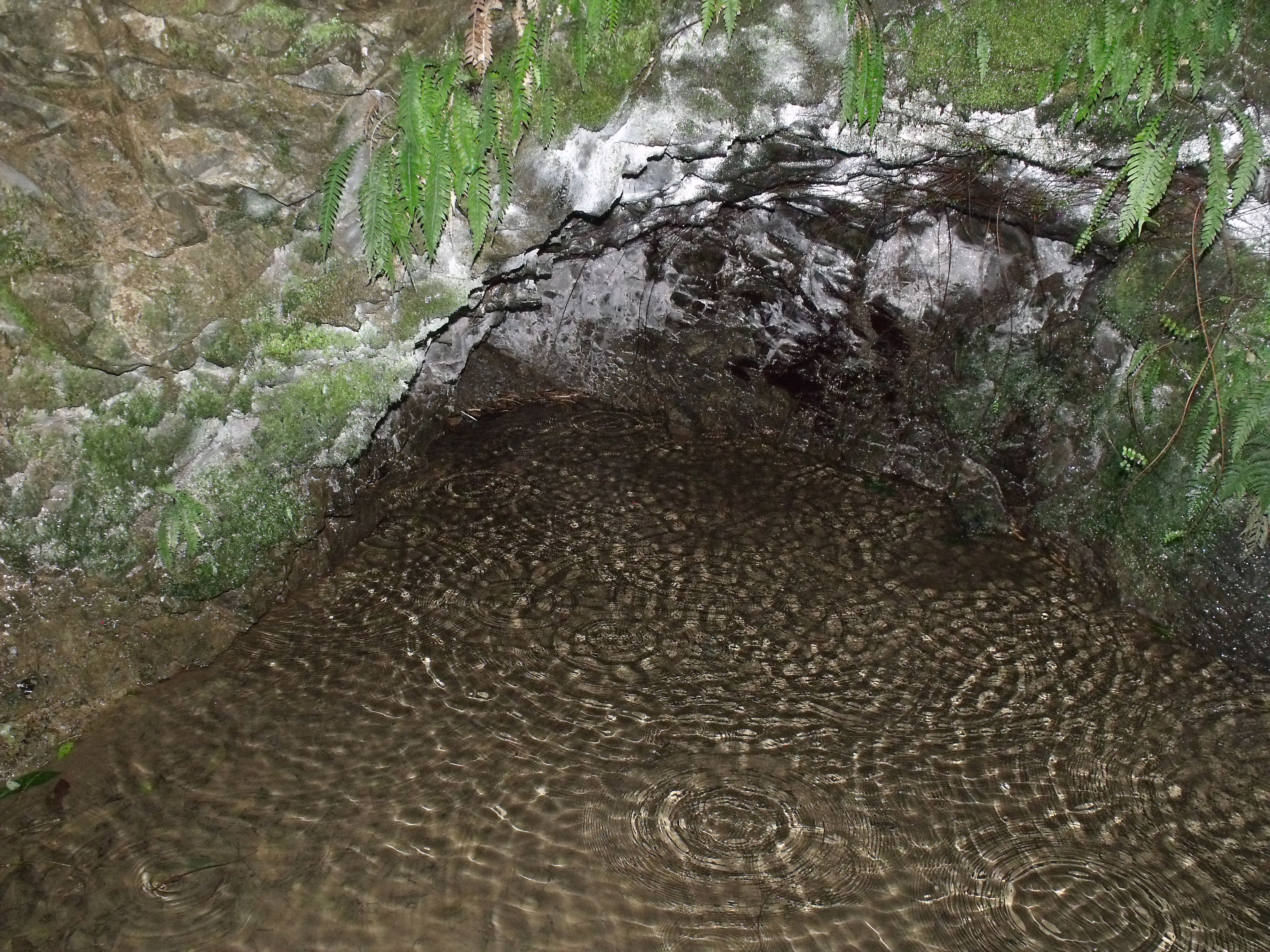
Tracey's Cave
Tracey’s Cave

It is a fairly quiet road, most of the time, so is a favourite road for serious cyclists, the ones with lycra suits who are not afraid of some fairly serious hills. I’ve no problem with them, but they did make it difficult on the narrow road at times.

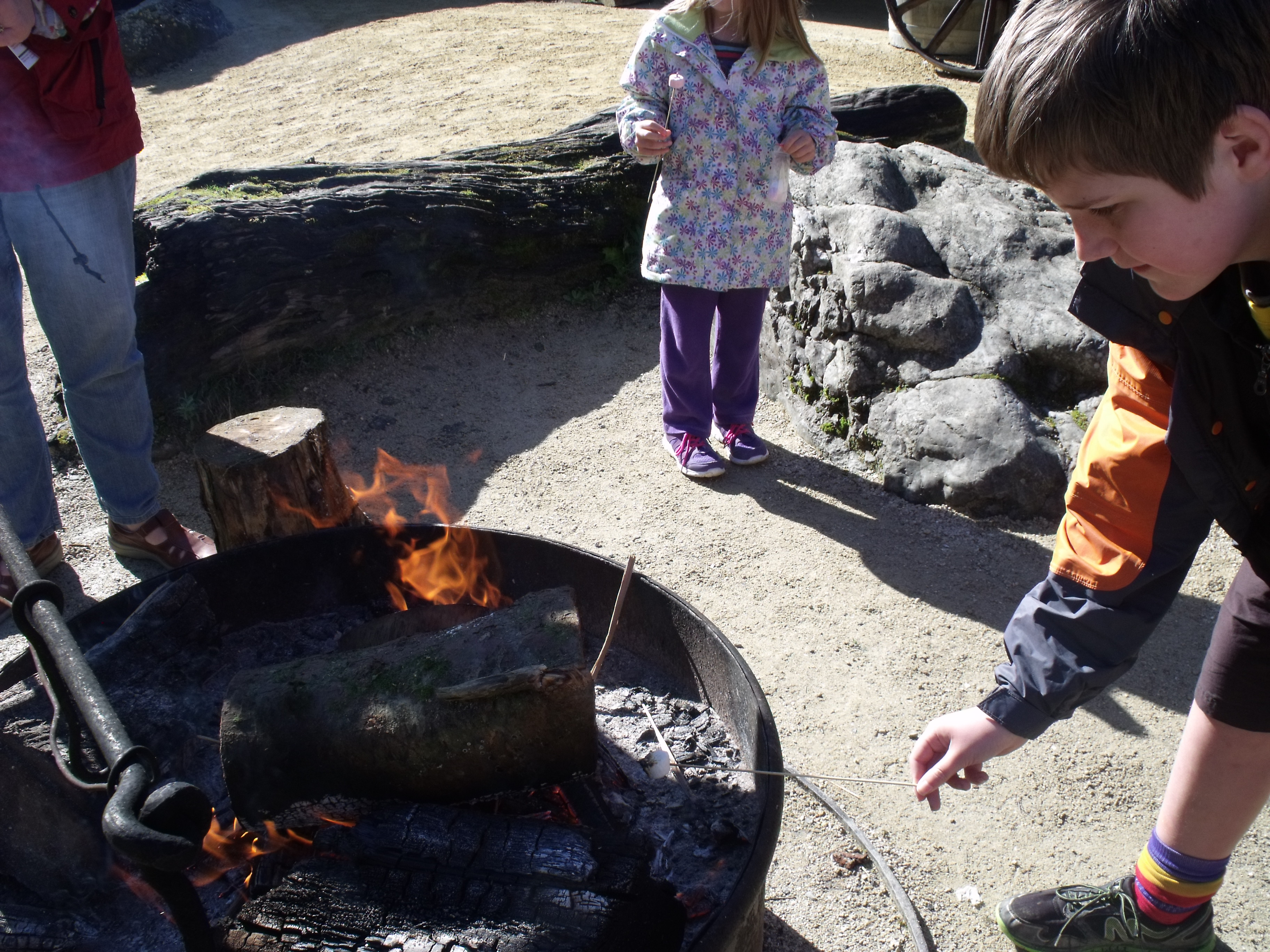
Toasting Marshmallows with Hamish

Staglands is 17km up this road, so that part of the trip took a while, but we got there and parked, waiting for my daughter and the grand kids. They all hopped out the car and admired the guinea fowl and peacocks which roamed the car park.

A handsome Kune Kune

I was informed that the brown peacocks were the female ones then we paid the entry fees and went in. The path bypassed the café and wound down to a couple of small lakes, with the usual wildfowl, mainly ducks, including one small survivor of a presumably larger brood.

Sparrow on Top
Sparrow on Top

On the way it passed a small cul-de-sac with a “cave”, Tracey’s Cave, with a constant splash into a pool of water which created interesting ripples.

Kea, too busy tending the plumage to chat.

We then followed the main path up to a barn where there was a fire burning in a barrel. Did I forget to mention that we bought small packets of marshmallows and sticks at the gatehouse? Ooops. Great fun was had toasting the marshmallows, something that I’ve never seen the point of, until now.

Trout pool
Trout pool

Just down from the barn was a small paddock with a number of Kune Kune pigs. These are fairly small, hairy pigs. Kune Kune are friendly and docile animals although I would not like to be in the paddock with them. The kids, Hamish, Duncan and Louise, loved feeding them out of the small packets of feed that we bought at the gatehouse.

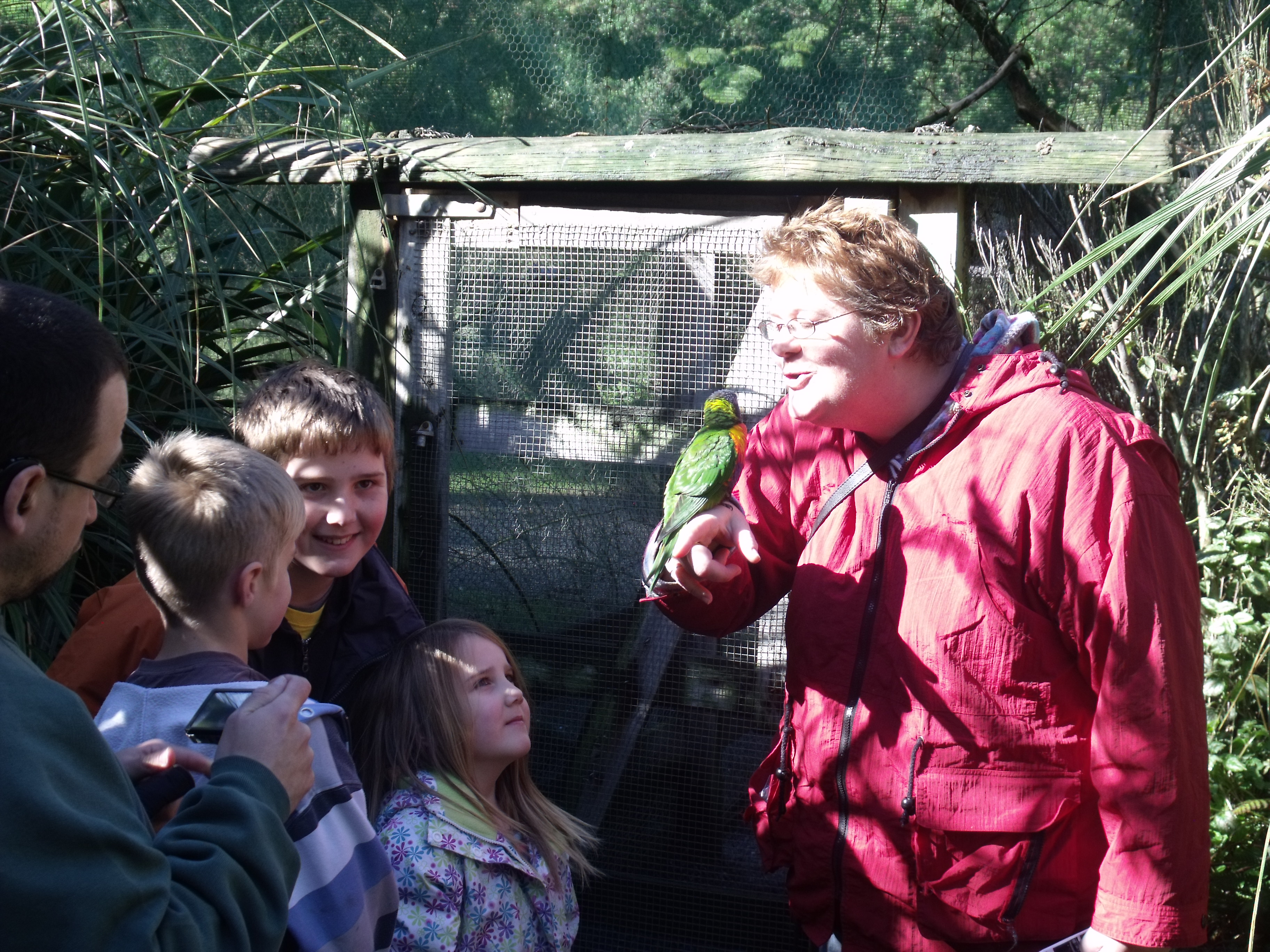
Tim, Hamish, Duncan, Louise and Kaz, with parakeet

A walk-in aviary was next, which contained Kea. These are a large alpine parrot, which in the wild are attracted to people and  their cars. Naturally people stop to see them and the Kea respond with thievery and destruction. They pinch sandwiches and pull the rubber bits from cars.

Hamish on the Swing Bridge

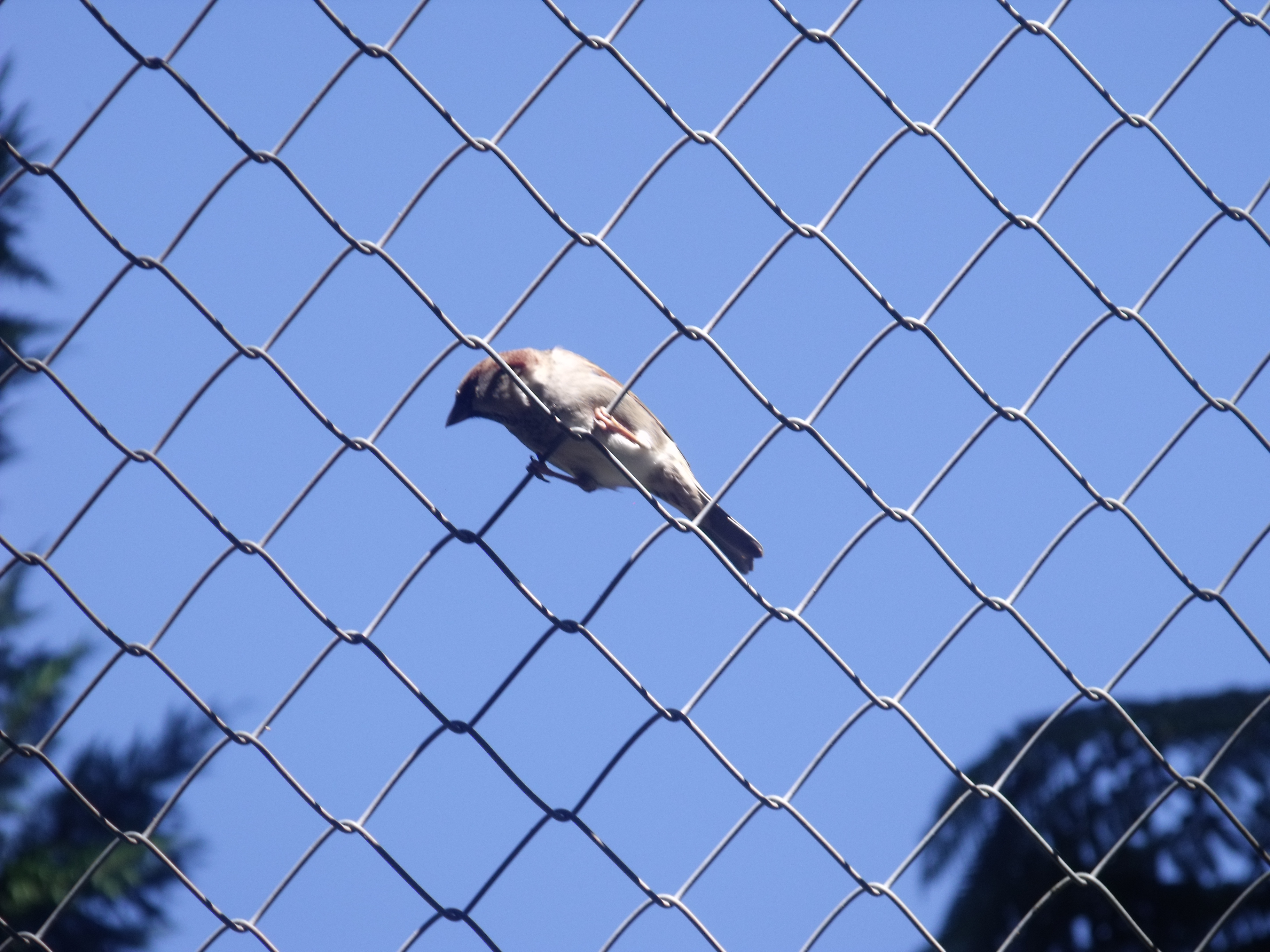
The Kea in the aviary were less exuberant than that preferring to preen out of reach, but other birds, small parrots, were friendlier and would sit on one’s hand. A passing sparrow stopped by overhead on the chicken wire roof.

Duncan on the Bridge

The stables contained horse, donkeys and small lambs and goats, all of which got a ration out of the small bags of feed. It almost seemed that these larger animals were taking the small portions simply to be friendly.

Louise at the Bridge

Next was a larger aviary, planted with toe toe, a large tussocky grass with plumed flower heads, much like “Pampas grass” which is well known in some other countries. Small birds, such as finches, cockatoos and budgerigars live in this aviary.

Facade with creepers

The kids all love the “swing bridge” which connects one half of the park with the half on the other side of the stream. The first area is a mock recreation of small settlement from around the 1900s, which has been used as a set for films. Up from there is a large pond with a walkway, with on one side, a wooden railway with a push cart, usually a hit with kids, but for some reason unused today. Though I did push Duncan along in it.

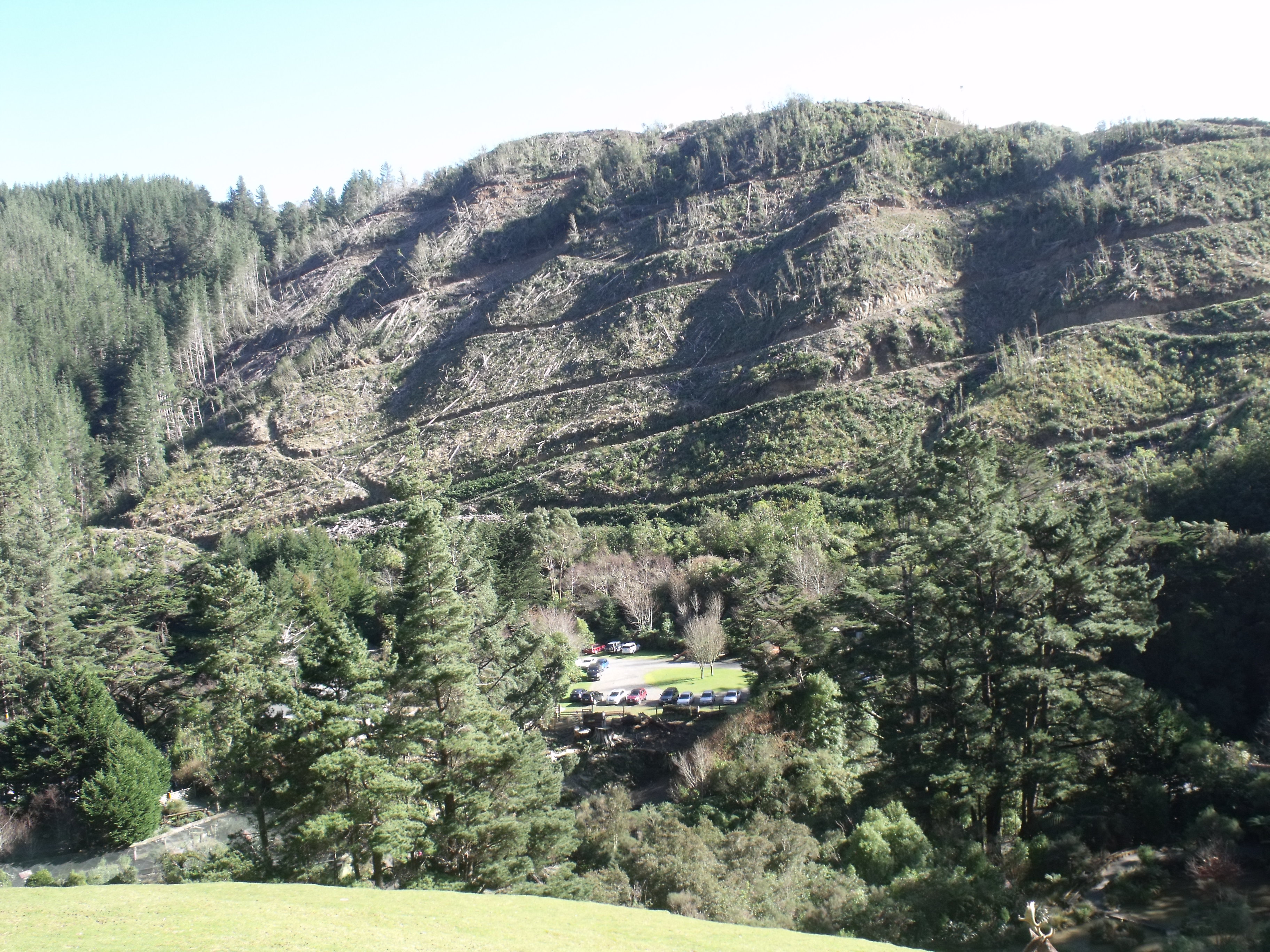
The inevitable scars of forestry, which should quickly heal.

After the pond was a large open paddock with deer, sheep and goats. A notice on the gate mentioned that the animals in the paddock could be “quite pushy”. A quick scramble and Hamish, Duncan and I had a glorious view of the valley, only slightly spoiled by a large logged area on the opposite side of the valley.

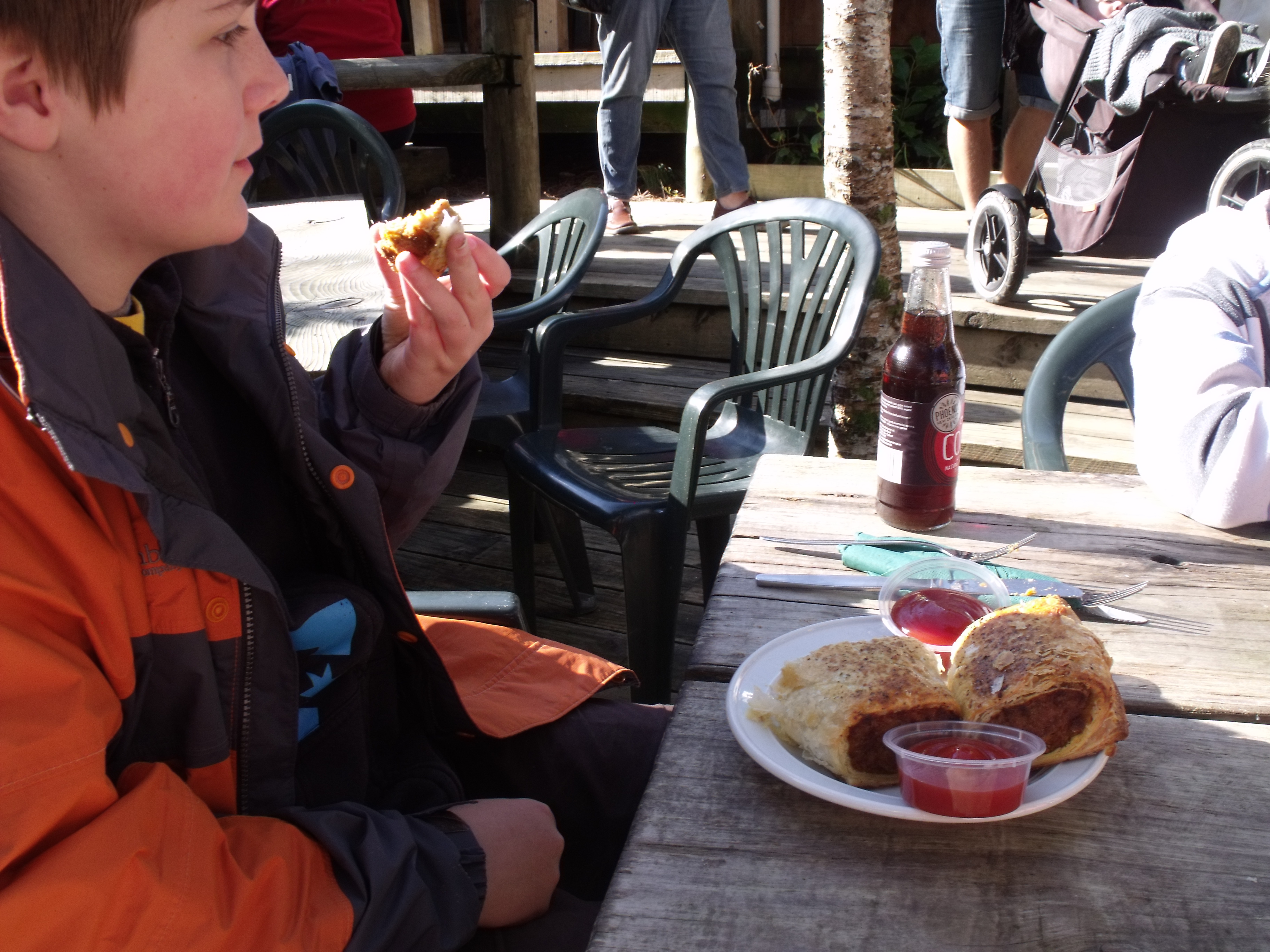
Hamish with sausage rolls

Then it was back down to the gatehouse and the café for re-fuelling. Hamish managed a couple of large sausage rolls (a mistake – I got the order wrong, it should have only one!) and was still hungry. Duncan went for a more sophisticated hot dogs and chips, while Louise claimed to be satisfied with an ice-cream though she did help herself to he mother’s chips. Tim (my son) and Kaz (his wife) both had nachos. I had a bacon and egg panini.

Duncan rides the stagecoach

Staglands is a great place for that sort of trip and we thoroughly enjoyed ourselves. It is great to be able to spend time with the grand kids, and it a shame that, for whatever reason, we didn’t get to do similar with our grand parents.

Louise and Duncan on the stagecoach

Sports by proxy

San Diego representin'
San Diego representin’ (Photo credit: San Diego Shooter)

We sit in our chairs and watch sport. We watch the news. We catch up on what friends are up to on Facebook and Twitter. Very few of us actually do anything. This is both worrying and amazing.

I’ve been watching the Commonwealth Games from Glasgow in Scotland. Sitting on the sofa I see the Silver Ferns of New Zealand play England at netball in the semi-final. (I’m glad the Silver Ferns won, of course, but you can’t help feeling sorry for the English team.)

The Official Logo of the Fiji Commonwealth Gam...
The Official Logo of the Fiji Commonwealth Games Association (Photo credit: Wikipedia)

The team members are healthy, fit and professional in their attitude towards the game, and I include both teams in that assessment of course, and they take it seriously. You can see the joy on the faces of the New Zealand team and despair on the face of the English team who came so close.

US Navy 031004-N-9693M-847 Navy fullback Kyle ...
US Navy 031004-N-9693M-847 Navy fullback Kyle Eckel celebrates a rushing attempt against Air Force (Photo credit: Wikipedia)

Then I look at myself. I’m reasonably fit, reasonably healthy, but I’ve not dedicated my life to a sport. I possibly could have been a reasonably good runner had I pursued my inclinations at school, but there was always someone better than me. I did enjoy running for its own sake though.

English: Usain Bolt at the World Championship ...
English: Usain Bolt at the World Championship Athletics 2009 in Berlin (Photo credit: Wikipedia)

So given that not everyone can be a top sports person, why do we spend so much time watching sport? We hope that our support and the fact that the sports people that we are supporting are aware of our support and that it helps them.

Hmm, I’m not so sure. When a Silver Fern player is trapped after the event by a media person, they will quite often acknowledge the support of the “people back home”. On occasion a sports person will dedicate a match to a relative who may have recently died, or to close family, wife and babies, or even the general supporter who stays up late to catch the broadcast of the event.

English: A Silver Fern flag, a proposed new Ne...
English: A Silver Fern flag, a proposed new New Zealand flag Deutsch: Silberfarn-Flagge, eine inoffizielle Flagge Neuseelands (Photo credit: Wikipedia)

But I still wonder. When I have played in sport in the past,  the sheer involvement of playing the game drives out all thoughts of supporters or other spectators. The roar of the crowd is not heard, the sideline cameras are invisible and the only thing that is experienced is the game, team mates, opponents, match officials. OK so I’m extrapolating more that a little here, but I think that it is true!

I’m not saying that support does not help a team. It definitely seems to but not at a conscious level as the conscious level of the brain is fully occupied by playing the game or it should be.

English: The Liverpool County Football Associa...
English: The Liverpool County Football Association Senior Cup, usually referred to as the Liverpool Senior Cup. Photographed in September 2011 in the boardroom of then-holders, Southport FC. (Photo credit: Wikipedia)

Sports people who are interviewed after a game do credit the support from people “back home” and friends and families, and I believe that in a way the support does help a team play well. A visiting team is always at a disadvantage because of the home support.

Sports men and women, after a game are asked for a snap diagnosis of the game. The best will credit the supporters for helping them win, and the best losers will accept the responsibility for the loss, which is slightly unfair if you think about it, as they cannot pass any responsibility for the loss to the supporters.

English: A television reporter interviews Univ...
English: A television reporter interviews University of Alabama head football coach Nick Saban. (Photo credit: Wikipedia)

It is true that the best teams attract the most fanatical supporters, but equally, fervent supporters can help to create success for a team. So what do the supporters get out of it?

Well, there are active supporters and passive supporters, by which I mean that some supporters actually go along to the game, and some watch it on television. Both types of supporter may collect “memorabilia” of the team and this can be very lucrative for the team, and possibly help to provide the team with equipment to help them succeed.

English: Fourth quarter of a college football ...
English: Fourth quarter of a college football game between the visiting No. 6 USC Trojans and the Stanford Cardinal at Stanford Stadium on November 15, 2008. It was the first sold out game at the new Stanford Stadium, which opened in 2006. USC would win, 45–23. (Photo credit: Wikipedia)

But the “memorabilia” and the support provides the supporter with a feeling of belonging or association with the team. Some supporters purchase team shirts with name and number of their favourite player, thus associating themselves with the player. I believe that this is not really an attempt to be that player, which would be delusional, but to tell the world of their association with their favourite player in a way that is instantly recognisable to another fan.

Liverpool Fans
Liverpool Fans (Photo credit: joncandy)

However, what televised sports give to the supporter is an idea of what it is to be a football player or a racing driver, or even a manager or a coach. Every change to a team or the support staff is avidly reported in the press or television. Supporters then take the information and discuss the pros and cons.

For the supporter, it is almost like being a coach or manager. He or she sees what it is to be a coach or a manager, at least to some extent. An avid supporter of the team may know almost about as much about the team as some people on the staff of the team, or so they would like to think.

English: Enrique Meza [left] with his assistan...
English: Enrique Meza [left] with his assistant coach and technical manager son: Enrique Maximiliano Meza [right] at their training session for Cruz Azul (Photo credit: Wikipedia)
A good manager knows this and may put out bulletins on an injured player’s recovery and coaching staff may provide limited access to training sessions. This is done to provide a rapport with the fans, so that the fans support the manager.

When the team takes the field, spectators at the ground get a feeling of participating at an event. There is a crowd noise, a sort of voiceless roar, modulated at times by team songs and cheers and groans when points or a goal are scored. I recall being at a netball match, though I can’t recall why. The crowd noise there was headachingly high-pitched.

Lacrosse
Lacrosse (Photo credit: Leo Laporte)

The way to become the centre of the event is to become a player, but most people don’t have the skill to take part in sport at a high level. With the television cameras and other technology that is available today, a spectator at home can almost come to believe that they are on the field of play.

In car racing this is taken to the next level, with cameras in cars that show, pretty much, the view that the driver sees. In field and other sports slow motion replays allow the viewer to see more than even the on field officials can see. An official might have a tenth of a second of action on which to base his decision, but the slow motion replay allows the armchair supported the luxury of several seconds and several different angles from which to view the incident.

Formula 1 Rd5 Barcelona 2011
Formula 1 Rd5 Barcelona 2011 (Photo credit: julien.reboulet)

All of which give a supporter the feeling of being at the event and of being part of it. Not everyone can become David Beckham or Usain Bolt, but being a supporter can almost get you there in a way.

English: Richie McCaw, New Zealand rugby union...
English: Richie McCaw, New Zealand rugby union player, in London. (Photo credit: Wikipedia)

The Negative Universe

Dandelion(negative)
Dandelion(negative) (Photo credit: tanakawho)


If cosmologists are to be believed the Universe came from nothing and is likely to return to nothing. This is odd as there seems to be an awful lot of it! There are between ten to the power 78 and ten to the power 82 atoms in the observable universe, according to some estimates. There’s also a huge amount of energy out there in the universe, and as Einstein said, this is equivalent to matter, according to his famous equation.

Maxwell's Equations
Maxwell’s Equations (Photo credit: DJOtaku)


It is likely that the enormous amount of matter and energy that we see out there is balanced by an equivalent amount of “negative” matter and energy somehow. “Negative” is in scare quotes because it may not describe what is actually going on. Anyway, the negative matter and energy may be incorporated into this universe somehow, which means that on average half the universe is this sort of energy. We can’t see it anywhere so far as I know, so it is a bit of a puzzle.

Large Format Doha Panorama Portra 400
Large Format Doha Panorama Portra 400 (Photo credit: Doha Sam)

We can see evidence everywhere for “normal” matter and energy, and we should be able to see evidence of “negative” matter if it is anywhere near us. As I understand it, “negative” matter would behave differently to “normal” in various ways and should be detectable. I’m not sure in what ways it would be different – I can guess that there could be a gravitational attraction between particles of “negative” matter, just as there is between particles of “normal” matter, but there could be a gravitational repulsion between “negative” matter and “normal” matter for example.

Galaxy NGC 720 (NASA, Chandra, 10/22/02)
Galaxy NGC 720 (NASA, Chandra, 10/22/02) (Photo credit: NASA’s Marshall Space Flight Center)

But my ignorance is almost total. I do believe it is true that “negative” matter should be detectable.) Since we can’t see or detect “negative” matter within our locality (ie “the observable universe“) it may be grouped elsewhere in the universe. If so, it may not have any observable effect in our neck of the woods, but inevitable it will have an effect at some time in the astronomical future.

Español: es la misma imagen que aparece en el ...
Español: es la misma imagen que aparece en el articulo en ingles: http://en.wikipedia.org/wiki/Sloan_Great_Wall (Photo credit: Wikipedia)

The reason that I say this is that the universe doesn’t seem to be expanding faster than the speed of light so any effect such as (possibly) gravity which does appear to have a “speed of light” effect will eventually affect our corner of the universe. But the situation is complex, and as the Wikipedia article says,

Due to the non-intuitive nature of the subject and what has been described by some as “careless” choices of wording, certain descriptions of the metric expansion of space and the misconceptions to which such descriptions can lead are an ongoing subject of discussion in the realm of pedagogy and communication of scientific concepts.

In other words, there are many misconceptions and misinterpretations around this topic. However any effect of the possible existence of “negative” matter on our little neck of the universe is likely to be felt a long time in the future, even on a cosmological time scale, I feel. “Negative” matter could have created a negative universe, I guess, which mirrors this universe.

Photo of a printout of the Wikipedia Copyleft ...
Photo of a printout of the Wikipedia Copyleft reflection in mirror, with pen (Photo credit: Wikipedia)

In a negative universe at least one dimension would be reversed but all other dimension would have the same polarity as our universe. If an odd number of dimensions were reversed, would all but one cancel out? I’m not sure but a cursory mathematical examination would indicate that this would not be so, but I lack the time to explore the concept in depth.

Dimensions
Dimensions (Photo credit: Wikipedia)

In our universe things tend to a state of disorder. If one partition of a closed system contains all the matter (in the simplest case, as a gas) and the partition is removed then eventually the matter is eventually dispersed through the whole system. In a negative universe, possibly the opposite would apply – gas dispersed through a system could tend to bunch up in one part of the system. Maxwell’s demon could watch benignly without lifting a finger.

Demonio Maxwell 2
Demonio Maxwell 2 (Photo credit: Wikipedia)

Our view of this is that it is extremely unlikely – would a glass spontaneously rise from the floor, gathering the scattered wine and land on the table complete with wine? Perhaps this is a parochial view, only true in our universe. In some alternate universe, this may be the normality – entropy may tend to decrease, order may tend to increase. Such an entropy twin may simple be the time reversed twin of the original universe. Or the original universe perceived from a time reversed perspective.

The Grand Canyon Time-Zero Project
The Grand Canyon Time-Zero Project (Photo credit: futurowoman)

If the universe sprung out of nothing, then the sum of the universe is zero. Any object has its anti-object. Any event has its anti-event. Maybe the universe has a partner, an anti-universe if you like, or even a mirror universe. Time in our universe runs from the zero moment into the positive future. In a mirror universe would presumably (and debatably) run in the opposite direction from the zero moment and all spacial dimensions would be reversed.

Plus-Reversed,-1960
Plus-Reversed,-1960 (Photo credit: Wikipedia)

This would correspond to a point reflection in time and space, which may or may not be the same as a rotation in time and space. I’m not sure. Some of complexities can be seen in this Wikipedia article on “parity”. In particular some interactions of elementary particles may display chirality, which means that they come in left and right handed versions, like gloves or shoes. All of the above means that if a person were to be point reflected into an anti-universe and all the elementary particles of his body were switched with their anti-particles, there may be no way for the person to tell that the switch had occurred.

different flowers from same plant
different flowers from same plant (Photo credit: ghedo)

Sure, time would be reversed, but so would literally everything else, so a left-handed glove would appear, in the point reflected world, to still be a left-handed glove even though, if we could see the glove it would appear to us, from our point of view to be right-handed. Of course I’ve assumed for much of the above that the reflection that transforms a universe to its anti-universe is a point reflection.

Axial chirality
Axial chirality (Photo credit: Wikipedia)

In mathematical terms that means that all variables are reversed. That is x is replaced by -x, y by -y, z by -z and so on. It may be that the reflection may be in a line and the x dimension stays the same while the others are negated. Or it may be a reflection in a plane (a mirror reflection) where 2 dimensions are unchanged. Or it may be a reflection in a higher number of dimensions.

English: Upper Yosemite fall with reflection
English: Upper Yosemite fall with reflection (Photo credit: Wikipedia)

As you can see, the subject is complex and I’ve not got my head around it (obviously!), but I believe that if we were switched into the anti-universe (including all out particles) it would not look any different from this universe. In fact we would probably find ourselves discussing our anti-universe, which would be our original universe. In fact it would not matter which universe we called “the original” because they both would have come into existence at the same time and there would be no meaning to the term “original”.

A face.. (the original OMG Wall)
A face.. (the original OMG Wall) (Photo credit: eworm)


Classification

"Father! Father! / Tell me what ails thee...
“Father! Father! / Tell me what ails thee? / With dismay thou art filling thy child!” (Photo credit: Wikipedia)

Oh, wow, drat and other words of dismay. I haven’t thought of a topic for this week and it is time to write my post. Time to get started.

OK, people seem to like classifying things. This can be so that they can find one item in a large collection of things, or it may be simply a means of bolstering prejudices that they might have. Or any of a myriad number of other reasons.

Garbage Can
Garbage Can (Photo credit: Wikipedia)

When faced with a profusion of things, the human impulse is to classify them. One of the most famous classification systems is that of Carl Linnaeus, whose classification system is used for the not so trivial task of classifying all living things. His system, with modifications is still the basis for biological classification of all organisms.

Digitally improved version of Alexander Roslin...
Digitally improved version of Alexander Roslin’s painting of Carl von Linné. This particular version has had dust and missing specs of paint deleted. (Photo credit: Wikipedia)

When Linnaeus started his classification, it is likely that partial schemes would likely have been in place to classify small groups of organisms, but Linnaeus extended this to all organisms, in an organised way. When someone states that mankind’s scientific name is “Homo Sapiens”, he or she is using the Linnaeus system, at least partially.

“Homo” represents mankind’s Genus, and “Sapiens” is mankind’s  Species, but the species is merely a leaf on the classification tree, which is rooted in the Animalia Kingdom, and descends through Phylum, Class, Order, Family, and Tribe, (which I’m not going to list here) and finally to the Genus and Species.

Darwin's tree of life
Darwin’s tree of life (Photo credit: Wikipedia)

Linnaeus’ system is still in use today, but the emphasis has changed somewhat. When he was doing his work, the classification was based on appearance, and while that is often a good guide to an organism’s place in nature, emphasis has now shifted to the genetic make up of organisms to determine their correct classification.

Agapornis phylogeny
Agapornis phylogeny (Photo credit: Wikipedia)

This has sometimes resulted in whole chunks of the classification tree being moved from one branch to another as knowledge of the genetics of the organisms has come to light. It is obvious that if two organisms have similar genetic make ups, then they must be closely related. Also, it implies that they almost certainly have a common ancestor, and such an ancestor is also fitted into the tree of life and given a species name.

Horned Dinosaur Phylogeny
Horned Dinosaur Phylogeny (Photo credit: Scott Wurzel)

This adds a time dimension to the genetic tree, turning it from a static representation of living organisms into a dynamic picture of all life over all time. The tree of life is evolving.

Another great classification system is the Dewey Decimal Classification system, a proprietary library classification system used to classify books. Every book in a library is assigned a number, which in most cases would not be unique. The number consists of two parts separated by a period (‘.’). Most library users would be aware of the system, and will have used it to locate books.

Spine Books Label show Call Number for Dewey D...
Spine Books Label show Call Number for Dewey Decimal Classification. (Photo credit: Wikipedia)

While the system can classify books in great detail, merely by extending the number after the period to many decimal points, most libraries classify their books in much less detail, using only two or three digits as a suffix. This results in groups of books receiving the same number, with the books in a group sharing a common topic, while differing in detail.

get to know the dewey decimal system
get to know the dewey decimal system (Photo credit: susannaryan)

For instance a particular number may be assigned by the library whose topic might be the geography of the country of Bolivia. (The actual number is 918.4). The library might have only one or two books on the subject of the country of Bolivia, so that number is sufficient to locate any of them.

In the country of Bolivia itself, however, there will almost certainly be many more books on the topic and the Dewey Decimal Classification almost certainly contains more detailed classification numbers which would have to be used in Bolivia libraries to classify the geography books. (I’ve not checked this “factoid” but it is probably true).

Shelf of Books on South America
Shelf of Books on South America (Photo credit: pkdon50)

So the Dewey Decimal Classification system can be hair-splittingly  accurate or broadly general in its application and this flexibility is ideal for libraries. Sometime libraries use a sort of hybrid system, probably driven by the need for a sub-classification where some books have been already more generally classified, where some books are classified as “something.12” and other books are classified as “something.123”. In most cases this inconsistency doesn’t matter.

Topographic map of Bolivia. Created with GMT f...
Topographic map of Bolivia. Created with GMT from public domain GLOBE data. (Photo credit: Wikipedia)

I’ve just realised on writing that, that it may not be inconsistency at all. Instead the “something.123” books may be more specific than the “something.12” books, which would therefore be more general.

An obvious difficulty with the Dewey Decimal Classification system is that there is no cross-reference possible. In the Bolivia example, a book may cover the topic of the geographic causes of distribution of various related Bolivian species of some organism or other. Is this to be classified as biology and be assigned to a class in the 500s (Pure Science), or should it be classified as geography and assigned to a class in the 900s?

English:
English: (Photo credit: Wikipedia)

Nowadays one can do a computer search and come up with a bunch of numbers that fit the topic that is being researched. In the days before computers there were card-based “Topic Catalogs” which would also provide the searcher with a bunch of numbers. The trouble is, many searches would result in multiple numbers, either as a result of a card search or a computer search.  One would then have to go to several locations to decide if the required topic was covered by this Dewey Decimal Classification number or one of the others. I make it sound bad, but really, it wasn’t, and the issue is more a user confusion about what was covered by each topic in the system rather than an issue with the system itself.

Banner for Wikipedia:WikiProject Lists of topics
Banner for Wikipedia:WikiProject Lists of topics (Photo credit: Wikipedia)

A computer search (on Google for example) will provide a list of possible references to a search term, but as anyone has used a computer search is aware, a search term can refer to many topics. A search for the word Socrates gave me a list including a Wikipedia article on the philosopher himself, a list of quotes taken from his work, a biography of the philosopher and a site where his philosophies could be discussed. And that is just the first four items out of an estimated 6 million or so.

Google
Google (Photo credit: warrantedarrest)

Classification of things seems to be a trait of humans. I think that we classify things to simplify things for ourselves, to make it easy to identify threats and possibilities. As such, it is probably an inherited trait possessed by at least the more developed organisms on the planet. However classification can add complexity if one is searching for something, so it is something of a trade off.

google_logo
google_logo (Photo credit: keso)

Ethics and Morals – the Ten Commandments

Ethics and Morals: Timeless and Universal?
Ethics and Morals: Timeless and Universal? (Photo credit: stephenccwu)

I’ve been thinking about ethics and morals over the past week, as preparation of a sort for writing this post. I’m not quite sure what got me started on this topic in the first place though. It would be more accurate to say that it is the basis for ethics and morality is what is interests me.

Religious people don’t have an issue, really, because their religion sets the rules for interactions with others, and any such rule is inviolate because it is supposedly handed to humans by “the powers that be”. The rule base is generally given as the word of god.

Sexta/Viernes/Friday-POSER-Deus - Dios - God
Sexta/Viernes/Friday-POSER-Deus – Dios – God (Photo credit: Caio Basilio)

Laws underscore ethics and morals, as they define what should happen if a person offends against another or the state or establishment. If it is not ethical to steal from another, what should be done? A law defines both the crime and often the punishment.

In the past, when religion had total control of peoples’ lives the religious establishment, the priests or other religious officials generally administered the secular laws and at the same time administered religious matters. In fact there was little difference.

Priest reading
Priest reading (Photo credit: Matthew Almon Roth)

The laws of those times, at least in England and Europe and probably in most of the rest of the world reflected a vengeful deity. The basic ethic was “an eye for an eye and a tooth for a tooth“, with the added spice of an implication of sin.

English: Coat of Arms of His Eminence Jaime Ca...
English: Coat of Arms of His Eminence Jaime Cardinal Sin. (Photo credit: Wikipedia)

Sin is an offence against god, so trumps the mere earthly transgression of the theft or whatever itself, resulting in penalties which would seem far too harsh in this day and age. For instance amputation for theft, deportation, banishment, or death for similar offences was common. Apart from the punishment of the perpetrator, a reason for the severity of the sentences was intended to underline the power of the establishment and to deter others from committing similar crimes.

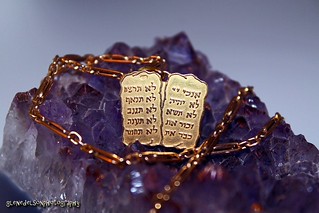
Ten Commandments
Ten Commandments (Photo credit: glen edelson)

In Christian and Jewish religions there are the Ten Commandments (or Sayings in Judaism). To Christians they are the ten commands of God, and in Judaism they are ten of 613 commandments of God.

Pomegranate heart- corazon de granada
Pomegranate heart- corazon de granada (Photo credit: LifeAsIPictured)

There are three parts to the Ten Commandments.

Firstly, there are four commandments relating to God. From an ethical point of view, if you believed that God was overseeing your life, then you had better do whatever you could to make him happy. A good start is to believe in Him, and then to keep Him happy by worshipping him in appropriate ways.

Detaill of page 130 in section 'Notes to Kent'...
Detaill of page 130 in section ‘Notes to Kent’ of Notes on the churches in the counties of Kent, Sussex, and Surrey The image is a reproduction of a foundation stone of the Plaxtol, ‘abbreviated’ with marks to superficially read ‘This church was built for the worship of God. Anno Domini 1649 (Photo credit: Wikipedia)

Secondly, there is a commandment relating to parents and teachers, in other words, those with authority over one. Again, it makes sense to keep those in authority happy.

Finally, there are five commandments relating to relationships with other people, things such as stealing from them, sleeping with their wife and daughters and so on.

Don't Steal My Coat
Don’t Steal My Coat (Photo credit: Wikipedia)

Outside of the Ten Commandments, it appears that the early Israelites had some ethical beliefs involving animals, as the tale of Balaam’s donkey reveals. Balaam’s donkey complains in a very human way expressing her hurt at Balaam’s treatment of her, and Balaam apologises to her.

Rembrandt's Balaam and his Ass
Rembrandt’s Balaam and his Ass (Photo credit: Wikipedia)

So a religious person has a basis for his assessment of what is right and wrong from the above framework. It was considered right to follow the teachings of the Ten Commandments, and this was reinforced by the society of the time.

Moses with the tablets of the Ten Commandments...
Moses with the tablets of the Ten Commandments, painting by Rembrandt (1659) (Photo credit: Wikipedia)

As with all ethical frameworks, there are times when the framework doesn’t quite seem to fit the situation. When you are starving could it be wrong to steal a loaf of bread, particularly if the bread in question will otherwise go to waste? When your family is starving, could it be wrong to steal to feed them? Obviously if the rules are applied strictly it IS wrong, and often, in the times when religion was paramount, they often were.

Bread Thief
Bread Thief (Photo credit: frankdouwes)

Of course, those who do not have a belief in a deity can still be guided by the Ten Commandments, if they are in fact relevant to them. So let’s have a look at the Ten Commandments from a secular point of view.

Obviously, the four commandments relating to God, don’t apply? Or do they? In dealing with religious people, a non-religious person should be aware of and make allowances for the non-religious person’s belief, so long as they don’t cause a conflict with the non-religious person’s belief. For instance a non-religious person may happily attend a wedding but may object to any attempt to indoctrinate his children with religious beliefs through the child’s schools.

Funny Religious Sticker
Funny Religious Sticker (Photo credit: Amarand Agasi)

An unquestioning following of the fifth commandment may also conflict with a non-religious person’s ethical beliefs. While a non-religious person may accept the authority of the government and of the police, he or she might disagree with the correctness of their actions. Occasionally, though, a non-religious person will disagree with the authorities so much that he or she will rebel against them.

Nobody expects... The Spanish Inquisition!
Nobody expects… The Spanish Inquisition! (Photo credit: Ochre Jelly)

The rest of the commandments deal with relationships with other people, and a non-religious person may well believe that these are ethically correct instructions. They describe how a person might want others to behave towards them, so ethically that is how a person should treat others.

English: Golden Rule, Smithy Brow, Ambleside L...
English: Golden Rule, Smithy Brow, Ambleside Lovely old traditional pub in Ambleside, just across from the main car park. (Photo credit: Wikipedia)

This ethical principle, of “do as you would be done by”, has a long history and is sometimes known as “the Golden Rule“. There is a second part to this principle which “do NOT treat others in a way that you would not like to be treated”. This principle is the basis for the two characters,  Mrs. Doasyouwouldbedoneby and Mrs. Bedonebyasyoudid, from the story “The Water-Babies” by Charles Kingsley.

Cover of "The Water-Babies (Books of Wond...
Cover of The Water-Babies (Books of Wonder)

The Golden Rule seems to be a very good basis for a set of ethical rules. Of course it is too simple to explicitly and accurately cover every eventuality, as the example above of the starving family demonstrates. It also does not make allowance for differences in beliefs, and there are others issues with it, but it can be seen that it is implied in the Ten Commandments.

English: "Mrs. Bedonebyasyoudid." Il...
English: “Mrs. Bedonebyasyoudid.” Illustration for Charles Kingsley’s The Water Babies in charcoal, water, and oil. (New York : Dodd, Mead & Co., 1916), p. 236. (Photo credit: Wikipedia)

The Ten Commandments themselves inherit the issues of the Golden Rule. As given, one should not harm another person, but what if you need to harm someone to save their life? Surgeons do this every day, but one can extend this to the killing of someone. Few people would argue that a policeman who guns down someone on a killing spree, as happens fairly often these days, has acted unethically.

Nevertheless, the Ten Commandments and through them the Golden Rule, provide useful hints and guidelines to good ethical behaviour, even for a non-believer.

Scan of illustration in The water-babies: a fa...
Scan of illustration in The water-babies: a fairy tale for a land-baby (1915) Boston: Houghton Mifflin (Photo credit: Wikipedia)


Time waits for no man

time travel
time travel (Photo credit: flyzipper)

Time is an odd thing. We say it passes, but it sometimes feels more like we are travelling through. As the old joke goes, we all travel through time – at a rate of one second per second.

While that might bring a smile, it does raise a question about time travel, because if one travels through time, one presumably travels through it at some rate or other, say ten years per minute. The problem with that it is that we are measuring a rate, which is a change of some variable with respect to another, but in this case we are measuring the rate of change of time with respect to time as well.

English: Acceleration as derivative of velocit...
English: Acceleration as derivative of velocity along trajectory (Photo credit: Wikipedia)

The time intervals over which the traveller is passing are measured in the usual way by a clock, but how does the traveller measure his time by? He could carry a clock with him, which he could then use to estimate his progress along the standard time scale. In other words the time traveller would somehow have to carry his own time scale with him which is different to the usual time scale.

Illustration of a light cone, based on Image:L...
Illustration of a light cone, based on Image:Light cone.png (Photo credit: Wikipedia)

Of course, Einstein’s Special Relativity shows that, in a way, we do carry our own time frames around with us, and if we are in motion relative to some other frame then time passes differently the two frames.  Of course, to simply travel in time, we would not want to travel in space, so we can’t use Special Relativity to allow us to use a different time frame, so far as I can see.

Also, we can only travel forward in time by using this loophole. No matter how fast we move relative to someone else, we both move forward in time, so we can’t use Special Relativity to go back in time and kill dear old Grandad.

The Grandfather Paradox
The Grandfather Paradox (Photo credit: Kaptain Kobold)

Einstein’s General Relativity considers that space-time (the conjunction of space and time) possesses curvature, and some theories use this to allow backwards time travel. However these solutions produce “closed time-like curves” which is not so much time travel as a time loop, perhaps like the loop in “Groundhog Day” where Bill Murray’s character repeatedly awakes to the same day.

groundhog day!
groundhog day! (Photo credit: NapaneeGal)

It appears that we need to look further for some way to travel in time. If we can’t use current physics, we will need to consider something more “science fiction” than modern physics. Of course science fiction time travellers don’t seem to explain their travels in more than a cursory way, because, after all, the mechanism is only secondary to the story line.

Time Machine Clockwork
Time Machine Clockwork (Photo credit: Pierre J.)

Two different possible mechanisms spring to mind.

Firstly, one way is to assume a sort of parallel world. A time traveller can enter this parallel world from any point in time and re-enter the standard universe at a different point, earlier or later in time. The traveller travels in time by analogously travelling in space in a world which has its own space-time with one of its space dimensions parallel to the conventional world’s time dimension.

parallel worlds
parallel worlds (Photo credit: aloshbennett)

Secondly, the author can conjecture a viciously curved space-time so that the characters can, at certain locations, move from one part of space-time to another part of time which is either earlier or later in the time dimension. Typically the character will “step sideways” or something to jump between times, either with the help of a machine or maybe not.

HELP ME HELP MYSELF!
HELP ME HELP MYSELF! (Photo credit: eyewashdesign: A. Golden)

One such tale of the second sort is “By His Bootstraps” by Robert A Heinlein, is which the main character passes through a portal to a distant future, only to entangle himself with later (and, relatively, earlier) versions of himself. He encounters a mysterious character who identifies himself as “Diktor”.   I’ll leave it there, as I don’t want to spoil the story for those who haven’t read it yet.

By His Bootstraps
By His Bootstraps (Photo credit: Wikipedia)

An example of the first sort is “The Corridors of Time” by Poul Anderson, where the main character is recruited into a war raging up and down the “corridors of time”.

Most stories, however, don’t specify in more than a cursory way the physics that is supposedly employed by the time traveller.

Train travel
Train travel (Photo credit: Wikipedia)

The effects of time travel are what is explored by these stories. If the traveller goes back in time he or she must interact with the world at the earlier time from when he started. There are time stories in which the traveller changes things so the state of the future time from which he can is changed.

Future World 2012 (Explored)
Future World 2012 (Explored) (Photo credit: Scottwdw)

This is the premise behind the Terminator series of films, where the Cyborg assassin (played by Arnold Schwarzenegger) is sent back in time to kill the mother of John  Connor, the leader of the rebellion against the killer machines. Obviously, in the future from which the Terminator comes, John Connor is born so the Terminator is trying to change the future from which he comes.

The Terminator
The Terminator (Photo credit: Dunechaser)

The obvious paradox here is that the Terminator risks changing the future into one in which he was never created. In which case he would not be able to come back in time to kill Sarah Connor.

The other sort of time travel story treats time as if it were immutable. Any events that happen are eventually shown to have logically been the consequence of the time travel in the first place. For instance, the mysterious stranger on the street turns out to be the time traveller, keeping an eye on the earlier version of himself. All is explained so that the stream of events is logical both from the time sequential point of view and also from the point of view of the traveller. The aforementioned “By His Bootstraps” is a story of this sort.

The Mysterious Stranger
The Mysterious Stranger (Photo credit: Wikipedia)

Is it possible that events in the past could have changed? We would not know it! As far as we would be concerned the past event would have have always happened, since there would be a temporal progression from the past event to our current time. Of course the language is tricky here, as it does not handle such matters as changes to the past.

Einstein's Theory Fights Off Challengers (NASA...
Einstein’s Theory Fights Off Challengers (NASA, Chandra, 04/14/10) (Photo credit: NASA’s Marshall Space Flight Center)

To use the physicists’ favourite analogy of a rubber sheet, if time is considered to be along one dimension of the sheet, and space along the other, then an event which changes the past is like someone pulling a point on the sheet to one side, which affects all the points from both the future and the past of the point which has been moved. But the sheet itself remains intact.

Rubber sheet undergone drying in smoke. Three ...
Rubber sheet undergone drying in smoke. Three versions are there in the picture. 1. Fresh sheet. 2. Little dried in sun light. 3. Dried in smoke. (Photo credit: Wikipedia)

However, I think that this scenario is unlikely. There doesn’t seem (at the present time) any physical mechanism by which time travel could be achieved, and even though it appears that time travel is logically possible (under the sort of scenario as in “By His Bootstraps”) in a deterministic universe, the simplest conclusion is that time travel is most likely unachievable in this universe.

A "jumpgate" of the X Universe, part...
A “jumpgate” of the X Universe, part of a space-travel network. (Photo credit: Wikipedia)


Parents

English: My parents.
English: My parents. (Photo credit: Wikipedia). No, not *my* parents. The artist’s parents!

Most people become parents at some time or other, and this is still true in spite of a supposed trend to childlessness in more couples. It is an ancient joke that the childless, in particular, the childless who do intend to have children at some time, don’t know how fundamentally life will change for them when they have children.

Father with child
Father with child (Photo credit: Wikipedia)

Childless couples, while not being selfish per se, are only responsible primarily for each other. Of course they are responsible for relationships with relatives and friends, but to such outsiders they appear as a single entity – John-and-Mary, Peter-and-Joanne, or maybe Mark-and-Andrew, or Lucy-and-Anna.

They become atomic, like the electron and proton of a hydrogen atom. We can’t press that analogy too far of course, as electrons tend to get shared around in compounds and that sort of relationship doesn’t work too well with humans.

Eadweard Muybridge's Phenakistoscope: A Couple...
Eadweard Muybridge’s Phenakistoscope: A Couple Waltzing (Photo credit: Wikipedia)

When a child comes along, by natural methods, or by adoption, or by donor, or by less formal methods in some societies, everything changes. No longer is the prime focus of the relationship each other, but is now the third person.

Young couple with baby.
Young couple with baby. (Photo credit: Wikipedia)

The parents quickly become the support structure for the child, and the view of the world is now that they are ‘parents’ and not a ‘couple’. In the view of the world, the child’s needs are paramount. At parent-teacher meetings the sole topic is what is good for the child. Schools send notices to parents demanding money with menaces – there’s no softer way to put it – so that the child gets the laptop, the sports gear, the musical instrument that the child absolutely needs according to the school.

English: Three Children in the courtyard of Th...
English: Three Children in the courtyard of The Druk White Lotus School Shey, Ladakh. Русский: Трое детей во дворе Драконовой школы Белого Лотоса в Шей, Ладакх, на севере Индии. (Photo credit: Wikipedia)

After the initial shock, and it is a big shock, a world-shaking shock, most parents adapt. Babies are designed to be cute after all. Super cute, so that the mechanics of nappies and feeding, the deprivation of sleep, and well, the loss of an independent life have their compensations.

There is almost certainly something instinctual here, some urge to protect one’s offspring, or indeed any small cute creature. How else can it be explained that couples allow their whole lives to be derailed by the arrival of a child?

English: Old School, Liversedge. The former Na...
English: Old School, Liversedge. The former National School is behind the photographer, the other side of Halifax Road (and being renovated at present), so it was surprising to find an ‘Old School’ next to the Town Hall. Possibly it was a small Board School to provide for children of parents who were not in the C of E (the National Schools became Church Schools, of course). (Photo credit: Wikipedia)

I can’t overemphasise the oddness of this. Leaving aside the fact that couples don’t know in advance how world-shattering the change is, couples in the main seem to embrace the change once it happens. Many women plan to go back to work after the first few months have passed, and a significant number fail to do so, even in this day and age.

Parents at the Art and Crafts Exhibition at th...
Parents at the Art and Crafts Exhibition at the Parent Teachers Meeting (Photo credit: Wikipedia)

If you talk to someone with a new baby, well after the first few tumultuous months anyway, it is usually a bit like switching on a light. Parents trumpet the amazing achievements of their children as if no other child has crawled, walked or said “Da-da” in the history of the human race. Prior to that point sleep deprivation means that any communication is difficult in the extreme.

English: Group portrait of the Maryborough Gir...
English: Group portrait of the Maryborough Girls Grammar School cricket team, 1915. The girls are in uniform, wearing shirts, striped ties and skirts. The group poses on the lawn in front of a school building and some other girls can be seen in the background. The back row stands and one of the girls is holding a cricket ball.The middle row sits in chairs and one of the girls holds a cricket bat. The front row sits on the ground and one of the girls wears cricket pads and has a bat. (Photo credit: Wikipedia)

Prior to the child’s arrival the pairs major preoccupation is strongly with each other. Of course pair bonds vary in intensity, but in couples the bond is usually strongly couple-centric. When the baby comes along, their major preoccupation is intensely with the child. In the first few months the child will be the topic of almost all conversation, except for the essentials of daily living.

A woman breastfeeding an infant.
A woman breastfeeding an infant. (Photo credit: Wikipedia)

After a few months, the child quickly starts to give back some of the attention. In fact most parents believe (as I do) that interaction between child and parents starts pretty much from birth, but the interaction between child and parents deepens as the child develops in the first few months.

original National Geographic article A BEDOUIN...
original National Geographic article A BEDOUIN MOTHER AND CHILD. The father of this little nomad may be a warlike bandit with a cloudy notion of property rights and other details of the civilized code; his mother a simple daughter of the desert with a childish curiosity and fondness for gaudy trinkets, but her babe has the divine heritage of mother love as truly as the most fortunate child of our own land. (Photo credit: Wikipedia)

Call it love, because that is what it is. It begins right after birth, and grows as the child learns to react to the parents, the feeding, the changing, the cuddles, the kisses. I believe that animals, at least those that bring up their young, in some ways feel for their offspring in the same way as humans. Heck, let’s just say it – animals that bring up their young must surely feel love, in a sense, for their young.

Indian Rhinoceros at San Diego Zoo's Wild Anim...
Indian Rhinoceros at San Diego Zoo’s Wild Animal Park in Escondido, CA (Photo credit: Wikipedia)

Certainly the higher animals do seem to feel something, as ape mothers carry around dead young, and elephants appear to grieve over their dead calves. Dolphins have been seen carrying their dead calves.

Baby bottlenose dolphin shannonry point 2006
Baby bottlenose dolphin shannonry point 2006 (Photo credit: Wikipedia)

Having survived the culture shock of the birth parents usually embrace the role. They pretty much dedicate their lives to their children, and if they are thoughtful people, will recognise why their own parents behaved the way that they did. Having railed at the restrictions put on them by their parents, they find themselves imposing similar restrictions on their children.

Indeed often they find themselves using the exact same phrases as their parents. It can be a great shock to realise that you are turning into your parents and that they turn out to have been right, justified and after all, reasonable. How did that happen?

Parents with child Statue, Hrobákova street, P...
Parents with child Statue, Hrobákova street, Petržalka, Bratislava (Photo credit: Wikipedia)

In most cases parents quickly come to terms with their somewhat subordinate role, which is at times infuriating, frustrating and drives parents to the edge of despair. It is also immensely rewarding, fulfilling, and enjoyable. Parents feel more pride when their child achieves a milestone like learning to walk than they ever felt over any of their own achievements.

If their children shows promise at any sport or academic achievement a parent’s pride is immense. This extends to at least the second generation, as I can attest. It’s not that a parent’s life is subsumed by their role in bringing up their children, but child rearing certainly causes some of a parents activities to take a back seat for a while.

English: Kindergarten kids and parents on the ...
English: Kindergarten kids and parents on the back of a truck on Norway’s constitution day. ‪Norsk (nynorsk)‬: Barnehageungar og foreldre bak på ein lastebil 17. mai. (Photo credit: Wikipedia)

If a parent is so inclined the child can be incorporated into the parent’s preferred recreational activity, so we see parents jogging with purpose-built strollers or pushchairs, and children being carried in backpacks. Children may play in the crèches of educational institutions while one of their parents continues their studies.

Most people go into parenthood not knowing how their lives will be wrenched into a different course by becoming parents. Most parents quickly come to terms with the enormous shift in the emphasis of their lives, and most would not go back to pre-parenthood if given the choice. Parenthood is that rewarding.

Portrait of a married couple and their child b...
Portrait of a married couple and their child by Gerrit Donck. Oil on canvas, 65 x 48 cm. (Photo credit: Wikipedia)


The Start of New Year

an old post card
an old post card (Photo credit: Wikipedia)

According to sources on the Internet, the winter solstice in the Southern Hemisphere occurs at 10:51 am UT on 21 June (this year, 2014). That translates to 10:51 pm in New Zealand. Just as in the Northern Hemisphere the start of the year corresponds roughly to the winter solstice  there, I like to think that the winter solstice in the Southern Hemisphere corresponds to the start of the year in the Southern Hemisphere. I don’t think that I would get much support to the start of the year officially changed, though!

The Earth at the start of the 4 (astronomical)...
The Earth at the start of the 4 (astronomical) seasons as seen from the south and ignoring the atmosphere (no clouds, no twilight). (Photo credit: Wikipedia)

The year can be divided into halves by the solstices, the winter solstice marking the sun’s most negative elevation with respect to the South Astronomical Pole since the previous June. From that moment in time the sun starts to move higher into the sky until, at or around 21 December, when the summer solstice occurs.

Midway between the solstices falls a time when the day and night are roughly equal in length. Around this time the sun crosses the celestial equator, and this time is called an equinox. There are two in the year, one when the sun is apparently moving south in the sky (the vernal equinox in the Southern Hemisphere) and one when it is moving north in the sky (the autumnal equinox in the Southern Hemisphere).

The Sun & the ecliptic rotation around the Ear...
The Sun & the ecliptic rotation around the Earth : The green Sun is the one of the vernal equinox (march), it is followed by a summer solstice Sun. Then automn equinox and winter solstice. The ground plane (latitude 50°N) is green, the rotating ecliptic plane is blue. Also represented are the celestial equator, the two tropics and the rotation axis. (Photo credit: Wikipedia)

Each of these quarter points of the year is or was celebrated with a festival of some sort, some of which, particularly the winter solstice were supposedly characterised by “unrestrained revelry“. The summer solstice was comparatively restrained, the vernal equinox was a celebration of new growth, and the autumnal equinox was a harvest festival, a gathering in and celebration of bounty produced by the year’s hard work.

What I wasn’t aware of is that there were other events called “Cross Quarter moments”. These are moments halfway between the equinoxes and solstices, and they are known as Embolc, Beltaine, Lughnasad, and Samhain. The Cross Quarter moments. the solstices and the equinoxes are set out in order for 2014 in the chart referenced here.

English: Wheel of the Year with Fire Festivals...
English: Wheel of the Year with Fire Festivals and Quarter Festivals, Neopagan holidays: Yule, Imbolc, Ostara, Beltane, Litha, Lughnasadh, Mabon, Samhain (Photo credit: Wikipedia)

Two of the Cross Quarter moments I have heard of, Beltane and Samhain. Beltane falls between the vernal equinox and the summer solstice and is roughly at the beginning of May, so corresponds roughly with May Day. It is astronomically the beginning of summer, but seasonal lag means that the season starts a little later than this.

English: Beer brewed during the night of Samha...
English: Beer brewed during the night of Samhain. Français : Bière brassée pendant la nuit de Samain. (Photo credit: Wikipedia)

Children (usually girls) still dance around the maypole or maytree, but few of them, and probably few of the adults have any idea of the origins of this ritual. Although it probably is related to Beltane or the start of summer, the significance and symbolism of the maypole is still debated. Some of the possible suggestions seem dubious and far-fetched, and I don’t think that is wrong to suggest that they reflect the prejudices of the people that make them. In particular it appears that Puritan Christians may have over-emphasised some aspects of the dance and celebration to argue for its banning.

English: Dance around the maypole during the M...
English: Dance around the maypole during the Midsummer celebration, in Åmmeberg, Sweden. (Photo credit: Wikipedia)

Morris dancing is also associated with a spring festival, usually Whitsun. It may possibly have been associated with Beltrane, but I don’t know the history of morris dancing, Whitsun and Beltrane or spring festivals in general well enough to assert this. There is a long tradition of ancient non-Christian rituals being adopted and given a Christian slant, so this may be possible.

Cotswold-style morris dancing in the grounds o...
Cotswold-style morris dancing in the grounds of Wells Cathedral, Wells, England — Exeter Morris Men (Photo credit: Wikipedia)

Samhain also has a long history and probably pre-dates Christianity. It is associated with the beginning of winter and marks the point where all crops are gathered and animals prepared for winter. Once again the Christian church has adopted the festival and the roots of “harvest festivals” are to be found in Samhain’s pre-Christian traditions.

English: A Donjari float used in Saijo's fall ...
English: A Donjari float used in Saijo’s fall harvest festival. I took this photo in October 2004. (Photo credit: Wikipedia)

The Christian church adopted the festival as All Saints (Hallows) Eve or Halloween. I note from the Wikipedia article that I linked to that some people consider that Halloween has no relationship with Samhain, but considering the similarities of the two traditions which happen at the same time of the year, I think that this seems unlikely.

Jack-o-lantern
Jack-o-lantern (Photo credit: Wikipedia)

Bonfires form a great part of the Samhain festival, maybe as an attempt to ward off the coming darkness of winter. I don’t think that it is a coincidence that there are still “celebrations” on 5 November, otherwise known as Guy Fawkes Day. An effigy of Guy Fawkes is burnt on a bonfire, in spite of the fact that Guy Fawkes was actually hanged.

All of the example above refer to the “Gaelic versions” of the various dates and festivals. It’s a bit simplistic to refer to a single “Gaelic version” as the dates and festivals have, naturally, changed over the years. Other cultures of course have their own versions of the various festivals. In the Tropics (between the Tropic of Cancer and the Tropic of Capricorn the sun is overhead at least once in the year, an obvious time for a festival!

English: Vector version of a design from the B...
English: Vector version of a design from the Book of Kells, fol. 29r. Traced outlines in black and white representing three intertwined dogs. (Photo credit: Wikipedia)

Since we have just passed the winter solstice, we can look forward to longer days and shorter nights from now until the summer solstice, which for us in the Southern Hemisphere comes around 21 December. So far this year winter has been fairly mild and a little wet. As we move towards the vernal equinox we still have the bulk of winter to come, as the astronomical year does not match the climatic year because of the seasonal lag.

English: Winter landscape off Ham Wall Somerse...
English: Winter landscape off Ham Wall Somerset. The most peaceful place on earth created from worked-out peat diggings. Excellent wetland habitat with characteristic reed beds. (Photo credit: Wikipedia)

Nevertheless it is a time to look forward and one can understand why the winter solstice is a such a time. It is a time of feasting, of using up some of the stores put away at the time of the autumnal equinox, the salted beef and cured hams. It is a time to relax, for mending and repairing, and for staying out of the weather as much as possible, as the weather of winter means that essential tasks only will be undertaken and the rush of springtime is still ahead. While the end of winter may bring shortages , it is still near the beginning and the stores are still full.

Russian Celebration Zakuski
Russian Celebration Zakuski (Photo credit: Wikipedia)


Where sex came from

Sex
Sex (Photo credit: danielito311)

When I decide on a topic, I usually hold onto it in my mind, and maybe flesh out a few ideas mentally. I’ve mentioned this before. This topic suddenly came to mind for no good reason, and I haven’t thought of any significant lines of discussion. I wish I could snapshot the “Related Articles” that have popped up, but it looks like they will lead me to places I do not intend to go. An example is “Casual sex isn’t just for college kids”. Mmm. As if college kids a) invented it b) have a monopoly in it.

The Cool Kids
The Cool Kids (Photo credit: TheMarque)

But I digress. Sex. Most living organisms have it. Amoeba, the popularly held archetype of the simple single celled organism, was believed to reproduce simply by fission. I’m unable to understand much of the scientific literature about amoeba reproduction, and there doesn’t seem to be much material about it anyway, but fission, I believe, results in each child organism having half the genetic material of the parent cell.

AMOEBA PROTEUS
AMOEBA PROTEUS (Photo credit: PROYECTO AGUA** /** WATER PROJECT)

Maybe nuclear genetic material is doubled before the split. Maybe each ‘individual’ is half an individual and needs to find another ‘individual’ in the same state to merge with? Merging has been observed in amoeba.

What is certain is the enormous size of the genome of an amoeba species. Some of them have genomes which are more than 200 times the size of the human genome. Amoeba are presented to us in school as possibly the simplest organism that there is. Based simply on the size of genome, this isn’t true.

human genome
human genome (Photo credit: vaXzine)

I can conjecture, based on little to no knowledge at all of the genetics of amoeba, that fission and fusion would enable amoeba species to mix and match their genetic material with much greater freedom than simple sexual reproduction.

So, amoeba splitting and merging could create an enormous genome, even in a simple organism. The size of a genome could be just a result of a less restrictive reproductive process than applies to more “advanced” multi-celled organisms (not to mention more “advanced” single-celled organisms.

Martin Krzywinski, Circles of Life - a compari...
Martin Krzywinski, Circles of Life – a comparison of human and dog genomes (Photo credit: chrisjohnbeckett)

If I’m correct or anywhere near close to correct about the amoeba genome and its reproduction, amoeba may represent an early stage of sexual reproduction. Amoeba were inventing reproduction, in a way. One can imagine that early organisms would absorb other weaker organisms, and in doing so, acquire their genetic material or proto-genetic material.

a haploid cell
a haploid cell (Photo credit: Wikipedia)

Of course in most cases they would simply digest it,  but in those days, the early days of life, when the chemical processes and genetic processes of life were shaking down into the rules that we know today, things would have been more fluid and the genetic material could have been incorporated into the organism’s own genetic material. Indeed, in the beginning the genetic material would probably not be distinguishable from other material in the organism. There wouldn’t have been a nucleus, as such.

English: In telophase, the nucleus of one cell...
English: In telophase, the nucleus of one cell is divided equally into two nuclei.It is the last stage of mitosis and directly proceeds interphase. (Photo credit: Wikipedia)

One can imagine that in the beginning, organisms just didn’t reproduce, by fission or any other method. They would have fairly quickly died out. Then organisms could have happened which just grew and grew until they split. Parts would have died off, parts would have lived.

The parts that survived would have been changed, modified by the environment, until the bits that would have earlier died, survived as new individuals. Maybe they couldn’t themselves reproduce, but eventually, the split off bits would have survived and been able to reproduce.

Diagram of bacterial binary fission.
Diagram of bacterial binary fission. (Photo credit: Wikipedia)

In retrospect, it appears that the best way to be able to reproduce is to separate the reproductive materials and functions mainly into a single location, the nucleus.

Organisms can they reproduce simply by duplication of the genetic information in the nucleus, producing a clone of themselves, which they can hive off as a new individual. Some organisms bud off a clone of themselves as a reproductive process.

Production of new individuals along a leaf mar...
Production of new individuals along a leaf margin of the air plant, Kalanchoe pinnata. The small plant in front is about 1 cm tall (Photo credit: Wikipedia)

This doesn’t allow for change in environment though. A self-cloning organism can’t react to environment changes. However if organisms can exchange genetic material while creating a child, it may be that the child’s genetic make up may allow it to survive where its parents would struggle.

The process used by amoebas, that is to say the process of division and merging of individual organisations could be the first step in that direction. Of course, uncontrolled merging could result in possibly viable individuals with large genomes, which is what we see in some amoeba.

Immature and mature fruits of Cocculus orbicul...
Immature and mature fruits of Cocculus orbiculatus….Trái của dây Sâm, dây xanh, Mộc Phòng kỷ … (Photo credit: Vietnam Plants & The USA. plants)

There are two routes here. Either an organism would clone its nucleus including its genetic material, then split, producing two identical organisms. or it could halve its genetic material and merge with a similarly haploid organism, resulting in a diploid individual.

The advantages of the haploid/diploid cycle are obvious – genetic material is mixed so at least some individuals may survive an environmental change, because the expression of the genome in the individual (the phenotype) allows them to differ from their parents and survive the change.

English: Illustration of the chromosomal organ...
English: Illustration of the chromosomal organisation of haploid and diploid organisms. (Photo credit: Wikipedia)

What is less obvious is why organisms split into male and female sexualities. It’s possible that the difference is caused by the necessity of one set of haploid individuals to supply an environment in which the child organism can develop. The other set of haploid individuals merely supplies the other half of the necessary genetic material.

So the female supplies the support environment plus the genetic material, or egg (ovum) and the male supplies only the genetic material, the sperm. One can imagine that originally organisms would directly exchange genetic material by fusion and fission, like amoeba, but at some time it became more efficient to disseminate genetic material outside the organism.

English: Electron microscope image of sperm.
English: Electron microscope image of sperm. (Photo credit: Wikipedia)

Cells within multicellular organisms or possibly unicellular organisms developed the ability to create new haploid cells with a copy of half the genetic information leaving behind unicellular haploid organisms or haploid cells within a diploid organism.  In female organisms the haploid cell would be an egg and would have the support environment to create a new diploid individual, and in male organism the haploid cell would just have half the genetic material and be a sperm.

Description unavailable
Description unavailable (Photo credit: EYECCD)

There are some hermaphroditic animals, for example some snails and slugs, which produce both eggs and sperms and many plants have both male and female characteristics, but many, many animals have separate male and female individuals. (I’m not keen on saying the majority of animals display sexual differentiation, because I don’t know if it is true.)

English: hermaphrodite symbol
English: hermaphrodite symbol (Photo credit: Wikipedia)

So, when life began it would have been simple unprotected self-replicating molecules. Growth would have been by accretion. At some stage the molecules would have evolved to the point where they developed some structure around themselves, maybe by rejecting some unwelcome molecules. Organelles, small biological factories would have developed as the organisms became more complex, all enclosed in a membrane that allowed the necessary chemicals in and unwanted ones out. This membrane would eventually enclose the nucleus of the cell. More complexity, more biological factories, and the cell would have formed an outer membrane, that enclosed all the necessary mechanisms that modern cells contain and require. (OK, I’m no expert so some of these conjectures may be wrong).

High magnification transmission electron micro...
High magnification transmission electron microscope image of a human leukocyte, showing golgi, which is a structure involved in protein transport in the cytoplasm of the cell. JEOL 100CX TEM (Photo credit: Wikipedia)

Cells would initially have not had any reproductive mechanism. They would grow and then split when they got too big. When cells developed specialised mechanisms for reproduction they needed some way of passing on the genetic material. Some cells would have developed a method of creating haploid individuals and these would have then merged with other haploid individuals to create normal diploid individuals.

English: Male and Female Superb Fairy-Wren.Tak...
English: Male and Female Superb Fairy-Wren.Taken in Ensay, Victoria. (Photo credit: Wikipedia)

Or maybe so-called haploid individuals arose first and diploid individuals arose from the merger of two haploid individuals.  When multi-cellular organism arose, they evolved special organs related to reproduction. Such organs created haploid versions of the organism and a method of delivery to the outside world of these eggs and sperm.

Once individuals have evolved to specifically create eggs or sperm, they are sexual individuals. If an individual evolved to create a support system for their haploid genetic material, for example eggs, it would find it difficult to find similar individuals to merge with since eggs are not particularly mobile. Sperm on the other hand are specialised to be mobile, so are ideal for merging with the eggs.

English: Male and female Sockeye salmon (Oncor...
English: Male and female Sockeye salmon (Oncorhynchus nerka) specimens. (Photo credit: Wikipedia)

Once the individuals have sexual differentiating characteristics this would flow through to the phenotype (physical expression of the genetic material – the multi-cellular organism). And that is my guess, as a complete amateur in the field of genetics is where sex came from. So the above may make sense at some level, or not. Even it does make a sort of sense, I may well be wrong about the detail! But it has been fun speculating.

here comes life
here comes life (Photo credit: AlicePopkorn)


Enhanced by Zemanta