
I’m going to do something that I’ve never done before, something a little risky. I’m going to write a piece about an article on someone else’s website, a piece which resonated with me. Of course, I may have totally missed the point of the other person’s article. I hope not, and I can only apologise in advance for any misconceptions that I have about the article.
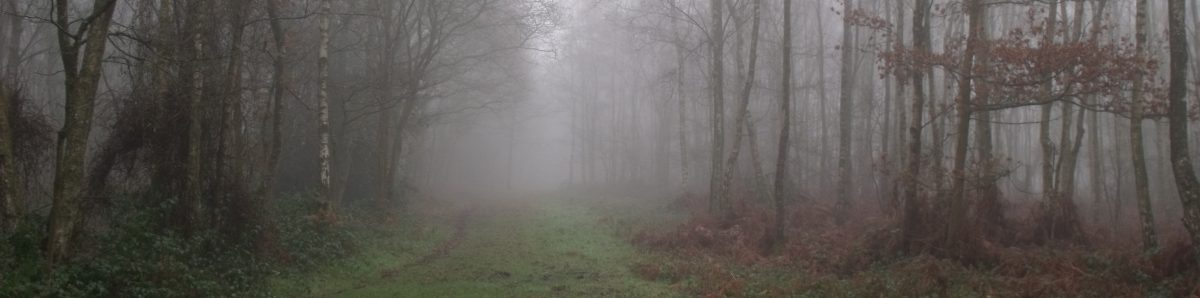
Please note that the pictures in this article are mere decorations and do not and not intended to relate to Tony Bridge and his art. Think of them as free association based on the words that I type.

The writer of the piece is Tony Bridge (http://www.thistonybridge.com) and the piece is entitled “On honesty in photography“.
Firstly I urge you to visit Tony Bridge’s site and view the many amazing and attention grabbing photographs that Tony has assembled on his site. I am in awe of his skill, his technique, and particularly of his professional photographer’s eye. (Please remember that none of these images are his. I would not presume…)

I’m no photographer. I take photographs, I try to ensure that the photographs are interesting, I try to “compose” them a little, I try to pay attention to the lighting of the subject versus the background and things like that, but these days I rarely stray from the automatic settings on my camera, which is a cheap FujiFilm one.
As for post-production, the removal of perceived mistakes in composition and specks of dust, changing hues and saturation and so on, well, I rarely do more than remove red-eye and shift the contrast. Tony’s article talks about a possible perceived over emphasis on the post-production of some modern photography. It is the main topic of Tony’s article.

With tools like Photoshop anything in or about a picture can be manipulated, from simple removal of flaws to major changes to the image. Indeed there are numerous photo manipulation “fails” to be found on the Internet, ranging from failed enhancements of “beauty” shots, to badly photoshopped propaganda photographs from the likes of North Korea.

Is this new? I think not. Apparently Henry VIII of England was deceived by a painted likeness of Anne of Cleves, complaining that “She is nothing so fair as she hath been reported.” To be sure this is not post production alteration of the image, but it is similar in kind. Henry could, probably justifiably, have called for more honesty in image production.

Of course there were movements in portraiture and other painting for more honesty in portrayal. Oliver Cromwell, is alleged to have required that his portrait be painted “warts and all”. However most painting tended to emphasise some aspects of the subject over others, the epitome being the painting of “The Monarch of the Glen” by Landseer, an over idealised painting of a stag. Nevertheless, a great painting.

Some painters realised the way that images were being enhanced and moved in another direction away from realism, leading to such schools of painting as impressionism, cubism, surrealism, pop art, to name only a few. Again the paintings were, are amazing. I draw a parallel between non-realistic art with highly post-processed photography.
Photography, springing up in the early 20th century in the shadow of painting, at first had few tools to do other than report what the lens had seen. Photographers were still learning about the new medium, but soon techniques started to arise, such as vignetting (softening the corners of an image) to alter the image.

But the tools soon arrived. The standard model of camera has the image plane perpendicular to the lens axis with the lens axis at or near to the centre of the image plane. Later cameras allowed the lens to be shifted and twisted to allow various effects, such as better images of tall buildings and so on. No doubt the photographers of the time might argue for a more honest approach, though I’m pushing the analogy to breaking point.
In the darkroom similar effects could be performed by manipulating the chemical baths and the enlarger used for the printing process. Many of the image manipulation processes are over 100 years old according to Wikipedia. It was probably the advert of colour films and processing that severely reduced the amateur use of darkroom processes in photography, because of the extra complexity of processes. That’s a pity, as nothing beats the feeling you get when an image appears from nothing on a white piece of paper.

The digital revolution has put the power back in the hands of the amateur again. Anyone with a phone can take a photograph, process it through Instagram and the result has been …. a cascade of rubbish!
Against this unprecedented tide of rubbish, real photographers, amateur and professional struggle to promote their art. So is real photography the poorly lit, over exposed, blurry, shaky, hand-held phone stuff, or the highly processed, sharp as a tack, rigidly tripod mounted, Canon/Nikon/Hasselblad shot stuff, or the story board, lightly processed, possibly hand held stuff?

In my opinion, it is an invalid question. Consider the famous “Monsoon Girl” photograph by Brian Brake. This is an awesome photograph and I don’t see why it should denigrated because it was a set up. Is it honest? It is honest to the story it told. It expresses perfectly the promise that the monsoon brings of growing things and plenty in the future. However it wasn’t a real photograph of a real girl in real monsoon rain.

Similarly with the awesome images that can be created by Photoshop and other tools. One of my favourite site for images is the NASA site. Wonderful images! However many of them are “false colour” images, of the sun and other objects. It’s not Photoshop, (so far as I know) but it is highly manipulated images. Are they “honest”? In one sense they are in another they are not. Are they amazing photographs? Yes, of course.

If I had a photo good enough to be used in a magazine or book or whatever, would I do whatever I could to make it as defect free as possible? Yes, I would and I would not consider that dishonest.
Tony Bridge questions whether or not we need the latest cameras, a longer lens, the next highest resolution or the next update of photo manipulation software. Of course we don’t. But if they help us get our message across, then they are useful. They are pretty nice toys, too! A long lens is great. An extremely long lens may enable things to be photographed that can’t otherwise be photographed, but only the photographer’s eye can make the picture shine.

I recall that I posted an image on Facebook of a stick insect shedding its skin. This event occurred practically right in front of my nose, just outside my front door. I really couldn’t have missed it. Brian Harmer, a photographer and blogger friend of mine congratulated me on my photo, and when I said that I couldn’t have missed it, he wisely said “Most of the genius in any image is what you point it at when you shoot. Your eye saw the image. the (camera) merely recorded it”.

My picture was no work of art, but I take his point. What makes a good photo or photo essay is the photographer’s eye and the photographer’s heart, and I believe that is something like what Tony Bridge means by “honesty”. Technique and tools can aid the photographer but they can’t make a mediocre picture into a great one.
One last comment. Does the use of less post-processing in digital photography. and a reliance on more honest photography mean that digital photography is maturing? Again, I will sit on the fence. Yes, it shows maturity if it erases the distinction between prior photography (analog photography?) and digital photography. When a photograph is just a photograph, and digital or analog post processing is not relevant, then digital photography has matured.

But I hope that is not totally true, as with maturity comes the danger of stagnation. I don’t believe that as technical a pastime or profession as photography can ever mature in that sense, fortunately. The technology will keep changing, opening new avenues for photographers, both amateur and professional, as its sisterly arts of painting and sculpture demonstrate.

Thank you Tony Bridge for providing your thought provoking article, which has been the inspiration of this post.


 Me on the net