Puzzles

Pieces of a puzzle
Pieces of a puzzle (Photo credit: Wikipedia)

I’ve been musing on the human liking for puzzles. I think that it is based on the need to understand the world that we live in and predict what might happen next. A caveman would see that day followed night which followed the day before, so he would conclude that night and day would continue to alternate.

It would become to him a natural thing, and in most cases that would be that, but in a few cases an Einstein of the caveman world might wonder about this sequence. He might conclude that some all powerful being causes day and night, possibly for the convenience of caveman kind, but if his mind worked a little differently he might consider the pattern was a natural one, and not a divinely created phenomenon.


Embed from Getty Images

Puzzling about these things is possibly what led to the evolution of the caveman into a human being. Those cavemen who had realised that the world appear to have an order would likely have a survival advantage over those who didn’t.

The human race has been working on the puzzle of the Universe from the earliest days of our existence. Solving a puzzle requires that you believe that there is a pattern and that you can work it out.


Embed from Getty Images

The Universal pattern may be ultimately beyond our reach, as it seems to me that, speaking philosophically, it might be impossible to fully understand everything about the Universe while we are inside it. It’s like trying to understand a room while in it. You may be able to know everything about the room by looking around and logically deducing things about it, but you can’t know how the room looks from the outside, where it is and even what its purpose is beyond just being a room.

Solving a puzzle usually involves creating order out of chaos. A good example is the Rubik’s Cube. To solve it, one has to cause the randomised colours to be manipulated so that each face has a single colour on it.

English: Rubik's Cube variations
English: Rubik’s Cube variations (Photo credit: Wikipedia)

A jigsaw puzzle is to start with is chaos made manifest. We apply energy and produce an ordered state over a fairly long time – we solve the jigsaw puzzle. After a brief period of admiration of our handiwork we dismantle the jigsaw puzzle in seconds. Unfortunately we don’t get the energy back again and that’s the nature of entropy/order.

Many puzzles are of this sort. In the card game patience (Klondike), the cards are shuffled and made random, and our job is to return order to the cards by moving them according to the rules. In the case of patience, we may not be able to, as it is possible that there is no legal way to access some of the cards. Only around 80% of of patience games are winnable.

Empire Patience Playing Cards, Box
Empire Patience Playing Cards, Box (Photo credit: Wikipedia)

Other games such as the Rubik’s Cube are always solvable, provided the “shuffling” is done legally. If the coloured stickers on a Rubik’s Cube are moved (an illegal “shuffle”) then the cube might not be solvable at all. A Rubik’s Cube expert can usually tell that this has been done almost instantly. Of course, switching two of the coloured stickers may by chance result in a configuration that matches a legal shuffle.

When scientists look at the Universe and propose theories about it, the process is much like the process of solving a jigsaw puzzle – you look at a piece of the puzzle and see if it resembles in some way other pieces. Then you look for a similar place to insert your piece. There may be some trial and error involved. Or you look at the shape of a gap in the puzzle and look for a piece that will fit into it. One such piece in the physics puzzle is called the Higgs Boson.

English: LHC tunnel near point 5. The last mag...
English: LHC tunnel near point 5. The last magnets before the cavern. (Photo credit: Wikipedia)

The shape is not the only consideration, as the colours and lines on the piece must match the colours and lines on the bit of the puzzle. In the same way, new theories in physics must match existing theories, or at least fit in with them.

Jigsaw puzzles are a good analogy for physics theories. Theories may be constructed in areas unrelated to any other theories, in a sort of theoretical island. Similarly a chunk of the jigsaw could be constructed separately from the rest, to be joined to the rest later. A theoretical island should eventually be joined to the rest of physics.


Embed from Getty Images

Of course any analogy will break down eventually, but the jigsaw puzzle analogy is a good one in that it mirrors many of the processes in physics. Physical theories can be modified to fit the experimental data, but you can’t modify the pieces of jigsaw to fit without spoiling the puzzle.

The best sorts of puzzles are the ones which give you the least amount of information that you need to solve the puzzle. With patience type games there is no real least amount of information, but in something like Sudoku puzzles the puzzle can be made more difficult by providing fewer clues in the grid. A particular set of clues may result in several possible solutions, if not enough clues are provided. This is generally considered to be a bad thing.

Solution in red for puzzle to the left
Solution in red for puzzle to the left (Photo credit: Wikipedia)

Some puzzles are logic puzzles, such as the ones where a traveller meet some people on the road who can only answer “yes” or “no”. The problem is for the traveller to ask them a question and deduce the answer from their terse replies. The people that he meets may lie or tell the truth or maybe alternate.

Scientists solving the puzzle of the Universe are very much like the traveller. They can question the results that they get, but like the people that the traveller meets, the results may say “yes” or “no” or be equivocal. Also, the puzzle that the scientists are solving  is a jigsaw puzzle without edges.

English: Example of a solution of a Hashiwokak...
English: Example of a solution of a Hashiwokakero logic puzzle. Deutsch: Beispiel einer Lösung eines Hashiwokakero Logikrätsels. (Photo credit: Wikipedia)

Everyone who has completed a jigsaw puzzle knows that the pieces can be confusing, especially when the colours in different areas appear similar. For scientists and mathematicians a piece of evidence or a theory may appear to be unrelated to another theory or piece of evidence, but often disparate areas of study may turn out to be linked together in unexpected ways. That’s part of the beauty of study in these fields.


Embed from Getty Images


Shopping

A New World Department Store located at New Wo...
A New World Department Store located at New World Centre Shopping Mall (Photo credit: Wikipedia)

When I do practically anything, I tend to muse about the origins of whatever it is I am doing. This is my way of looking at something in a different way. So today I’m going to think about shopping.

In the days before money, people would presumably have gone around trading for the things that they needed, which makes shopping in the way we understand it difficult and complicated. Role specialisations (butcher, baker, candlestick maker) would probably have arisen well before money was invented and shops as we know then would be unlikely to have existed.

English: Traditional Butcher Shop in Abbotsbury.
English: Traditional Butcher Shop in Abbotsbury. (Photo credit: Wikipedia)

Trade would have been, for example, a barrel of apples for a side of pork, and complex networks of obligations would have arisen as Peter owes Paul a dozen eggs, while Paul owes Saul a side of pork, who owes Roger a hour or so labour to repair a pig byre, and Roger owes the blacksmith some wheat for his knives, and so on.

Once the human race invented money, this would all have become a lot easier. The value of the side of pork or the labour to repair the pig byre  could be assessed and indebtedness could be quantified more accurately. The advantages were obvious. Instead of passing around obligations, one could use money to pay for things.


Embed from Getty Images

Of course, the underlying principle is the same, the exchange of one thing of value for another thing of value, but the big advantage was the decoupling of the direct “thing for a thing”. An intermediate “thing of value” or money, enabled the keeping track of indebtedness much easier.

A smithy would be naturally located in a central position, as would the mill. Other suppliers would maybe not be so central – the proto-butcher might travel around the countryside killing and butchering animals, and the proto-baker probably worked from home and may have dealt with the passing trade and also delivered. Perhaps the proto-milkman might have distributed his spare milk and butter around the countryside too.

Bread rolls
Bread rolls (Photo credit: Wikipedia)

It’s likely that market places existed before money was invented, as places for people to trade their surpluses for other people’s surpluses, but the invention of money would probably have boosted the use of market places, and specialist traders would turn from prototypes to more specific traders.

And a retail/wholesale split may have happened pretty much as a result of the invention of money. The beef and pig farmer may have completely dropped any attempt to grow grain, or to keep a milk cow, if he could sell all his animals to the butcher and buy bread, grain, milk and cheese and butter from similar specialists.

English: Office candlestick in brass, made by ...
English: Office candlestick in brass, made by Skultuna mässingsbruk, Sweden. Svenska: Kontorsljusstake i mässing från Skultuna mässingsbruk. (Photo credit: Wikipedia)

So, the market place may have started out as place to trade produce, but it would have swiftly changed to a place where one could buy stuff. Pretty soon it would have occurred to the market traders that the hassle of setting up stalls and taking them down each day was a waste of time. They would use the new money to buy a house in or near the market, not to live in, but to store and even market their goods.

From the point of view of the customers, as well as the new class of merchants, this was a great move. Instead of travelling to the butcher, the baker, and indeed the candlestick maker, they only had to go to one place, the new expanded market. It would not be long before the houses around the market were modified to make buying and selling easy and for merchants to display their wares. Shops were invented.

English: Mindpro_Citinall_Giordano_Shop
English: Mindpro_Citinall_Giordano_Shop (Photo credit: Wikipedia)

More exotic products, such as spices from abroad and fabrics from other parts of the country would have started to make their way in to the market places as distant merchants could send large quantities of their goods and would know that a local trader could buy them, and sell them on to local people. Of course, a profit was to be had at each stage of the process.

Shops would naturally tend to arise near the market (which would still be used for livestock and work fairs), so shopping areas would have arisen, well placed in the town centres.

Oskargallerian, a shopping mall in Örnsköldsvi...
Oskargallerian, a shopping mall in Örnsköldsvik, Sweden (Photo credit: Wikipedia)

In the largest centres of all, the cities, this concentration of shopping gave rise to problems for the shopkeepers, such as where to store one’s wares, and, inevitably, how to attract customers. Attractive shops help with the attraction, as does a large range of wares. Warehouses slightly out of town and large storeroom solve some of the other problems.

A larger range of wares means that some shops would have started to sell multiple types of wares. A clothier may sell clothes for all purposes, gender and ages, and may also sell raw materials for clothes making and the tools for making clothes. A hatter may also start to sell suits, maybe from the clothier, wholesale.

The Milliner (hat maker)
The Milliner (hat maker) (Photo credit: Wikipedia)

Some time  in the 20th century the so called department stores became popular. These store sold wide ranges of things for as many household needs as possible. They were called department stores as they were divided up into departments – clothes here, crockery and other cooking equipment there, haberdashery here, gardening requisites there. Even jewelry would perhaps be found over there.

We are seeing the ultimate in bricks and mortar shopping these days, in the big shopping malls. These are usually based around a supermarket or a department store and contain many smaller speciality stores. Since they are truly “single places to shop” or “one stop shopping” they can be locates away from the town or city centres, to the detriment of any remaining city centre shops.

English: Bentalls Kingston department store wh...
English: Bentalls Kingston department store which is now incorporated into the Bentalls centre shopping mall. (Photo credit: Wikipedia)

But in this virtual age, virtual shopping is becoming more important. You can buy almost anything that you can think of on line these days, even your daily groceries, and it is usually cheaper. However, there may be a limit to this, as many people like to touch and feel and pick and choose what they purchase, and clothes often need to be tried on. So while the on line trend in shopping is gathering pace, it is probable that bricks and mortar shops will survive, in some form, at least for a moderate amount of time.


Embed from Getty Images

Holidays

English: Holiday in village
English: Holiday in village (Photo credit: Wikipedia)

I should imagine that going on holiday, for many people would be a relatively new thing. While those with money might decide to shift operations from home to another location, which might or might not be near a beach, those who work from them would mostly have no respite from day to day toil, since their employers would still require looking after as usual.

As ordinary people became wealthy, and the old social structures faded away for the most part, it would have become more usual for ordinary people to go away, just as their employers used to.

Rangiputa, Karikari Peninsula, Northland, New ...
Rangiputa, Karikari Peninsula, Northland, New Zealand. Rangiputa is a beach and bach (holiday home) community on the west side of the peninsula (Photo credit: Wikipedia)

The word “holiday” itself is a  contraction of “holy day”, and on holy days there were celebrations and less formal work. The word has come to mean a day on which one does not have to work. Most countries these days would have statutory holidays on which which people would not have to work. There may be other restrictions, such as legislation that shops should remain closed.

It’s understandable that some countries require shop closures, as this means that shop staff get the holiday too, but many countries these days allow shops to stay open if they wish and some of the best retail days are on statutory holidays. Usually shops that stay open are required to compensate staff who are required to work.

English: Brixham - Harbourside Shops These sho...
English: Brixham – Harbourside Shops These shops mainly cater to the holiday trade who visit the harbour. (Photo credit: Wikipedia)

Holidays are disruptions to normal schedules. When one goes away, one is in a different environment and one has to make do. Even something as simple as making a cup of tea may be complicated by the need to find a spoon, a cup, and a teabag, not to mention the need to figure out the operation of a different jug!

These things are not an enormous issue, and in fact draw attention to the fact that one is on holiday. All schedules are voided and one can do whatever one wants. Often this may amount to doing nothing.


Embed from Getty Images

A “holiday industry” has evolved, which provides accommodation, and resources for those temporarily away from home. It also provides entertainments or “attractions” if the holiday maker doesn’t just want to lay on the beach. The holiday maker may do all sorts of things that he or she doesn’t usually do, from the exciting (bungy jumping or similar) to the restful (a gentle walk around gardens or maybe a castle visit or may a zoo).

These facilities are all staffed by helpful people who arrange things so that the holiday maker can enjoy his or her self without worries. These people are of course employed by the facilities, but many of them enjoy their work very much anyway. It’s a sort of bonus for helping people.

English: Ultra Dynamics Dowty Turbocraft water...
English: Ultra Dynamics Dowty Turbocraft waterjet boat (Photo credit: Wikipedia)

Holiday makers must also be fed, and this has become a huge industry too. In any seaside towns so-called fast food outlets can be found in abundance, along with more up market restaurants and cafés, for more leisurely eating. For many people one of the advantages of being on holiday is that one doesn’t have to cook, and one can choose to eat things that one doesn’t normally eat.

Holidays can be expensive. Since we are close to the Pacific Islands, like Tonga, Samoa and Fiji, many people fly out to the islands on their summer holidays. This means flight and accommodation has to be booked and paid for.

English: Great Frigate Birds (Fregata minor) o...
English: Great Frigate Birds (Fregata minor) on Johnston Atoll, Pacific Island Wildlife Refuges (Photo credit: Wikipedia)

When the holiday makers arrive at their destinations, they have to pay for food and entertainment. Other expenses may be for sun screen cream, snacks, tours, tips, and the odd item of clothing which may have been accidentally left at home.

Holiday entertainment may comprise guided tours, or visiting monuments or zoos. Amusement parks are often an attraction as are aquariums. All this can cost a lot, but unless you are content to veg out on the beach, you’ll have to pay for it. Even vegging out on the beach comes at a cost, from sun protection through to drink to offset the dehydration caused by the sun.

English: Roller coaster, M&Ds Theme Park, Stra...
English: Roller coaster, M&Ds Theme Park, Strathclyde Country Park The larger and older of the two roller coasters, at the very southern end of the park. (Photo credit: Wikipedia)

So, why do we throw over the usual daily regime, and drag our family on an often uncomfortable road, sea, or plane trip, to a location where we know little of the environment, which will cost us money, to spend the days traipsing from “attraction” to “attraction” spending more money and feeding on often costly food of unknown quality or provenance?

Part of the answer is that the daily regime becomes boring and descends into drudgery. Removing ourselves from the daily regime allows us to escape that drudgery for a while. As far as the cost goes, well, one is prepared to spend a certain amount of money to escape the drudgery for a while.

Money for All
Money for All (Photo credit: Wikipedia)

Removing ourselves from the usual means that we can try the unusual. We may try Mexican food, or Vietnamese food. Or even Scottish cuisine if we choose. The world is our oyster.

We can try sports and pastimes that we have never tried before. Bungee jumping. Skiing, water or snow. We can visit a “Theme Park”, ride a roller coaster, or other ride. We can scare ourselves and excite ourselves.

Skiing
Skiing (Photo credit: Wikipedia)

We can experience different cultures, different scenery, but at the end of the day we know that we will be returning to our mundane lives. We have at the back of our minds the cosy ordinariness of our usual lives, as a sort of safety harness.

We know our comfortable house will be there for us to return to, and while we may enjoy the beds in our hotel, motel, holiday home or tent, we look forward to the return to our own beds. We look forward to drinking the brands of coffee and tea that we prefer and fill the fridge with the foods that we prefer to cook.

English: Hotel room in the Waldorf Hilton, Ald...
English: Hotel room in the Waldorf Hilton, Aldwych, London. (Photo credit: Wikipedia)

Few people would want to live in hotels and sleep in strange beds as a way of life, but there are some people who do so. While we enjoy being on holiday, as a break from our usual lives, we would probably not want to live that way for an extended period. Those who do are unusual people.


Embed from Getty Images

Success

Winner
Winner (Photo credit: Wikipedia)

Everyone likes to succeed at their endeavours, but not everyone is able to succeed for a number of reasons. People have varying drives to succeed, with some having little drive and others have a high level of the drive to succeed.

Maybe “succeed” is not the right word here as what I am referring to is the drive to create a company, or an artwork, or some other goal. Some people seem to have this urge almost from birth, such as top sports people, and some have some sort of “Damascene Moment“, where some event gives them reason to achieve some goal.

the Conversion of Saul on the road to Damascus...
the Conversion of Saul on the road to Damascus as painted by Michelangelo. (Photo credit: Wikipedia)

Actually St Paul is probably not a good example of what I am talking about as he already had a goal (persecution of the Christians) and his goal was changed dramatically. Many others, however, have experienced conversion events to many different religions. Some however have experienced more gradual conversions.

It is not my intent to argue that sudden or gradual conversions to any religion or creed are real mystical or religious events. They may give the person a life long belief in the creed or religion, but in many cases such conversion may moderate or fade over time.

English: Parish church of the conversion of Pa...
English: Parish church of the conversion of Paul the Apostle, Vrhnika, Slovenia. Slovenščina: Župnijska cerkev spreobrnitve Sv. Pavla na Vrhniki (Photo credit: Wikipedia)

In the big religious revivals in the US such as those run by Billy Graham people at the rallies were encouraged to make a public declaration of their faith and millions did so. The pressure and excitement engendered by the event most likely resulted in people being swept along and making declarations and later reconsidering.

People who succeed in things are focussed individuals who have a clear goal, and do not see or discount the difficulties in achieving their goals, whatever they might be. Others, who are less driven would more likely see the difficulties, and indeed, such difficulties may be overwhelming.

Depth-of-focus
Depth-of-focus (Photo credit: Wikipedia)

The media is happy to promote success stories, such as this one, and they are supposed to be inspirational. The person mentioned in the article appears to have been successful, with a high powered job and a similarly high powered lifestyle, only to lose it all. The story ends on an upbeat as the person succeeds in turning her life around.

This little example shows a couple of things. Firstly, although she was successful, her life crashed and burnt, and secondly, she turned her life around but her goals were now set much lower.


Embed from Getty Images

Many people who attempt to become successful crash and burn like she did both before and after becoming successful. Also, she was successful in turning her life around, achieving a different sort of success.

That’s an interesting point – one form of success is to acquire lots of money, property, possessions. Another form of success is to be able to enjoy oneself in a hedonistic way, usually as a result of acquiring money, property, etc.

English: "The" Cranstal Cottage (now...
English: “The” Cranstal Cottage (now vacant and for sale) near Cranstal, Isle of Man My grandfather came from the Isle of Man to Missouri back in 1852 and became a successful farmer. We (my wife and I) have visited the IOM twice and love it! We were looking for property to buy and found Cranstal Cottage, the same one shown in the photo with the palm tree in the front, taken front on back in 2005 [33942] Now it is quite overgrown with no one living there and for sale. (Photo credit: Wikipedia)
However, such successes may not provide happiness, and indeed money may not buy happiness for many people. To achieve happiness one may need to give up such worldly wealth and adopt a simpler life. Others may find other ways to achieve happiness, for instance, in a job which they enjoy, and achieving happiness may, in many cases, equate to achieving success in life.

Personal success can come as a result of success in other fields, of course, and worldly success, such as starting and running a successful business, is almost always considered to be any achievement worthy of public approbation.

English: A Chinese man going about his business.
English: A Chinese man going about his business. (Photo credit: Wikipedia)

However many newly started businesses fail. This does not hurt just the entrepreneur, but also anyone who has come to depend on the new business and those who have invested in the business. Normally a start up gets finance from friends and relatives in the first place and only wins finance from other sources later.

Some entrepreneurs have a history of failure. Some fail multiple times causing severe financial distress to friends and relatives. However, if such start ups were banned, this would severely hamper the evolution and growth of businesses. Such companies as Microsoft, Apple, IBM, Facebook, and Google, not to mention Amazon and similar would perhaps not have come about.


Embed from Getty Images

However, it is worth noting that Richard Branson, whose Virgin companies are well known, and who is now trying to conquer space commercially, came from a fairly well to do family. Mark Zucherberg, also came from a fairly well to do family. Bill Gates of Microsoft had a similar background. It seems that having a well to do family helps one succeed as an entrepreneur.

Of course, that’s a sweeping generalisation and would need a lot more data to justify. It might be that the reason, if there is one, for such a correlation, is genetic, and successful people may often come from families that have an entrepreneurial gene. It may be that the reason if cultural, and that children of successful people learn from their families how to succeed.

English: Renowned speaker, author, entrepreneu...
English: Renowned speaker, author, entrepreneur and artist Jewel Daniels (Photo credit: Wikipedia)

If there is a correlation, this doesn’t bode well for the children of the less well off. They either don’t have the genes for success, or the don’t have the environment for success. Nevertheless some of them do succeed, against the odds.

A successful businessman or woman is like a successful athlete – an athlete is more likely to be successful if he comes from a successful sporting family. Such a family is more likely to provide the support that any aspiring athlete needs and will have provided a successful gene set to their sporting children.

English: Owen Hamilton represents Jamaica in t...
English: Owen Hamilton represents Jamaica in the 800 meter track and field team event at the 1984 Summer Olympics. (Photo credit: Wikipedia)

A family that knows how to compete will be able to inspire in their children the will to succeed if they follow in the family footsteps. However the child will need to have the intrinsic ability to perform, if he or she is to approach or even exceed parental achievements.

I think of this whenever someone points to someone who has achieved success in business or their life and remarks that this person shows what dedication and hard work can achieve. The implication is that anyone who does not succeed isn’t dedicated enough and is lazy.


Embed from Getty Images

This implication is just not true. No matter how hard I try, if I trained every day, there is no way that I could become a top athlete. Such athletes are anomalous phenomena. They are gifted individuals, and this should be recognised. In business, as in athletics, it takes more, much more, than hard work and dedication to succeed. Thomas Edison‘s adage is true, but without the one per cent inspiration, which comes to few, it is all just sweat.

None of my inventions came by accident. I see a worthwhile need to be met and I make trial after trial until it comes. What it boils down to is one per cent inspiration and ninety-nine per cent perspiration.


http://www.gettyimages.com/detail/556444419

Space – the Final Front Ear

Portrait of William Shatner
Portrait of William Shatner (Photo credit: Wikipedia)

Sorry about the fabricated mondegreen, which obviously references the Star Trek series of films and TV shows. Captain Kirk saw space, or more correctly distance, as a barrier, but it really is one of the factors that determines the structure or shape of our Universe.

It is interesting to me, that, although the Universe is finite, if it derived from a Big Bang, there is a human urge to explore outwards, as if it were infinite. That is probably one of the factors that led scientists such as Fred Hoyle and others to support a Steady State Theory of the Universe.


Embed from Getty Images

Personally, I believe that there is no such thing as a steady state in anything. When we see something which appears to be in a steady state or equilibrium state we should look for the feedback factors that are keeping it that way. For example a pendulum hangs straight down when at rest because any deviation from that position results in gravitation forces pulling it back to the rest position.

If friction is low the pendulum will actually pass through the equilibrium position and swing to the other side, whereupon gravity will slow it and draw it back towards the equilibrium position again. Eventually friction will slow the pendulum down and the pendulum will again hang vertically.

De :en:Image:Pendulum.jpg
De :en:Image:Pendulum.jpg (Photo credit: Wikipedia)

So we have two forces, gravity and friction, resulting in the pendulum returning to the equilibrium position. No pendulum lasts for ever, as the pivot will wear out or an elephant may step on the thing, so the equilibrium will only exist for a finite time, but it will last long enough for us to use in clocks or in scientific experiments.

Space is itself expanding as I understand the theories and some of it is out of our sight, over an event horizon, which is a locus where everything is moving away from us at the speed of light. That doesn’t much our location special – it is true of any point in the Universe. LGM on a planet around a star that is over the event horizon from us have their own event horizon, and while they may be able to see a star inside our event horizon and we in theirs, we cannot see each other.

Alien (creature in Alien franchise)
Alien (creature in Alien franchise) (Photo credit: Wikipedia)

Space separates us form the LGM, but it also separates from things local to us. Ben, our dog, is over there, about 3 metres away. My cup is mere centimetres away. It is fair to say, I think, that this is the essence of space – it is hard to conceive a universe which doesn’t incorporate a spacial concept. Or rather, a separation concept to allow things to be different from one another.

Space is not the only “separation concept” that I can think of. Things can also be separated in time, so two different bodies can exist in the same spacial position, but just not at the same time. Time is so connected to space that Einstein and others were able to link time and space into a complex space/time concept.

Time dilation spacetime diagram06
Time dilation spacetime diagram06 (Photo credit: Wikipedia)

The similarity between the space dimension and the time dimension is striking. You can even measure distance in time units as astronomers do when they talk about light years. We also do it when we say that a distant town is three hours away.

We less frequently talk of time in distance units, for example, when we say things like “six laps later”, to describe the time between two events in a car race. At some level we acknowledge that time and the space dimension have a lot in common.

English: MMTC workout. 10 of 1 mile laps witho...
English: MMTC workout. 10 of 1 mile laps without rest. (Photo credit: Wikipedia)

Space in the sort of concept that everyone knows and experiences but no one thinks deeply about. There’s no doubt that space separates events from one another. You can’t have two solid objects occupying the same space at the same time, without catastrophe ensuing. Scientists have been trying to achieve this for years, with the aim of harvesting the energy generated from the ensuring nuclear fusion.

Space appears on the macro (normal) level to be continuous. We appear to move smoothly from one location to another when we walk, incidentally forcing the air out of way as we do so. There is no sudden jumps that we notice, we don’t hop from point to point like a chess piece on a board.

Animation of the Knight's tour
Animation of the Knight’s tour (Photo credit: Wikipedia)

The philosopher Zeno came up with a number of paradoxes related to movement, that is getting from point A to point B. For instance, the athlete Achilles could not overtake a tortoise in a foot race, because Achilles would need first to reach the tortoise’s starting point, by which time the tortoise would have moved on. Achilles would then have reach the point that the tortoise had reached now, by which time the tortoise would have moved on. And so on, ad infinitum.

Of course Achilles does overtake the tortoise, and I believe the main issue in this case is related to the summation of an infinite number of decreasing distances, which intuitively one might this would sum to an infinite distance. In fact the sum of the distances is a finite number. If Achilles runs 10 times as fast as the tortoise and they start 10 feet apart then Achilles overtakes the tortoise after he has travelled 11 and 1/9 feet exactly.

Triumphant Achilles in Achilleion levelled
Triumphant Achilles in Achilleion levelled (Photo credit: Wikipedia)

Zeno’s paradoxes still inspire debate, but his conclusion was that movement, the smooth transition of something from one place to another is an illusion. One of the assumptions used is that distance is a continuously varying property, but it may be that it is not, and there are hints of that at the quantum level. The Planck length is the smallest distance about which statements can usefully be made and it is impossible to determine the difference between two locations less than one Planck length apart. Perhaps we do hop from place to place like chess pieces, or at least our atoms and their constituent particles do.

Max Planck 1910
Max Planck 1910 (Photo credit: Wikipedia)

Space and time enable events to happen uniquely, and without collisions. Events may happen in the same place as long as they happen at different times. It may be that events of different probabilities happen at the same place and time, so long as the sum of the probabilities of all events is one. It may therefore be that probability is a dimension with the same sort of status as the space and time dimensions. This would require that our view of probability, of one event out of many being the one that actually happens is an illusion and that events of all probabilities happen in a sense.

English: The probability pattern for a single ...
English: The probability pattern for a single electron atom. (Photo credit: Wikipedia)

This title is secret


Embed from Getty Images

Everyone has secrets. Even a hermit in a cell has secrets, not the least of which is what made him become a hermit. His overt reasons may be plausible, but it is likely that for most persons his overt reasons would not be quite enough to drive them into seclusion.

I don’t believe that anyone can be completely open and still be sane. It may be that a person, while being non-racist in actions and philosophy sometimes has thought that is racially biassed. The person will probably then suppress those thoughts as wrong or unnatural.

Thoughts in the Night, Dreams During the Day
Thoughts in the Night, Dreams During the Day (Photo credit: Wikipedia)

Couples often claim to be one hundred percent open with each other, but this is unlikely to be true. One person may have eaten the last chocolate, and remains strategically silent when the other partner remarks that they thought that there was one more left.

One partner may prefer Indian cuisine but may silently go along with the other partners desire for Thai or Japanese if he or she has no strong feelings about the matter on a particular occasion. Over time however partners will know one another’s preferences and a compromise will be reached.

Pad Thai at Sarah's restaurant in Toronto, Canada.
Pad Thai at Sarah’s restaurant in Toronto, Canada. (Photo credit: Wikipedia)

Families may have secrets – the skeletons in the cupboards. Very often the emergence of such secrets may be disturbing or traumatic and may shake the family to the core. The secret may be something that the family knows but which is get from outsiders, or one or two family members may keep from the rest : “Well, Aunty P and Uncle Q were never formally married, you know.”

Firms often have secrets. A firm may fail, and few people outside the firm may have seen it coming. Either the firm purposefully has been optimistic in its accounts and its presentation to the outside world, or the accounts may have been in a mess and the warning signs missed both internally and externally.

Intellectual Property Owners Association
Intellectual Property Owners Association (Photo credit: Wikipedia)

Firms have other secrets, such as the exact processes that are used to produce their product. Such secrets are believed by the firm to give them an advantage over their competitors, so they do all that they can to prevent the competitors from learning their secrets.

Often a firm will keep a yet to be launched product a secret, again so that competitors can’t steal the ideas. This has led to big launches and product announcements that are covered by the media, often for products which are not significantly different from previous products already released.


Embed from Getty Images

Of course, one firm will know that another firm has secrets, and so firms will spy on one another, there will be leaks of information, and all sorts of skullduggery will ensue!

There will be political secrets too, and a great deal of energy is put into uncovering such secrets and exposing them for political gain. The media are always searching for political secrets, simply to sell more publications.

World wide governments spy on each other. While this information can be used to find out if another government has hostile intentions, it can also be used to assess the threat that the other government poses.

The 33 convicted members of the Duquesne spy r...
The 33 convicted members of the Duquesne spy ring (FBI print). (Photo credit: Wikipedia)

An example of this was spying on Iraq gave the United State government an excuse to invade Iraq, because spying had been said to have revealed that “Weapons of Mass Destruction” had been developed in Iraq. This turned out to be untrue, and whether or not spying had really erroneously indicated that such weapons had been developed has been a topic of debate ever since.

Governments routinely spy on their own citizens too. If a government suspects that certain of its citizens are secretly planning revolt they may keep a close watch on them. Also, governments may take an interest in someone if they are suspected of planning to commit a crime. In many cities around the world it is almost impossible to walk down the street without passing a number of surveillance cameras.

Shot of the perpetrator by a surveillance came...
Shot of the perpetrator by a surveillance camera in the lobby of the Serena Hotel in Kabul. (Photo credit: Wikipedia)

Indeed such surveillance cameras are common these days. People have been accustomed to seeing them on the roads and in shops, and most are accepting of them. The argument is that if you have no secret to hide, then the cameras are not a concern, and people believe that if there is a camera, then this will frequently deter people from misbehaving.

This is more or less true, though there are enough videos on YouTube of idiots doing silly things in front of security cameras. Those people don’t have any secrets from them!

English: A payload surveillance camera made by...
English: A payload surveillance camera made by Controp and distributed to the U.S Government by ADI Technologies. (Photo credit: Wikipedia)

Sometimes secrets are good. You would not set a password and then tell everyone about it, of course, and your password keeps your stuff secret from any possible attackers. Before the rise of Internet banking things were kept secret by locking them up in a box or safe. These days your password might be what is kept in the safe!

Cryptography is looked after by Alice and Bob and friends. These characters, invented by cryptographers, are forever exchanging secret messages, which are usually something like “This is Alice”. They use various cryptographical messages means to keep their secret information secret, usually using things like “private keys” and “public keys”.

Public key making
Public key making (Photo credit: Wikipedia)

Cryptography has arisen as a result of the Internet’s total lack of security or secrecy. When the Internet was built no one could have predicted the need for security. After all, it was only a tiny network connecting a few research and educational institutions and joining it was by invitation. Everyone knew everyone else.

Pretty soon, though, the Internet grew too large for everyone to know everyone else and security was needed. At first login accounts were all that way necessary, but soon that was insufficient. Black Hat hackers joined the Internet, and they were interested in breaking into your account to read your emails to your girlfriend, your mother, or your cannabis dealer.

English: A stereotypical caricature of a villa...
English: A stereotypical caricature of a villain (i.e. generic melodrama villain stock character, with handlebar moustache and black top-hat). (Photo credit: Wikipedia)

Password requirements got stricter and stricter as the Black Hats got cleverer and cleverer at breaking password security but people still use passwords like “password” and “12345”. There are now so many people connected to the Internet that there is a certain safety in numbers. Just like birds flock together so that an individual’s chances of becoming prey are small, so an individual’s private information is probably safe, unless by chance, they are the one in the millions who is picked on by the Black Hatter.


Embed from Getty Images


Home grown

Chauvin, Louisiana, 1972. Woman selling home g...
Chauvin, Louisiana, 1972. Woman selling home grown produce. (Photo credit: Wikipedia)

I often wonder about the economics of “growing your own”. Usually you have buy your plants, buy compost, fertilizers, and some times special food with added stuff to encourage growth. Then there’s water, which you may get charged for in some locations.

Then the crops may not be that heavy, the fruit small, maybe bug eaten, and weather battered. It makes me wonder if the effort is economically worth while, and that is before I’ve considered the fact that the cost of the labour that you put in is not inconsiderable.

English: Home grown tomatoes, Omagh One enterp...
English: Home grown tomatoes, Omagh One enterprising occupant of a house in Georges Street proves that these plants can be still successfully grown in a small greenhouse, despite the continuous overcast skies [565288] (Photo credit: Wikipedia)
However, people reckon that the taste of home grown vegetable is better than those bought in a shop. That may be, but it is difficult to justify the amount of work that home grown produce entails on that basis.

Others worry about the pesticides and growth additives that are added to commercial produce and it is a justified concern, but many, many people never eat home grown produce and it doesn’t seem to seriously affect the majority of them.


Embed from Getty Images

Genetic manipulation has given such people something else to worry about, but really, crops have been genetically modified for millennia, by selection of certain strains. Also, people have subjected seeds to toxic substances such as acids and alkalis, which has the effect of changing the genetic structures of plants.

In particular, the grains that are grown commercially have been manipulated in such a way as to cause a doubling of the genetic material in the plant and such plants are termed tetraploid or octoploid, depending on the number of times the genetic material is multiplied in the seeds.

English: The edge of a wheat crop south of Cla...
English: The edge of a wheat crop south of Clanfield In the green strip beside the wheat were some oat plants. (Photo credit: Wikipedia)

Those opposed to genetic manipulation rarely if ever mention the multiploidity (a word I may just have invented), and raise a nightmare scenario where all so-called “natural” crops are displaced by genetically modified plants. This is a scenario that I find to be extremely unlikely.

If you have ever been around farms you will see the farmer working very hard to support his specialised plants, genetically modified or not. Some genetically modified plants, modified to give higher yields, require insecticides to keep down the pests which may devour them. Other genetically modified plants have genes inserted to deter pests from eating them.

This image shows the coding region in a segmen...
This image shows the coding region in a segment of eukaryotic DNA. (Photo credit: Wikipedia)

Outside of the cultivated fields, in patches of unusable land, grow plants which are escaped crop plants, but they don’t resemble the crop plants very much. Over just a few generations they have in the main reverted back to ancestral types, and that common leggy plant with yellow petals and lumpy seeds pops is such a plant. It may well be an escaped brassica, or wild cabbage, or maybe an escaped oil seed rape plant, the cultivated version of which supplies canola oil for margarines.

Wild growing plants are vigorous growers and over power or inter breed with the escaped crop plants and the more delicate genetically modified versions lose out to the ancestral varieties. Of course, there is a one in many billions chance that a genetically modified plant might supply a gene that causes the loss of other ancestral genes, but it is much more likely that I win a lotto jackpot! The odds are astronomical.

Brassica oleracea (Wild Cabbage) - naturalised...
Brassica oleracea (Wild Cabbage) – naturalised population growing on seacliffs below a mediaeval monastery at Tynemouth, Northumberland, UK (Photo credit: Wikipedia)

It is sheer hubris to believe that our first forays into genetic modification would produce organisms which are more robust than those produced by millions of years of evolution. It is slightly more likely that genetically modified genes might find there way into ancestral organisms, conferring some advantage on those organisms. The likelihood is, however, as I said above, that modified genes would be lost in the genetic battle between genetically modified and ancestral versions of an organism.

Modern crops, even the ones which have not been genetically modified, need a lot of tending. They need (in many cases) irrigation, fertilizers, pesticides, and that’s after the preparation of the land and the sowing of the seeds. It is big business and the margins need to be considered at every stage.

Furrow irrigation system using siphon tubes
Furrow irrigation system using siphon tubes (Photo credit: Wikipedia)

Because the produce is grown in standardised conditions, to maximise yield it is pretty much all the same size and quality and this is pretty much become the standard. Consumers have come to expect uniformity in their produce and producers have been driven to provide this.

Grape tomatoes.
Grape tomatoes. (Photo credit: Wikipedia)

Home grown produce is usually much more variable. Tomatoes may vary in size and shape, and may even be misshapen. Potatoes may vary from large to really small. Peas and beans may have variable numbers in the pods. People who are used to shop bought produce may be disappointed in home grown produce.

I’m told that great satisfaction can be gained from growing your own crops, and indeed, we have raised beans, silver beet, spinach and some other things, and we have enjoyed them as much if not more than shop bought stuff. But I’m no gardener. Gardening plays havoc with my fingernails!

English: Fingernails, about 2mm long Deutsch: ...
English: Fingernails, about 2mm long Deutsch: Fingernägel, etwa 2mm lang (Photo credit: Wikipedia)

For those who do decide to produce their own crops, I feel that they should do it for the satisfaction of the act, rather than for any perceived economic reason. The economics are debatable, as I suggest above. As I also say above, the taste of home grown food is supposedly superior to that of shop bought food.

It is certainly true that the flavours of home grown food can be stronger than those of shop bought food.

English: Produce grown at organic community ga...
English: Produce grown at organic community garden in Santa Clara, Cuba. Most of the workers are retired. Profits are shared based on how much time is worked. (Photo credit: Wikipedia)

Home grown tomatoes, for example, tend to be fleshier, or more solid, than shop bought ones and, although they may vary in size and colour, they do taste good.

One big advantage of the home grown movement is that a section of the movement has taken on the task of keeping alive the ancestral strains of various vegetables and fruit trees. This means that if commercial produce production were to experience an apocalypse that perhaps ancestral strains could be used to rebuild the produce industries.

English: Well tended fruit trees Wimpole Hall ...
English: Well tended fruit trees Wimpole Hall walled garden. (Photo credit: Wikipedia)

Also, people in the home grown movement have maintained varieties of vegetables and fruits that are slightly different to common commercial varieties – such as purple carrots or yellow tomatoes. The more variety that we have in our vegetables and fruit the better, even if it means that some people get their fingernails dirty!

Carrot diversity
Carrot diversity (Photo credit: Wikipedia)

Weather or not.

English: Cliffs of Moher - Inclement weather a...
English: Cliffs of Moher – Inclement weather again! (Photo credit: Wikipedia)

(One day late again – this is becoming annoying!)

The human race probably evolved language for the single purpose of being able to discuss the weather. It’s one of the first things that people learn about when learning a foreign language. Obviously, when language had been evolved, the human race found other uses for the facility.

Weather would have been very important for early man, as it would be next to impossible to hunt animals in a downpour as rain washes out tracks and scents and makes the task of getting from point A to point B difficult in itself. Heavy rain cuts off hunters from possible hunting grounds.

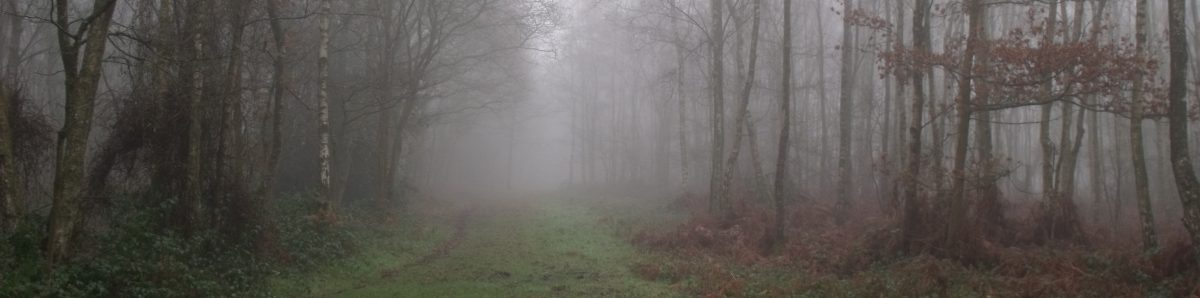
English: Forest track in spruce plantation I s...
English: Forest track in spruce plantation I suspect this would look bleak regardless of the weather, but mist and heavy rain certainly doesn’t help. (Photo credit: Wikipedia)

Visibility is also reduced by rain making location and tracking of prey difficult. Also, prey hunkers down in inclement weather, hiding away in inaccessible dens, or perching in inaccessible trees.

When early man developed techniques of agriculture, he would have been aware that his crops were dependant on the weather. Too much rain might cause the crops to rot in the ground or not develop properly, while too little rain (and more sun) would dry out and kill the crops and prevent them from fruiting.

English: This is a Tsuga canadensis in zone 6 ...
English: This is a Tsuga canadensis in zone 6 that may be suffering from early drought. (Photo credit: Wikipedia)

The early farmer would have had to consider carefully where to plant his crops. It would not be a good idea to plant crops in area prone to flooding (unless the plant, like rice needs flooding, during its development). It would also not be a good idea to plant the crops too far from water, so that watering them would not be too onerous.

Being able to predict the weather would enable the early farmer to take actions to look after his crops. The ancient Egyptians, one of the first societies of whose agriculture we have some knowledge, lived in the Nile basin and took advantage of the annual floods, and developed a complex system of irrigation. This led the Egyptians to develop mathematics, astronomy, and other sciences in order to predict when the floods were likely to happen.


http://www.gettyimages.com/detail/116475354

Arguably the need to predict the weather had a lot to do with the fact that the Egyptians developed civilisation in the first place. Arguably the rise of civilisation goes hand in hand with such developments of science and technology.

Predicting the Nile floods is prediction of the weather on a long time scale, and it is likely that the floods could be a little earlier or a little later than predictions. Such large scale weather patterns are both easier and harder to predict than smaller scale weather patterns, because the floods would come sooner or later in most years, but the extent of the floods would likely vary from year to year.


Embed from Getty Images

Since the exact timing of the floods and the extent of the flooding was not predictable, it was almost inevitable that the ancient Egyptians looked for supernatural guidance, and religion became associated with agriculture, and this appears to be a general rule. In a culture, supernatural beings, gods, are associated with agriculture, often a pantheon of them.

As part of the tasks associated with agriculture, the gods were considered to be responsible for the weather both short and long term. Interestingly while the gods were supposed to be responsible for the weather, this did not stop enquiring minds looking for the mechanisms of the weather, how the gods worked, so to speak.


Embed from Getty Images

We know a great deal more about the weather and how it happens, now. Science has moved on a great deal and we have discovered more and more about how the gods create and manage the weather, to the extent that we have taken the task away from them and given it to the scientists. I’m not debating religion per se, but some people think that we have taken everything away from the gods, removing their very necessity of being.

If forced into a corner and asked for my opinion, I’d probably agree, but there is something comforting to many people in the concept of gods or a God, and billions of people express a belief in a deity or deities, or some other supernatural influence. This may be something that we will leave behind as the human race matures, we can’t tell. It may be that science, with its laws, theories and predictions is just the latest in a succession of descriptions of the world, and may itself be ultimately seen as a simple rationalisation of what we see around us.

English: "The ancient Egyptians were accu...
English: “The ancient Egyptians were accustomed to appease the god of the Nile and induce him to bestow a bountiful inundation by throwing as a sacrifice into its sacred water a beautiful virgin.” (Photo credit: Wikipedia)

It appears that the weather is getting wilder. Scorching temperatures are measured in some places, while other places are in the grip of freezing temperatures. Storms are continually being labelled the biggest in so many years. Flood protection schemes are being overwhelmed. Crippling droughts have hit many countries and ice is reportedly retreating in the Arctic and Antarctic.

This is, for good reasons, labelled global warming and the temperatures do seem to be rising all over the globe. I’m aware that controversy surrounds the whole topic, with allegations of bad science, conspiracy, and manipulation of data on both sides of the “debate”.

Temperature predictions from some climate mode...
Temperature predictions from some climate models assuming the SRES A2 emissions scenario. (Photo credit: Wikipedia)

The trouble with the global warming discussion is around the time scales involved and the rates of temperature rise. The period of time when we have reliable temperature measurements doesn’t go back very far, and the temperature rise is small and difficult to measure.

Those opposed to the idea of global warming point out that while measured temperatures may have risen slightly, if there is any rise it could be explained by natural changes unrelated to human activities, such as variations in the output of the sun, and that in any case, the data is insufficient to show any upward trend at all.


Embed from Getty Images

Those in favour of the idea, counter that with the claim that the temperature rise is real and that the fact that it has risen in such a short time is a concern, and that action is essential.

It may never be formally decided. As we get better at predicting the weather it may turn out that the models which fit the data may solve the problem, and that one or the other side in the debate will fade away. As in the debate on evolution, the opposition to which gradually faded in favour of Darwin’s theories as time passed, I believe the same is likely to happen in the global warming debate.

English: Human evolution scheme
English: Human evolution scheme (Photo credit: Wikipedia)

It’s History

The Sunken Road at Waterloo, painting by Stanl...
The Sunken Road at Waterloo, painting by Stanley Berkley, from A History of the Nineteenth Century, Year by Year, Edwin Emerson, Jr., 1902. (Photo credit: Wikipedia)

I was never any good at history. That’s probably because I couldn’t get straight in my mind who was battling who and for what reason and for how long and so on. Later I came across the concept that history is written by the victors. This makes sense to me in some ways but the losers will still have their point of view and will likely instruct their children according to that point of view.

So while one side may say that a battle was a heroic victory over huge odds, the other party may describe the heroic resistance against huge odds. One side might add that an ally came to the rescue at the last minute while the other side might mention a traitorous change of allegiance of a former ally.

English: US and Iraqi Army Soldiers guard bord...
English: US and Iraqi Army Soldiers guard borders in Iraq (Photo credit: Wikipedia)

In wars before the twentieth century it might be that the average person would be unlikely to see any military action or even be directly affected by a war or battle. Of course, the authorities might increase taxes and conscript young men, but most people would not have seen any fighting.

Communication about the battles and the progress of the war would have been hit and miss. An injured person on their way home after fighting would no doubt have little idea of what was actually happening either on the small scale of the actual battle or on the wider canvas of the whole campaign.

English: trench listening to a handmade crysta...
English: trench listening to a handmade crystal radio during the First World War 1914-1918 . Français : poste à crystal utilisé durant la première guerre mondiale 1914-1918 (Photo credit: Wikipedia)

Anyone who has taken part in any sort of war games, such as paint-ball or capture the flags type games, will know that an awful lot of running through undergrowth and an awful lot of lying in wait is involved, and an awful lot of not knowing what is happening. In older times, it could be that what is going on 100 metres away would not be known.

A lot of ancient warfare was waged based on intelligence brought in by scouts and observers. That’s why armies always try to take higher ground, as it gives you a better view of the field of battle and it also can be defended by fewer people. The disadvantage of course is that a patch of higher ground can be surrounded and isolated.

English: View across Gordano Valley View acros...
English: View across Gordano Valley View across Gordano Valley from Tickenham near Cadbury Camp. The south Wales coast can be seen on the horizon. (Photo credit: Wikipedia)

Scouts and observers can of course be mistaken. That “100 or so” men that were spotted may actually be many more, or it may even be a contingent of one’s own troops or allies which are out of position. A scout also risks his life by approaching as close to the enemy as he can.

Such intelligence as filters back to the commanders is obviously flawed and incomplete. They probably don’t know too much about the country that they are invading, whereas the locals may possibly have a better idea of the lay of the land. Maps may be incomplete or inaccurate, and may even have been built up directly from the intelligence.

The Map Room in the Churchill Museum and Cabin...
The Map Room in the Churchill Museum and Cabinet War Rooms (Photo credit: Wikipedia)

The commanders then need to deploy their troops according to their best knowledge and the intelligence. As a result they may send off troops to places where they may be easily overwhelmed or may be ineffective.

The commanders will instruct their platoon commanders on the objectives for their troops but once the platoon commanders reach their positions they are pretty much on their own. Chaos inevitably ensues, in spite of any attempts to keep order.


Embed from Getty Images

Signals are used for communication, bugle calls, semaphores, runners and other methods are used to try to give the overall commanders an idea of what is happening at the front lines. Inevitably messages will go astray and orders will be misunderstood and this may well turn the tide of battle.

Perhaps this is why I was no good at history. When one is taught about the battle of Waterloo for example, one learns that Wellington deployed his troops here and here and that Napoleon attacked here and here and the Prussian army attacked here and here. While these statements may cover the actual flow of the battle, much of this will have been rationalised after the event.

Am Morgen nach der Schlacht von Waterloo Detai...
Am Morgen nach der Schlacht von Waterloo Detail John Heaviside Clarke (1771 – 1863) England, um 1816 Öl auf Leinwand aus der ständigen Sammlung des Deutschen Historischen Museum, Berlin (Photo credit: Wikipedia)

On a wider scale, take Napoleon for example. He is described in Wikipedia as “one of the most celebrated and controversial political figures in Western history”. From the English point of view he is the villain of the piece but I suspect that to many on his side he was a hero. There is no doubt that he was respected even by his enemies as a brilliant politician and military leader.

On the principal of “history is written by the victors” mentioned above, if Napoleon had won, and should France have held sway over England, then no doubt he would have been painted either as a benevolent leader or as a heavy-handed dictator, depending on his acceptance or rejection by England. By “England” I mean the politicians and powerful in the country. The “man in the field” probably wouldn’t care too much, unless it affected him in some way.

English: One of the signatures of Napoleon Bon...
English: One of the signatures of Napoleon Bonaparte (1804), made with Inkscape by David Torres Costales (Photo credit: Wikipedia)

History, to my mind, attributes intent much more than is justified, which renders it debatable at the least. We read that Country A pushed into a region in order to cut off Country B from some resource or other. More likely Country A had the opportunity and the resources to be able to expand into the region while Country B failed to do so because of lack of foresight, opportunity or resources.

So the expansion of Country A would have more to do with young men seeing the opportunities and travelling to the colonies to make their fortunes than any real plans by the government of Country A.

Canadian CF-18 Hornets participated in combat ...
Canadian CF-18 Hornets participated in combat during the Gulf War. (Photo credit: Wikipedia)

Baudrillard published some articles on the Gulf War, the last of which is entitled “The Gulf War Did Not Take Place“. He disputed the history of the events in the Gulf as presented.

Firstly he argued that, because of the superior air power of the Americans, they did not actually come into actually engage in conflict with the Iraqi army, and therefore the events could not be really considered to be a war.

Ex-Iraqi BMP-1 IFV captured by the US forces i...
Ex-Iraqi BMP-1 IFV captured by the US forces in Iraq during the First Persian Gulf War. (Photo credit: Wikipedia)

Secondly he argued that the view of the war as presented by the media which was fed, not from actual events but mainly from the propaganda machine of the American military and as such it presented only one point of view, that of the Americans.

History will present the Gulf War and the American handling of it in overwhelmingly positive light. History has been written by the Americans for better or worse, as the victors in this event. I’m not arguing that history is wrong. Just that it presents a picture and that picture may ignore many important aspects of an event and we should be wary of official histories.

Braine-l'Alleud Belgium, Lions' Hillock. - Com...
Braine-l’Alleud Belgium, Lions’ Hillock. – Commemorative monument of the Battle of Waterloo standing on the spot where the Prince of Orange was wounded during the fight. (Photo credit: Wikipedia)


Heaven and Hell

English: Punishment Monument An historic colle...
English: Punishment Monument An historic collection of punishment equipment. (Photo credit: Wikipedia)

As children we learn that there are consequences to everything. If we misbehave, we are punished in some ways. In earlier days we may have been smacked, but, thank goodness, those days are past. While corporal punishment has done little harm to most people who have suffered it as children, it is very very rarely justified and other options are available.

A child learns quickly that misbehaving leads to withdrawal of treats and privileges, which serves them well when they become adults and the punishments become imprisonment, restriction (like the loss of a drivers license) or the financial punishment of a fine.

English: The Prison
English: The Prison (Photo credit: Wikipedia)

The other side of the coin is rewards. For children the rewards for being good are treats and privileges. For adults the rewards of a virtuous life are esteem and again privilege. A virtuous life might also bring financial rewards – you are more likely to go back to a good lawyer, or a good mechanic if he or she does a good job and you may be prepared to spend a little more to do so.

When humans first contemplated death, the obvious question is what happened to the person, his self, his personality, after death. The answer that he just stopped is disagreeable and possibly upsetting. So it was natural to conjecture a non-physical something, a “soul” which encapsulated the persons personality which in some sense continued after the person died.

English: Depiction of a soul being carried to ...
English: Depiction of a soul being carried to heaven by two angels. (Photo credit: Wikipedia)

Some individuals claim to have had contact with souls after death, and claim to pass messages on to the living. Such “mediums” often get money or gifts in thanks or as a reward from the living relatives of the deceased person. Many so-called mediums have been discredited and proved to be merely charlatans, to the extent that to call someone a medium is tantamount to insinuating that they are a fraud.

It’s debatable whether a self-professed medium is a con artist or whether such a person is deluding themselves, but the concept of a soul is to my mind merely wishful thinking, or another name for the personality of the person, which is embedded in and part of a person’s mind. Since the mind is probably an emergent property of the brain I can’t see the soul or personality surviving the death of the brain.

English: Main regions of the vertebrate brain,...
English: Main regions of the vertebrate brain, shown for a shark and a human brain (the human brain is sliced along the midline). The two brains are not on the same scale. (Photo credit: Wikipedia)

Nevertheless, if you allow the concept of a soul, which inhabits a body during life, what does happen to it during and after death? Does it “softly and suddenly vanish away” like a sailor who has met a Boojum? Or does it continue, either in this world or some other? There are those who have claimed to have encountered incorporeal beings or ghosts, but like the stories of mediums, these claims are dubious.

The most common claim is that souls have passed on to other worlds, to some other realm, and this is where heaven and hell come into the picture. If a person has been a good person, then his soul goes to a better place, and if he has not, then his soul goes to a place of endless punishment of a mental and physical type.


Embed from Getty Images

Many people over the year have been vouchsafed visions of both heaven and hell. Such visions are often weird and look to me more like the utterances of someone who is not completely sane, but the thing that strikes me is that they are all intensely physical – the sinner is thrown into a fiery pit for all time, and good person gets to consort with heavenly virgins or to worship the deity while being in his presence and partaking in his glory.

We know the physical because we live in it. We are it, in some senses. It seems to me that those with visions, even those whose visions are a result of their inner mental issues, can only talk of heaven and hell is physical terms. It is impossible for us to consider a world that is not physical. The very concepts of heaven and hell are concepts of places and places are physical.


Embed from Getty Images

If, for the sake of discussion, we assume the visions are of something real, then if these visions represent something they are interpretations of something so different from out physical being that they must be severely distorted and much will have been lost in the translation. I myself don’t think that they represent anything more than the scrambled thoughts of a probably mentally sick person.

However that hasn’t stopped people building on the earlier visions of others. What happens to someone who dies? In the Christian tradition, if they are good they are allowed entry to heaven, and into the presence of the Deity and to worship Him. There is a certain blandness to this vision, and presumably the presence of the Deity makes up for this.

Pandemonium - One out of a set of mezzotints w...
Pandemonium – One out of a set of mezzotints with the same title (Photo credit: Wikipedia)

Those who are sinners (that is, pretty much everyone!) is sent to hell. Eternal fire and so on. Now things get complicated. Pretty much everyone has sinned at some time, so everyone is going to burn in eternal fire. Theologians (alone with their private damning thoughts) came up with a number of issues. What about those innocent who died before having a chance to sin but had not been accepted into the Church? The theologians came up with the concept of Limbo, where these children, mainly those that died in the womb, can reside.

There are other complications, but probably the most famous complex description of hell comes from the Dante’s “Divine Comedy“. The hell contained in the work has nine circles and is a complex system within those. Dante’s Purgatory and Paradise are similarly complicated.

Frontispiece to Purgatory by Dante
Frontispiece to Purgatory by Dante (Photo credit: Wikipedia)

All these visions of the afterlife are enthralling and entertaining it is true, but (seeing as no one has verifiably been there and returned), surely there contradictions embedded in the concepts of heaven and hell as found in religious and other literature.

It seems to me that the idea of heaven and hell as places which have a physical nature cannot be true. Dante’s heaven and hell for example, has physical attributes like distance and extent. Things are nearby or over there. Time also passes which allow the narrative development of course.


Embed from Getty Images

However, distance and time are attributes of the physical world, and while scientists have postulated other worlds, the worlds that they postulate are very similar to the world that we experience. Heaven and hell, and any other layers of the afterlife, are conceptually in a different realm, and I can’t see why such a different realm would have anything recognisable as physics.

The Garden of Earthly Delights (c. 1480-1505) ...
The Garden of Earthly Delights (c. 1480-1505) by Hieronymus Bosch. Oil on wood triptych, 220 cm x 389 cm, now in the Museo del Prado. High-resolution version from The Prado in Google Earth. (Photo credit: Wikipedia)