Two Hundred and Fifty

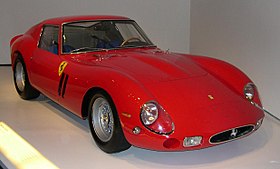
Ferrari 250 GTO
Ferrari 250 GTO

This post will be my 250th. 250 times approximation 1,000 words. A quarter of a million words. Wow. I didn’t think that I could do it. I hit the target. I reached the summit of Everest. I ran a marathon. And other similar metaphors for success.

Of course, I could be posting into a void. I see that I get, usually, a few dozen views for each post and some people are actually “following” me. I even, now and then, get a comment. I’ve done zero in the way of self promotion. I finish each post, figuratively pat it on its back and send it on its way, never to be seen again.

On its way
On its way

This doesn’t concern me. It seems that, for me, writing this blog is a bit like playing a piano in an empty room, or doing a jigsaw on the Internet. The reward is in the doing. I certainly feel a sense of achievement when I hit the “Publish” button, but I don’t often follow up on the post.

What I found amazing is my ability to ramble on for 1,000 words on any subject. I reckon that I could probably stretch any subject out to 1,000 words. In fact, I usually go over. Around the 300 to 400 word mark I’m wondering if I will reach the 1,000, and then suddenly I’m a couple of dozen words past the mark and wondering how to stop. Many times I will just stop so if you think I dropped a subject abruptly, you are probably right.

Analog television ends in Japan

Some subjects have come up more than once. If you have been a regular reader you will have noticed themes running through my posts. There’s science, particularly physics and cosmology, there’s philosophy, there’s maths. I’ve tried to steer away from politics, but Trump has crept in there somewhere.

There’s weather, there’s seasons, there’s discussion on society, as I see it, and occasionally I discuss my posts themselves. These things are, obviously, the things that interest me, the things that I tend to think about.

River Arun
River Arun

Apparently I have 144 followers. That’s 144 more than I expected. I hope that some of them read my posts on a regular basis, but that’s not necessary. I hope that more dip in from time to time and find some interest nugget.

That sound disparaging to my followers, but that’s not my intent. My intent is to reflect on the realities of blogging. I follow other blogs, but I don’t read all the posts on those blogs. Maybe one or two of them I read pretty much every time the blogger posts a new post.

Someone's blog post
Someone’s blog post

That’s the reality of blogging I think. Millions of blog plots are published every day, and I reckon that very few of them are read by more than one or two people at the most. Some blogs strike the jackpot, though, and have millions of followers.

I’d guess that the big blogs are about politics in some shape or form, or fashion and fashion hints and tips. Maybe cooking? I’ve seen a few cooking blogs and they seem to be quite popular. Some big firms have taken to publishing a blog. Some people blog about their illnesses and their battles with it. The best of the latter can be both sad and uplifting.

Protest
Protest

You know the sort I mean? You go to the firm’s website and there’s a button or menu item that proudly proclaims “Blog”. When you look at the blog, it’s simply a list of what the CEO and board have been up to, or releases of new products, or sometimes posts about workers at the firm getting involved with the local community. All good earnest stuff, but scarcely riveting. I wonder how many followers they get? Probably about as many as me! I hope so. At least they are trying.

(Approaching 600 words of waffle. I can do it!)

Since I’m not doing a political blog, I don’t think that anything I post is controversial, which is probably reflected in the number of my followers. I don’t stir up any furores with my words on Plato’s Cave analogy, so far as I know. I get no furious comments about my views on Schrodinger’s Cat. “You should see what he says about Plato’s Cave! You must go on there and refute it!” Nah, doesn’t happen!

Plato's Allegory of the cave, Engraving of Jan...
Plato’s Allegory of the cave, Engraving of Jan Saenredam (1565-1607) after a painting of Cornelis Corneliszoon van Haarlem (1562-1638) (Photo credit: Wikipedia)

As I said, the low number of hits doesn’t worry me. It would be a hassle if suddenly my followers shot up to thousands, and I felt obligated to provide all these people an interesting post on a regular basis. As it is I can ramble on about prime numbers or the relationship between the different number sets and potentially only disappoint a few people. If any.

What have I learnt from all this blogging? That it is hard. It’s not just a matter of sitting down and blasting out a 1,000 words. Well sometimes it is, actually, but most times I grind it out in 100 word or so chunks. I aim to write the blog on Sunday and add pictures and publish on Monday.

Hard work
Hard work

Sometimes I miss the Monday deadline, out of sheer forgetfulness, mostly and pop it out on Tuesday or even later. Sometimes I forget to write my post until late on Sunday, but it is only rarely that I have to write it on Monday or even later. So far as I can tell, I’ve not completely missed a weekly post since the earliest days.

This is not the first blog I’ve tried to write. I had several goes before this one and I think that maybe this attempt “stuck” because I set out my aim to publish weekly early on. Maybe. It may also be the target of 250 posts that I set myself early on. Now I’ve achieved that goal.

Mud
Mud

So what next? I’ve not decided. I might stop now, or I might go on to 500. I may not know right up until the last minute. 500 posts is approaching 10 years of posts which seems a phenomenally long time. But then again, 250 posts is around 5 years of posts and I achieved that. We’ll have to see.

(As I sail past 1,000 words, I reflect that I can extract that many words from practically nothing. It seems to be a knack.)

Fireworks in NZ
Fireworks in NZ

The Universe in a Hair Tie

Hair Ties
Hair Ties

I’m constantly bemused by the Universe. Why are some things the way they are? What is the Big Bang all about? Why Quantum? Why do people seemingly like to kill other people? Obviously on average this last is untrue, but that’s little comfort when a significant portion appears to be inflicting mayhem, in the forms of wars, terrorism, traffic accidents and even simple murder, on other people.

But let’s not get too serious. One quirk of the universe caught my eye in the supermarket. No, it wasn’t the solid wall of fizzy and sugary drinks. It wasn’t the half wall of cotton wool masquerading as bread. It wasn’t even the rows of vegetables liberally sprayed to make them look fresh, or the wall of salty crunchy snacks indistinguishable in look and taste to everyone except teenage boys who are picky connoisseurs of the things.

Chip Aisle
Chip Aisle

No, it was a humble object, a truncated ice cream cone shaped in plastic containing a small bag of hair ties, the sort of thing that girls use to put their hair in bunches. At first sight a good idea. It can sit on the dressing table, resting on the flat base, and the owner can remove one or two ties as required and replace them in due course.

Except – The truncated cone didn’t look very stable and the ball just rested on the cone, and would presumably roll away if the cone was upset. And the ball. In my limited experience of hair ties, they end up capturing loose hairs, the sparkly sheath snaps exposing the elastic core, or the elastic core breaks rendering them useless. They don’t have a long life.

Pigtails
Pigtails

In addition they get lost. Just like the planet of lost pens there is a planet of lost hair ties. Like the pens the hair ties rings around the planet just as ice and rocks form rings around Saturn. Just like a pen you can put one down anywhere and when you come back the hair tie has completely disappeared. Because of some law of probability or something sometimes there’s a pen in its place bearing the logo of some firm that you’ve never heard of and which operates in a different area to the one that you live in.

So after a while the semi stable holder of a ball of hair ties becomes a depleted bunch of hairy broken hair ties and a tipped over holder which has rolled off under the bed. I admit that much of the above is speculation. I’m not a girl, don’t wear hair ties, and I’m not an astronomer or statistician. But I suggest you try the experiment. Buy an ice cream holder and hair tie ball set and observe what happens. I reckon that it will be uncannily like the scenario I suggest above.

Ice Cream Cone
Ice Cream Cone

But think of all the unlikely things that had to happen to create that unlikely supermarket item. Firstly we had to have the Big Bang. But not just any Big Bang. This one. A slightly different Big Bang may not have resulted in a liveable Universe. The Big Bang might also have created a liveable Universe but not one where life evolved.

Life evolves on planets. Planets revolve around stars. Stars and planets have to be of right sort that life can evolve on. One of the things that is essential is a mix of elements which can only be created in the heart of a star. You see, the Universe is mostly hydrogen, as free protons, the occasional hydrogen atom, and the even rarer hydrogen molecules.

Pens
Pens

And that would be it, but some of the hydrogen/protons condensed into clumps or clouds, which grew until gravity compressed the hydrogen atoms to the point where they fused and produced helium and gave off energy. Stars. Generation I stars. Eventually pressures increased to the point where other elements started to be produced, and finally the stars exploded!

The Big Bang that started all this is the precise one that embodied or encoded all the nuclear interactions that I’ve just mentioned. Oh, there is a possibility that there was only one possible Big Bang – the one that led to us, but that doesn’t explain why all the universal constants have the values that they do. If any had been slightly different we wouldn’t be here.

Big Bang
Big Bang

When the stars exploded all the elements necessary to life were blasted into space. Over billions of years these very rare elements condensed to become our sun, and our earth. The earth and any rocky earthlike planet consists of a vast collection very rare atoms. We consist of a vast collection of very rare atoms that have somehow sprung to life. You can almost see the point of that religionists make when they say that such happenings as you and I could not have occurred by chance.

But of course they are wrong. Chance is the only reason for things happening, and it is so long since the Big Bang that unusual clusters of rare atoms, such as us, even though they are of very low probability, have come to pass, and all this was implicit in the Big Bang.

Periodic Table
Periodic Table

By some chance some collection of very rare elements sat down one day and thought about hair ties and how to keep them tidy and protect them from being lost and came up with the ice creme cone concept. I’ve wondered about the concept above, and whether or not it is in fact a useful one. My feeling is that the flaws outweigh the advantages, but of course I may be wrong.

For all I know, the concept works fine, and is the greatest advance in hair tie technology since someone had the original concept of a hair tie. When you think about it, it is a pretty cool technology which does away with the need for ribbons and strings, and the difficulties of tying and adjusting them. The ice cream cone holder concept could be the next step in the evolution of hair technology.

Hair Tie Balls
Hair Tie Balls

The truly wondrous thing though, is that the ice cream cone hair tie holder concept and its execution and appearance on the supermarket shelves is implicit in the Big Bang. The Big Bang led to stars, supernovas, more stars, planets, life, supermarkets and ice cream cone hair tie holders, and that is truly amazing.

Supermarket
Supermarket

Parallel worlds or a Continuum?

Spooky Cat
Spooky Cat

A cursory search on the Internet doesn’t tell me one way or another if Erwin Schrodinger owned a cat. Nevertheless he could have owned a cat, so the existence of Schrodinger’s actual cat is unknown to me. David Deutsch might possible argue that Schrodinger’s decision to own a cat or not own a cat resulted in two parallel worlds.

The above is obviously a play on the original scenario outlined by Schrodinger, the famous Schrodinger’s Cat thought experiment. The cat’s state before the box is opened is a strange state, referred to as a superposition, where the cat is both alive and dead. When the box is opened it is argued that this state is somehow resolved with cat being definitely alive or dead.

It's a trap!
It’s a trap!

Suppose that we install a detector in the box with the cat which determines whether or not the cat is dead and notes the time when  it dies. Does this resolve the paradox? After all, if the detector says that the cat died three minutes ago, then we now know exactly when the cat died.

This doesn’t resolve the issue, though, as the detector will also be in a superposition until the box is opened – we don’t know if it has been triggered or not. Of course, some people, including Schrodinger himself, are not happy with this interpretation, and it does seem that, pragmatically, the cat is alive until the device in the box is triggered and is thereafter dead.

Superposition of waves

However the equation derived by Schrodinger appears to say that the cat exists in both states, so it appears as if Schodinger’s “ridiculous case” (his words) is in fact the case. Somehow the cat does appear to be in the strage state of superposition.

If we look at the experimenter, he (or she) has no clue before opening the box whether the cat is dead or not. Nothing appears to change for him (or her), but in fact it does. He (or she) is unaware of the state of the cat, so he (or she) is in the superimposed state : He (or she) is unaware whether or not the cat is alive or whether it is dead, which is a superposition state.

Dead Cat Bounce
Dead Cat Bounce

Yet we don’t find this strange. If we remove the scientific gadgets from the box, this doesn’t really change anything – the cat may drop dead from old ages or disease before the box is open. Once again we cannot know the live/dead status of the cat until we open the box.

So, what is special about opening the box? Well, the “when” is very important if we consider the usual case with the scientific gadgets in the box. If we open the box early we are more likely to find the cat alive. If we open it later it is more likely that the cat will be dead. Extinct. Shuffled the mortal coil.

Mortal Coil
Mortal Coil

So it is the probability of atomic decay leading to the cat’s death that is changing. It may be 70% likely that cat is dead, so if we could repeat the experiment 1000s of times 7/10th of the time the cat is dead, and 3/10th of the time the cat is still alive. Yeah, cat!! (There’s also a possibility that the experimenter gets a whiff of cyanide and dies, but let’s ignore that.)

But after the box is opened, the cat is 100% alive or 100% dead. Apparently. How did that happen? Some people claim that something mysterious called “the collapse of the waveform” happened. I don’t think that really explains anything.


Collapse of the waveform

The same thing happens in the real world. If I don’t check my lotto tickets I’m in a superposition state of having won a fortune and not having won a fortune. When I check them I find I haven’t won anything. Again! I must stop buying them. They are a waste of money.

The many worlds hypothesis gets around this by postulating the splitting of the world into two worlds whenever a situation like this arises. After I check my lotto ticket there are two worlds, one where I am a winner and one where I am not. How can I move to the world where I’m a millionaire? It doesn’t seem fair that I stuck here with two worthless bits of paper. does it?

Lotto tickets
Lotto tickets

And what does the probability mean? In the lotto case it is 1 in an astronomical number that I come out a winner and almost 1 that I get nothing. In the cat case it may be 60/40 or 70/30, and in the cat case it changes over time.

If the world splits every time a probabilistic situation arises, then the probabilities don’t actually mean much. What difference does it make if a situation is “more probable” than another situation if both situations come about in the multiverse regardless? It doesn’t seem that it is a meaningful attribute of the branches. What does it mean, in this model that branch A is three times more likely than branch B? Somehow a continuum (probability) reduces to a binary choice (A or B).

Spectrum
Spectrum

We could consider that the split is not a split at all, but that reality, the universe, whatever, has another dimension, that of probability. Imagine your worldline, a worm travelling through the dimensions of space and the new one of probability. You open the box and lo! Your worldline continues, and the cat is now dead or alive, but not both.

But which way does it go? That is determined purely by the probabilities, by the throw of the cosmic dice, but once it chooses a path, then there is no other possibility. In the space dimensions you can only be in one place at a time. If you are at A you cannot be at B, and similarly in the probability dimension, if you are at P you cannot be at Q.

Alphabet
Alphabet

However any point P (the cat is still alive!) is merely a point on the probability line. There are an uncountable number of points where the cat is alive and also an uncountable number of points where the cat is deceased. But the ratio between the two parts of the line is the probability of the cat’s survival.

Many Worlds
Many Worlds

Virtually real

Antonin Artaud
Antonin Artaud

Reputedly the French avant-garde playwright Antonin Artaud took the view that illusion was not distinct from reality, advocating that spectators at a play should suspend disbelief and regard the drama on stage as reality. We do, in fact do this all the time.

From the slightly different perspective as spectators we watch our films and our soaps and our nature programs and we enter the reality shown on the screen while ignoring , to a large extent, what is going on around us. We even turn down the lights so that the brighter reality on the screen dominates. We cry for the characters, we laugh for and at them, we cheer their successes even though, at some level we realise that they are not “real”.

Movie Theatre
Movie Theatre

When we go to the cinema, we get the same thing only stronger, bigger and brighter. The theatre sound system knocks dust from the pelmets and detaches spider from the roof. The screen is so wide and we are so close that we are thrust deep into the action. The 5 metre high image of a face 15 metres away makes the same angle in the eye as a 200mm high face at arms length.

But we don’t need technology to enter a different reality. In a book we read of heroes and heroines, ogres and business men, of warfare and love making, of atoms and galaxies, of amoeba and star clouds. We use our imagination to enter their worlds and we get lost in them. We may beg, buy, borrow or steal a “page turner”, a book that we have to read through to the end, to find out the fate of the characters in it. We may purchase a travel book and visit in the imagination lands that we will never physically visit.

Books
Books

Photographs draw us in, religious books promise us heaven or hell, text books inform us and guide us, map books (or GPS) show us the way from A to B. Our games enter us into a different reality, sometimes one where it is kill or be killed, or where we get lost in a maze, or where we simply have to solve a puzzle. Games introduce us to a multilevel reality – we first enter the reality of the computer or PlayStation or XBox, or Nintendo, then we enter the reality of the game within the device.

Of course we may prefer old style board games like chess. Imagine a world that consists of 32 black and 32 white squares and black and white player pieces, which, quantum like, can only exist in one square at a time and when captured, cease to exist, so far as the reality of the chessboard is concerned. Players enter this reality in their minds and navigate their pieces in a war of black versus white, which starts with a given configuration and ends when the contest is decided, then returns like a cyclic Big Bang to the original configuration.

Big Bang
Big Bang

The fact that we can embed one reality (the fictional) inside another (the real) leads to the idea of an infinite regression of realities. In “The Matrix“, which I have never seen(!), Neo’s supposed reality turns out to be a simulation, and the real world is much more unpleasant than the supposed reality (not that unpleasant things don’t happen to Neo and others in the supposed reality).

The mathematician, the logician, the philosopher says “Only two?” If there are two realities, could it be possible that there are more? Maybe the real world of the Matrix is itself a simulation. Maybe that simulation is a simulation.

Wake up Neo
Wake up Neo

So we end up with the possibility of an infinite series of nested realities. There is one thing about the realities that I’ve been talking about though and that is that they are in our minds. If that pattern were to apply, every one of the nested realities would be in a mind. In the case of the Matrix Neo’s reality was imposed on his mind from outside, as it was for every other human in the Matrix.

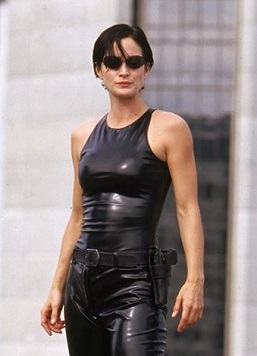
The really clever thing about the Matrix was not that it was imposed on every human’s mind, but that it integrated all inputs from all the human minds into a consistent whole. For instance, if Neo sees a door and opens it, this information has to update the Matrix, and get downloaded into the minds of all the others in the Matrix, such as Trinity, who is waiting on the other side of the door.

Trinity (Matrix)
Trinity (Matrix)

That’s an impressive feat! The updating of the Matrix by all the human minds and the broadcasting of it back to all human minds is a much more impressive task than creating the Matrix in the first place. It is several orders of magnitude harder.

For instance, consider the immersive and interactive virtual realities which we have built and which generally involve the wearing of special gear such as VR helmets and VR gloves and connection to a fast computer which holds the information about the VR “world”.

VR Helmet
VR Helmet

If there are two individuals using the VR “world” at the same time, when Player One raises his hand, the information is fed to the computer and updates the VR “world”. Player Two’s view of the world has to be updated to show the avatar of Player One with his hand raised. If there are even more players all moving around the problem becomes much worse. Each player’s updates need to be fed to all other players (or all the “close” players to each player). The traffic rises exponentially.

But most of the time we don’t need fully immersive virtual reality to achieve a virtual reality. A simple book can do it. A movie can do it, probably even better. A play will do it too. All it requires is the suspension of disbelief, and the ability of the mind to draw pictures and fill in the gaps. It may be apparent to a person who walks in on the performance that Inspector Goole is only an actor, as are the member of the cast. The set is not really the sitting room of the Birlings, but a roughly painted lath and hardboard approximation.

An Inspector Calls
An Inspector Calls

But in the minds of the audience, for the duration of the play, J. B Priestly gives them a view into a different reality. One that is not fully immersive, but which uses the power of the human mind.

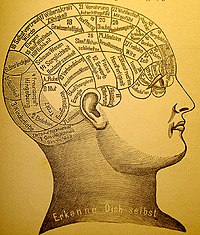
Phrenology
Phrenology


Fake News

News
News

All news is fake to some extent. When a reporter watches some event unfold he or she will have their own in-built and acquired biases, no matter how hard they try to keep them under control. Those who watch or read the news report will also have their own leanings and belief systems. In addition they will tend to view only those sources which fit with their world view.

Although I attempt to show that “news” as such is a severely distorted view of events, and that everyone has their own viewpoint on news events depending on their innate beliefs and acquired biases, this phenomenon is not restricted to news and the events that get reported by the news media. We filter all that we see through the sieve of these beliefs and therefore what we see conforms to our world view and naturally this acts to confirm these beliefs in our minds.

Beliefs Knowledge and Truth

Back in 1991 Jean Baudrillard said that “The Gulf War did not happen“. Of course, he did not mean that the events referred to as “The Gulf War” or “The Liberation of Kuwait” did not happen, but that the events as reported by the US authorities and others were highly edited and presented in a way that but the US and its allies in the best possible light. Baudrillard also contended that the so-called war was not a war in the usual sense as the American troops did not directly engage in conflict with the opposing forces.

I am not arguing on the rights or wrongs of the Gulf War, as that is not the main purpose of my posting here, but that what was reported by the Western media was a distorted view of the events that happened during that war. As I live in a “Western” nation, the view that I and billions of others had was highly tilted in the direction of the United States. If I had been able to see the reporting of the Iraqi media, I am sure that I would have a very different view of the events. Similarly it too would also be highly distorted.

Destroyed tank
Destroyed tank in Gulf War

Neither viewpoint could be considered “right” or “wrong”, as such. Neither is intended to be an accurate record of what actually happened, while the events as reported happened, the interpretation of the events may omit or emphasise some aspect over others. One report may record that several “insurgents” or “terrorists” were killed, while another report of the same event will record that some “freedom fighters” were killed. One report may leave out the fact that “non-combatants” were killed while the other may call them civilians and children.

In recent times though, so-called “fake news” has had some attention in the media itself. Kellyanne Conway used the phrase “alternative facts” to explain the claim that President Trump’s inauguration had the “largest audience to ever witness an inauguration – period – both in person and around the globe”, when less partial estimates put the crowd at a much lower level than it was at the previous three inaugurations. She was widely ridiculed for this, though, to be fair, she maybe meant to say “alternative information” or “incomplete information”, as she has claimed.

Presidential inauguration

Unfortunately for that interpretation, she later referred to something that did not happen. This may again have been a slip of the tongue or incorrect remembrance of the event referred to, but two such slips probably indicates that she should not be doing the job and should let other handle the interaction between the White House and the media. However while the media is focusing on her missteps they are not focusing on the President, and that may be the whole point.

Of course, “alternative facts” or alternative interpretations are not found just in politics, but in many walks of life. How many people have watched a sports match and have been surprised by the interpretation of the way that the match went that appears in the media. One group of supporters may think that the referee was biased in favour of the other team, while the opposition’s supporter might believe that the referee made the right calls. Of course it may depend a great deal on whether or not your team won!

Referee (Massimo Busacca)

However, in spite of all that I have said above, there has been a rise in recent time of true “Fake News” sites. These sites publish news items which are simply not true and the intent of these sites is to deliberately confuse and deceive those who read it. One interesting consequence is that China supported Americans who accused Facebook of spreading false news.

The most controlled regime outside of North Korea pointed out that in the free for all of democratic and liberal societies anyone could set up a web site and promulgate false news and views. In China however any site which published fake news would be hit by the full weight of the state. Of course the issue with this is that any site publishing views opposed by the state would be shut down immediately whether or not the news was actually fake.

The article on Chinese support for the opponents of fake news on Facebook come from the Huffington Post, and as such contains its own biases of course. Therefore the amount of credence that you put on the above article will depend on your political stance. However, it is likely that while the Huff may post satirical articles, it is unlikely, in my opinion, to post out and out fake news. Just use your brains when you read it, and be aware of your own and the site’s political biases.

The same goes for sites which promote miracle cures, or medicines which are outside of the mainstream medical province. Sites which promote anti-abortion, anti-vaccination, anti-fluoride, anti-folic acid, and other fringe beliefs really annoy me because they either ignore medical evidence or call into question by invoking conspiracy theories (“Big Pharma” anyone?) Beliefs like homeopathy and many other alternative medical beliefs belong with beliefs in psychic powers – in the rubbish bin of history.

Rubbish bin
Rubbish bin

Shadows of Reality

Silhouette of a woman in a cave looking at her...
Silhouette of a woman in a cave looking at her own shadow. The image can be used in philosophy (for example in Allegory of the cave) as well as to show psychological principles (for example Borderline personality disorder). (Photo credit: Wikipedia)

Plato’s Allegory of the Cave has people chained in chairs facing a blank wall. All that they can see are the shadows cast on the wall of the cave. When they break free from their chains they discover that reality is not what they believed it to be. In particular, they don’t know what the sun is, having never seen it before. The implication is that we cannot know reality and that we only see shadows of it and must make do with that.

It’s a nice analogy, and presages Kant’s noumenon and phenomenon, where phenomenon is what we sense or perceive and noumenon is what gives rise to phenomenon. Noumenon is fundamentally unknowable through human sensation, and perhaps corresponds to Kant’s “Ding an sich” (thing-in-itself), which I think of as the thing that gives rise to perceived phenomena, but is not and cannot be experienced through the senses or by other means (if such exist).

Plato's Allegory of the Cave by Jan Saenredam,...
Plato’s Allegory of the Cave by Jan Saenredam, according to Cornelis van Haarlem, 1604, Albertina, Vienna (Photo credit: Wikipedia)

The nice thing about allegories and analogies is that you can play around with them. Of course, if you push them too far they fall apart, but that is part of the fun. I’m going to push the Cave Allegory a little bit.

You see, the people in the chairs are not entirely without information about the outside world, aka reality. If the shadows move across the cave wall and they are not moving, then something else is! They won’t know what is causing this phenomenon, but they will notice that it changes in a fixed cycle. The shadows sweep across the wall, only for everything to go dark, and then everything repeats. Let’s call it a day.

If the people in chairs watch for long enough they may determine that there longer cycles. Sometimes the shadows reach higher up the walls, and sometimes they are lower. Let’s call these longer cycles years.

When one raises his hand one of the shadows changes. Some of the shadows are apparently related to the people in the chairs! The person in the chair will most likely come to associate one of the shadows with him/her self, and by extension would assume that some of the other shadows are people also.

He or she might not realise that his/her body is actually seated in a chair, and that the shadow which he/she associates with his/her self are merely outlines. This is a scary thought – if the analogy holds, is it not possible that the same is true of us? We may be seeing shadows and concluding that we are the shadows. Maybe there is a wider reality outside of our perceptual cave and we only need to turn around to see it.

However, just like the people in the cave, if we did wake to a wider reality, we probably would not understand what we are seeing – the people in the cave, when they freed themselves, found the sun to be incomprehensible.

I just realised that in Plato’s original allegory, the light that threw the shadows was not the sun but a fire. I’m going to acknowledge my mistake but let it stand, as it makes my point that the people in the chairs are not completely without clues about the wider world, even if their interpretations are wide of the mark.

Science and what was previously known as ‘natural philosophy’ are attempts to describe the shadows that we see. One of our shadows is the rising and setting of the sun. I’ve described elsewhere that the extreme doubter, the ultimate sceptic, doubts that we will see another sunrise, or rather, cannot see any way that we can know absolutely that we will see another sunrise (leaving aside for arguments sake the possibility that we drop dead – that is not what the issue is).

I don’t actually believe that we are sitting in any conceptual chairs, so we can’t leap out of them to get a wider view of reality in the sense of the allegory, but we do describe the world in terms of what we see, just as those in the cave do. We have no better access to reality than they do. We just have a better class of shadows as it were.

That’s why I find it amusing when the headlines read that scientists have found the Higgs Boson, or that they have detected gravity waves. Oh really? I do not suggest that the Higgs Boson has not been “found” or that gravity waves have not been detected, of course, but no one have ever seen the Boson or watched a gravity wave passing by.

One possible way the Higgs boson might be prod...
One possible way the Higgs boson might be produced at the Large Hadron Collider. Similar images at: http://atlas.web.cern.ch/Atlas/GROUPS/PHYSICS/Conferences/2003/aspen-03_dam.ppt (Photo credit: Wikipedia)

No, what they have in fact done is theorised about these things, designed experiments that should show a blip in a graph or find an anomalous number in the printout of their experiments, and this is what they see. They see the predicted blip or the anomalous number.

These results however based on existing theories. Starting from theories about matter and what it is made of. Atoms, you say? Oh OK, we have experiments (from long ago) which show that matter is made up of atoms. We know a lot about atoms from experiments and theories, but no one has ever seen one or held one in his/her hands. We are sure, though, that matter is basically made up of atoms.

English: Some common molecules and the atoms t...
English: Some common molecules and the atoms that they are made from. (Photo credit: Wikipedia)

However, certain results of these experiments lead to the question of what atoms are made of. So we end up with a (very accurate) theory and experiments which show the existence of sub atomic particles. Some of these theories lead to the theory of the existence of the Higg’s Boson. It is required if some of the theories are correct.

I don’t know the details, but experiments have been done which reportedly appear to show the existence of the Higg’s Boson. What they show is results which are consistent with the stack of theories the top one of which predicts the existence of the Higg’s Boson, and the lower theories predict various behaviours down to the lowest level, those that theorise that matter is fundamentally atomic.

English: Crystal structure of vanadinite. Gray...
English: Crystal structure of vanadinite. Gray: lead atoms, orange: vanadium atoms, green: chlorine atoms, blue: oxygen atoms. (Photo credit: Wikipedia)

Those are our shadows on the wall. We describe what exists by using theories based on what we can see. We see the blip in the graph, and celebrate our theory which is underpinned by other theories down to the lowest and most general theories. However, we can’t get out of our allegorical chairs and turn to actually look at what exists. That’s where the analogy breaks down – there are no chairs and there is no wall. However what we are looking at are shadows.

The Tyranny of the Minority

English: LGBT pride parade in Madrid (Spain) 2...
English: LGBT pride parade in Madrid (Spain) 2008 Español: Desfile del orgullo LGBT en Madrid (España) 2008 (Photo credit: Wikipedia)

It would be nice if everyone could agree what is fair and what is not. In an ideal world a believer in a religion would agree with a believer in another religion that they both have the right to believe as they wish. Instead we find believers in one religion continuously killing believers in another religion.

One of the problems is that the holy books TELL believers to kill, in various dreadful ways, those who do not believe in the holy books, so for a believer the killings are justified. Naturally those being attacked also have a holy book that tells believers to kill non-believers, so we have a religious war.

This book is considered the most important of ...
This book is considered the most important of the Baha’i faith. Kitáb-i-Aqdas (The Most Holy Book, 1873) is, however, NOT translated into Swedish yet, and no layout for the front has been devised or developed. Therefore I have created a dummy cover, a pretended cover, with the intention to illustrate a wikipedia article about a book that eventually will be translated into Swedish. The appearance of the Aqdas in Swedish and its face is completely my own invention. (Photo credit: Wikipedia)

Most religious believers would probably characterise themselves as “moderate” believers and would probably condemn those extremists and countries that practise killings in the name of the religion. They would point out that when the deity instructed believers to kill, it was in specific historical circumstances (such as when followers of another region were trying to wipe them out) and that to apply the injunction in modern times is perverse.

Most of the time, I’d suggest, the average believer would be happy to get along with believers in another region, but is instructed to shun them by a small number of “militant” believers and teachers. The would be moderates are bullied and coerced by the militants into actions which they would not normally contemplate.

English: Street Preacher A Christian street pr...
English: Street Preacher A Christian street preacher by the war memorial at the junction of High Street and Moss Street. (Photo credit: Wikipedia)

Of course, such things don’t just happen in religious societies. When people see their standard of living fall, when they are thrown out of jobs because the jobs are being shipped overseas, or because technology is making their jobs redundant, they may fall under the sway of someone who tells them that their situation can be improved and that person if the best person to achieve that feat.

It helps if the person is charismatic, if the person claims that he/she is going to overturn the traditional ways of doing things, if the person is not part of the establishment, if the person intends to disrupt the current ways of doing things.

What actually happens is that the the person stumbles when he/she tries to shake things up. Some things will change, but far more things will remain the same. Many processes and procedures have reasons for their existence, though it is good to challenge them now and again.

My point is that the directions of our lives are directed and controlled by a small number of people. They may be politicians, or business people, or religious leaders. We may get to choose between them, but as types, politicians are very similar, regardless of party affiliations. Generally they are leaders while the rest of the population are followers, just getting on with their lives, trusting the leaders to lead us in the right direction.

This is a workable model, and has served us well for the most part. Sometimes a maverick comes along to lead us in a direction that in retrospect seems bizarre or counter intuitive, and the unmotivated majority is dragged in a direction that they would not have wanted to go. Sometime a leader is so powerful that he/she does things that give him/her power over the population that they would normally not cede to the leader, and we get a depot or dictator. But dictators die and rarely are they followed by an equally despotic ruler.

We pretty much expect others to, basically, run the country for us, but I’ve noticed in recent years the rise of a new type of tyranny, the tyranny of the minority. A few people, for their own ends, prevent the silent majority from having what they want.

For instance some people refuse to have their children immunised, which means that their children can catch diseases and while the disease may turn out to be mild for their children, their children can then infect smaller children who are too young to be immunised and who may react badly to the disease. Children die in this manner, and this is preventable.

If there was a law that all children hove to be immunised, then these deaths could be prevented and as a bonus the disease could be wiped out. In my opinion anyone who lets their child become a carrier for a disease should be charged with manslaughter as the very least.

Most people are happy with chlorine being added to tap water. It ensures that tap water is safe to drink. However in the developed countries a militant few are campaigning to stop chloride being added to tap water, and in some places they are winning. They are winning by using scare tactics and misinformation.

This anti-chlorine web page is typical and uses both techniques. Firstly it mentions that “chlorine gas was used with deadly effectiveness as a weapon in the First World War.” This is a fact, but it is also a big scare as the concentrations of chlorine gas used in the First World War were massively higher than the trace of chlorine left in tap water by the disinfection process.

English: Using a pool chlorine indicator to te...
English: Using a pool chlorine indicator to test for chlorine gas escaping from a solution of acetic acid and sodium hypochlorite. Note the amount of yellow in the drip suspended in the gas. The same amount of chlorine gas is made with addition of acetic acid as without acetic acid. (Photo credit: Wikipedia)

Secondly, the article mentions that “a recent study conducted in Hartford, Connecticut found that women with breast cancer have 50-60 percent higher levels of organochlorines (chlorine by-products) in their breast tissue than cancer-free women”. This is misdirection as there is no evidence that the organochlorines entered the body through ingested water.

Did I mention that the one person quoted extensively in the article was employed by a filter manufacturer? Shame on Scientific American for publishing an article with such an obvious bias.

English: Water Filter Standing in a field besi...
English: Water Filter Standing in a field beside a minor road. There are some old foundations nearby which suggest that there might have been a building here at one time. See the manufacturer’s plate here 441663. Arran is just visible in the distance. (Photo credit: Wikipedia)

This is one way that the minority tyrannises the majority. They come up with spurious and unscientific arguments that are plausible to many people and persuade the authorities that they will launch lawsuits if the authorities persist in whatever the minority doesn’t like. They demand their “right” to chlorine free water, or bread without folate, or the right to not have their children vaccinated, or similar.

This denies the rights of the majority, who either want chlorine, folate or don’t want disease carriers giving whooping cough or measles to very small children, or more likely don’t care one way or the other, but accept that what the authorities are trying to do is beneficial. Which stinks, in many ways.

SCHOOL CHILDREN TESTING WATER FOR PURITY - NAR...
SCHOOL CHILDREN TESTING WATER FOR PURITY – NARA – 543915 (Photo credit: Wikipedia)

(I add illustrations to my blogs, not because I agree with the points that the illustrations may be making but because they are related in some way to my topic. Please be aware that the words are the important thing, and the illustrations are only decoration and may not reflect my point of view.)

What is philosophy for?

English: A cropped version of Antonio Ciseri's...
English: A cropped version of Antonio Ciseri’s depiction of Pontius Pilate presenting a scourged Christ to the people. See: Eccehomo1.jpg for full version. (Photo credit: Wikipedia)

What is truth?” Pilate asked of Jesus. Jesus had just asserted that he had come into the world to testify to the truth. Pilate used this to close off the conversation, as he knew that truth is exceedingly difficult to define, and that one man’s truth is another man’s falsehood.

We live in a world where politicians cite “alternative facts” to defend themselves when their statements are questioned. Hmm. This seems like a step on the road to fluid “truth” of the authorities in the book “1984”, but is more likely to be a scrambling attempt of the establishment to defend itself.

English: Donald Trump at a press conference an...
English: Donald Trump at a press conference announcing David Blaine’s latest feat in New York City at the Trump Tower. (Photo credit: Wikipedia)

Philosophy is a means of addressing Pilate’s question and many many others that do not fall into the realm of science or of mathematics. What is real and can we know it? Can we know anything? Is there a God, and if so, why does he permit evil into His universe?

These are questions which fall into the realm of philosophy, as do others about the meaning of science and mathematics, and questions of ethics and morals.

Raphael's "School of Athens"
Raphael’s “School of Athens” (Photo credit: Wikipedia)

Almost by definition, philosophical questions cannot be answered. The “What is truth?” one is a prime example. Will the sun rise tomorrow morning? Did the sun rise this morning? Is the sun risen at the moment? All of these questions can be pragmatically answered “Yes!” but probe a little deeper and the answer can appear less definite.

After all, we might remember the sun coming up this morning, but what if these are false memories. Or maybe what we see is a mere “virtual reality” fed directly to our brains. And just because the sun rose this morning, and the morning before, and so on, doesn’t mean that it will rise tomorrow. Maybe there is some as yet unknown physical event that will cause it not to rise. Maybe cause and effect are illusions and anything can happen.

Dark clouds below light ones at sun rise
Dark clouds below light ones at sun rise (Photo credit: Wikipedia)

We nowadays separate science and philosophy, but this was not always so, and science was once termed “natural philosophy“. The ancient Greeks would have been termed philosophers, but they dealt with such questions as what everything is made of. Some of their suggestions would seem quaint today, but they did suggest the concept of atoms.

At the time there was no way that any of their hypotheses, such as the atomic hypothesis, could be tested and some of them even thought that testing them was a bad idea. They meta-hypothesised that everything could be deduced simply by thought. They needed no experiments!

English: Engraving depicting the Greek philoso...
English: Engraving depicting the Greek philosophers Hipparchia of Maroneia and Crates of Thebes. From the book Proefsteen van de Trou-ringh (Touchstone of the Wedding Ring) written by Jacob Cats. Hipparchia and Crates are depicted wearing 17th-century clothing. In the scene depicted, Crates is trying to dissuade Hipparchia from her affections for him by pointing to his head to show how ugly he is. (Photo credit: Wikipedia)

Atomic theory is now definitely in the realm of science. Biology too, and mathematics, though maths now has its own realm, apart from science. Anything that is in the realms of philosophy may find its way to the realm of science or maths.

What about things like ethics and morality? Surely these won’t ever move to the field of science? Well, maybe. I wouldn’t bet on it, though it may be a long time before there is an ethical Newton, a morality Einstein.

Sir Isaac Newton
Sir Isaac Newton (Photo credit: Wikipedia)

Science has made great grabs in recent times for the fields of behaviourism and in studies of human consciousness. These have been until recently the domain of philosophers alone. In a way, it might be better if we did not understand the way that people and societies and human consciousness work, because understanding things is the first step to control things. Let’s hope that the ethical Newton and the morality Einstein arrive before we know how to scientifically control people and societies.

Philosophic pondering on the way things are tend to be wild and diverse. We tend to think of such hypotheses as the multiple worlds theories as new and cutting edge, but Professor Pangloss in Voltaire’s 1759 book “Candide” proclaims that “all is for the best” in this “best of all possible worlds”, which implies that there are, or could be, other worlds where things might be different.

This engraving is from Voltaire's Candide: it ...
This engraving is from Voltaire’s Candide: it depicts the scene where Candide and Cacambo see two monkeys apparently attacking two nude women. Candide kills the monkeys, then comes to believe the monkeys and women were actually lovers. The image may have been accompanied by the caption, “The two wanderers heard a few little cries”. (Photo credit: Wikipedia)

Of course, since there was no real divide between philosophy and science and maths in the early days, we can’t really say that science has taken over these philosophical topics, more that they have been hived off as science split from philosophy. Nevertheless, science is probing topics, such as the nature of reality, which definitely have a philosophical flavour to them. For instance, is the cat alive or dead, or maybe both?

The philosopher Zeno of Elea introduced some paradoxes which even today exercise the minds of philosophers and mathematicians. Basically, Zeno poses the question : How does one (or an arrow for that matter) move from point A to point B? There’s plenty on the Internet about these paradoxes, so I’m not going into them in detail, but essential the core of the problem is how to sum an infinite number of increasingly small intervals of space or time without the result becoming infinite.

English: The Zeno Paradox in portuguese. Deriv...
English: The Zeno Paradox in portuguese. Derivate work from Zeno Paradox de.PNG Português do Brasil: O Paradoxo de Zenão em português. Trabalho derivado de Zeno Paradox de.PNG. (Photo credit: Wikipedia)

Obviously Achilles does overtake the tortoise, the arrow does reach its target and it is possible to travel from A to B, but some people still think that science and maths have not yet solved these paradoxes, and there’s still a sliver of a problem for the philosophers. Arguments these days resolve more around whether the paradoxes have been resolved and therefore we can move from A to B, or are still in the realm of philosophers and therefore we cannot move from A to B!

When the Greek philosophers were thinking about atoms and what things are made of, there was no way to test the various theories out. When they were developing theories about the stars and other astronomical objects they had no way to test the theories out. However, eventually the “natural philosophers” like Newton, laid the basis for astronomical theories, and early chemists like Lavoisier laid the basis for the science of chemistry, which made use of the theory of atoms.

A scan of the first page of John Dalton's &quo...
A scan of the first page of John Dalton’s “A New System of Chemical Philosophy”, published in 1808. Please do not “update” the list with modern spellings. This is a historic list and the old spellings are intentional. Yes, it’s “carbone”, not “carbon”. (Photo credit: Wikipedia)

Philosophy exists because people like to ask questions like “What is beyond the end of the Universe?” or “If God made everything, who or what made God?” Or “How long is the hypotenuse of a right angled triangle with sides on one cm or one inch?” Or “Why is the ratio of the circumference to the diameter of a circle a fixed number and what is it?”

Philosophy exists to postulate parallel Universes, massive balls of fusing gas, and terrestrial planets complete with humans or maybe little green men. Its job is to wonder what lies beyond the bounds of science and what makes humans behave the way that they do, and whether or not God is dead. It is to ask the impossible questions. It is science’s job to prize these issues from the hands of the philosophers and answer them.


Getting the Wind Up

A plant disease called “myrtle rust” has appeared in New Zealand, apparently after the spores have been blown across the Tasman sea from Australia. That’s over four thousand miles. The prevailing winds are from Australia to New Zealand and the cyclones and storms that hit New Zealand are formed in or off the coast of Australia, or further north in the Tropics, or further south in the Southern ocean.

In these areas low pressure areas form and consequently winds blow from the surrounding areas of slightly higher pressure into the lower pressure area and start to swirl clockwise. The clockwise movement is the result of the Coriolis effect, which is difficult to explain, but relates to the fact that when an object moves north or south on the rotating Earth, it moves closer to or further from the Earth’s axis of rotation.

Combination of Image:Hurricane isabel2 2003.jp...
Combination of Image:Hurricane isabel2 2003.jpg and Image:Coriolis effect10.png to illustrate the Coriolis force better. (Photo credit: Wikipedia)

A low pressure area sucks in air and it is forced up in the centre where it cools and forms clouds and rain. As this process continues, the pressure at the centre of the low drops and the spiral of winds gets tighter and, if the low is very deep, more destructive. I’m not sure why a low deepens, when one would think that all the in-rushing air would fill the low, and the few explanations that I have read have not convinced me.

On a larger scale, bands of winds circle the Earth, with winds coming from the west in the south and the north of the two hemispheres, with prevailing easterly winds nearer the Equator in both hemispheres. The sometimes destructive cyclones and anticyclones are mere ripples in this larger flow.

English: Map of the North Pacific Subtropical ...
English: Map of the North Pacific Subtropical Convergence Zone (STCZ) within the North Pacific Gyre. Also the location of the Great Pacific Garbage Patch. (Photo credit: Wikipedia)

Even in quiet wind conditions there is usually a breeze, often stimulated by local conditions, such a large lake or sea. All that is required for a breeze is a small differential in temperature, with local heating expanding the air or local cooling causing it to contract.

The sea will absorb heat from the sun more slowly than the land, and the air over the land is therefore warmer and becomes less dense. Consequently a breeze develops flowing from the sea to the land. The reverse occurs at night, when the land cools more quickly than the sea. Such conditions are however very local and are often unnoticeable and overridden by cyclonic and anticyclonic wind conditions.

The formation of breezes. Diagram A) Sea breez...
The formation of breezes. Diagram A) Sea breeze B) Land breeze Français : Formation des brises. Diagramme A) Brise de mer B) Brise de terre (Photo credit: Wikipedia)

Within a large weather system, such as a cyclonic system, local conditions may affect the wind directions and strength. Often the wind direction and strength varies widely locally, giving rise to conditions that are described as “blustery”. While such conditions may be good for drying laundry, they making sailing a difficult pastime. Sailing races can be won or lost depending on whether or not the sailors catch the good air or fall into a pocket of stale air.

The strength of the wind obviously varies tremendously. At the one end of the scale a breeze may cause a flag to limply stir, while at the other end of the scale, a really large storm may uproot trees and destroy houses. In some parts of the world tornadoes may form when weather conditions are right and may sweep destructively over the land, ripping apart anything that stands in their way.

Large, violent tornadoes can cause catastrophi...
Large, violent tornadoes can cause catastrophic damage when striking populated areas. (Photo credit: Wikipedia)

There is energy in the wind, and efforts are being made to economically harvest this energy to reduce our reliance on fossil fuels. Such fuels are not infinite, and we will sometime or other run out of them. It may be that we have enough fossil fuels to last centuries, but getting at them involves the disruption of mining, and as they are used up, mining will become even more disruptive than it is now. Mining even small amounts will become very expensive.

It makes sense to develop machines to harvest wind power, and the signs are that this is becoming economically more competitive. At one time, before petrol engines became common, the only ways to power transport were wind and steam, and it may be that petrol and other fossil fuelled engines may only have a relatively short time span of usefulness, maybe only a century or so.

Miners digging coal
Miners digging coal (Photo credit: Wikipedia)

We also use fossil fuels for our plastics. Almost everything in our modern world has a large proportion of plastics in it, sourced almost entirely from oil. It remains to be seen if we could replace our need for fossil resources from renewable resources.

Hay fever suffers may curse the wind as it blows pollen up their noses and into their respiratory systems, but many plants rely on the wind to propagate themselves. A case in point is the myrtle rust I mentioned at the start of this post. Plant pollen can travel thousands of kilometres and fall all I know can circle the Earth. It’s an efficient way of spreading the reproductive material, but its a really inefficient way of getting the reproductive material to a member of the species of the opposite gender.

Pollen from a variety of common plants: sunflo...
Pollen from a variety of common plants: sunflower (Helianthus annuus), morning glory Ipomoea purpurea, hollyhock (Sildalcea malviflora), lily (Lilium auratum), primrose (Oenothera fruticosa) and castor bean (Ricinus communis). The image is magnified some x500, so the bean shaped grain in the bottom left corner is about 50 μm long. (Photo credit: Wikipedia)

Obviously it works best where the plants are grouped together, and it works even better if the plants are hermaphrodites, but it does work (occasionally) when the plants are far apart. This mechanism for reproduction probably arose a long time ago before plants invaded the land. plants growing in the sea, and many animals too, just broadcast their gametes into the sea and trust in at least some of them finding other gametes so that they can grow into mature individuals. (Caution: It’s complicated!)

We often hear the sound of wind. It can be caused by wind blowing through trees or other plants. It can be caused by wind blowing through gaps in our houses, mainly doors and windows. We build our houses to protect us from the wind and other aspects of the weather, as a sort of synthetic cave, I guess.

Wind chimes. {| align="center" style...
Wind chimes. {| align=”center” style=”width:80%; background-color:#f7f8ff; border:2px solid #8888aa; padding:5px;” |- | Camera and Exposure Details: Camera: Canon PowerShot S3 IS Lens: Canon 1:2.7-3.5 USM 12x Zoom Lens Exposure: mm (mm in 35mm equivalent) f/4 @ 1/125 s. |}Category:Taken with Canon PowerShot S3 IS (Photo credit: Wikipedia)

We can even make music (well, musical sounds) using the wind. Many people have “wind chimes” which are metallic objects strung on wires arranged so that the wind can bash them together, making a chiming noise. Some people like them, and others dislike them (I fall into the second camp).

Strings can be placed on a sounding board and used to produce musical sounds, and such “Aeolian Harps” were once as common as wind chimes. An accidental Aeolian harp can be heard in the sound that power and telephone lines make when a strong wind blows.

English: Aeolian harp at Tre-Ysgawen Hall This...
English: Aeolian harp at Tre-Ysgawen Hall This aeolian harp is in the grounds of Tre-Ysgawen Hall. When the wind comes from a particular direction it ‘plays’ the harp and ethereal musical sounds are produced. (Photo credit: Wikipedia)

Time for this post about wind to wind down now, if you will excuse the pun.

This picture from a NASA study on wingtip vort...
This picture from a NASA study on wingtip vortices qualitatively illustrates the wake turbulence. (Photo credit: Wikipedia)

Waiting on God

Older woman with straw hat relaxing, seen in E...
Older woman with straw hat relaxing, seen in England 1976 (Photo credit: Wikipedia)

I hate getting older. I hate the sensation of slowly losing my faculties. For example, I’m proud of my vocabulary, but these days I sometimes cannot bring a particular word. Or another word slips in in its place.

For example, above I wrote “facilities” first, and then realised that I meant “faculties”. Words which I would have written without even thinking suddenly are suddenly tricky to spell. “Thought”! Is that “ght” or “gth”? I used to be able to write whole paragraph without seeing the wiggly red line even once.

Spelling
Spelling (Photo credit: Wikipedia)

Even worse, when I’m talking to someone and I pause to collect my thoughts and work out what I am going to say next, they try to finish my sentence! That is incredibly annoying, but people seem to think that it is funny. The only time that someone finishing someone else’s sentences was in a sketch by Ronnie Barker and Ronnie Corbett (“You Can Say That Again“).

One’s mental faculties reach a peak at sometime between 20 and 40. Babies are born with immature brains and our early life consists of us learning how to get on in life and at the same time allowing our brains to mature. From then on our brains start to slowly fade over time.

Our memories and our ability to access them slowly decline. I’ve always been quite good at quizzes and I hope and believe that I am still good at them. However I do know that I can’t access answers to quiz questions as fast as I used to be able to do, and quite often I find that I can’t recall an answer at all, only to realise, once the answer has been given, that I knew it all the time. I couldn’t recall it at all, but it was there, in my brain, but inaccessible to me.

The abilities that we have built up over the years after we became physically and mentally mature by offsetting the start of the loss of brain cells with experience start to fade as more and more brain cells die and lesser used abilities start to be lost. If you haven’t played golf in a while or ice skated since your twenties, if you try to take up the sport again, you will have to relearn it.

English: ice skating at bondi beach
English: ice skating at bondi beach (Photo credit: Wikipedia)

Since the circuits have not faded totally away you may achieve some level of competence fairly quickly, but you will never reach the height of ability that you had in your twenties. Even if you don’t give up a sport your abilities will fade, just not so quickly as if you had taken a break from the sport.

I was trying to make this post about me but I’ve drifted into generalisations. I’ve not retried a sport that I was good at, as I was never that good at a sport, but I have tried ice skating and roller skating after not having done it for a while, and I was able to manage it pretty well and pretty quickly too, so I think that I can vouch for my statement above.

Tre personer som åker långfärdsskridsko
Tre personer som åker långfärdsskridsko (Photo credit: Wikipedia)

One’s senses also decline with age. In particular, eyesight fades noticeably for most people. Things like cataracts and other conditions can only partially be mitigated. Spectacles tend to get stronger and the muscles that focus the eye deteriorate as other muscles do.

I’ve worn glasses since I was a teenager, that is, for most of my life. I can vouch for the fact that my eyesight has got worse over the ensuing decades, though I can see most things fairly clearly. I can’t easily read the small typefaces that are usually used for the ubiquitous “Terms and Conditions” found with appliances and contracts, but I suspect that the type has also diminished over the years and that the firms that supply the product or commodity hope that no one read them anyway.

The other senses also fade as the sensors and nerves age. Things taste blander, smell less fragrant, touch becomes less sensitive, and hearing tends to fade too. I’m fortunate that my hearing has not, as yet, been severely impacted, but I do suffer from tinnitus intermittently.

Taste is an awkward one – as one’s sense of taste declines, so, potentially, does one’s ability to digest food. The complex mechanism that is our digestive system of develops problems as we age, meaning that we may need to switch to less spicy foods, and since the sense of taste is declining, everything may taste even blander!

Chilli pepper 1
Chilli pepper 1 (Photo credit: Wikipedia)

Joints wear as we get older. So do the ligaments that connect to them. Muscles become less effective. Balance, which depends on certain nerves in the ear, may be affected by the general decline of the nervous system. As I said above, my hearing is still pretty good and maybe as a consequence my balance is still pretty good, fortunately.

My joints do give me trouble some of the time, especially my knees. That’s something of a family joke as my father has had knee problems. He has had both knee joints replaced. My sisters also have issues with the knee joints and so do my daughters. We’ve all inherited the family knees, apparently.

Capsule of right knee-joint (distended). Later...
Capsule of right knee-joint (distended). Lateral aspect. (Photo credit: Wikipedia)

People are living longer than ever before, but this is for many a mixed blessing. My father and mother are both still alive at more than 90. Fortunately they are still both pretty well, and although they do have some problems, both mental and physical. Others are not so fortunate and may spend years or even decades crippled by arthritis or a stroke, or severely constrained by some condition or other.

My biggest nightmare, as I grow older, is that my mind will fade away, or I suffer from some long term debilitating illness. I had a heart attack many years ago and in many ways it would be preferable, at least to me, for me to die suddenly from another one. Of course it would be traumatic for my family, but I’d hope that they would know me well enough to realise that I would prefer it that way.

English: Intubation - placement of endotrachea...
English: Intubation – placement of endotracheal tube with a laryngoscope to a doll in an out-of-hospital -exercise. (Photo credit: Wikipedia)