Virtual Reality


Embed from Getty Images

Back in 1999 I was just finishing my Masters degree at Victoria University of Wellington. I needed a subject for my research paper and I chose what was then a hot topic, Virtual Reality (VR). At the time, the computing resources that were available to most people were, by today’s standards pretty limited.

17 years ago we measured RAM in megabytes, and disk space in gigabytes. The Internet was not as pervasive as it is today, and most people, if they accessed the Internet at all, used dial up modems. Broadband was for most people, still in their future. As were smartphones and all the technology that we immerse ourselves in today.

Exploded view of a personal computer
Exploded view of a personal computer (Photo credit: Wikipedia)

As could be imagined, this limited the effectiveness of VR. If you were trying to set up a VR session between two geographically separated places, then the VR experience could be somewhat limited by the low resolution, the speed of updates of the views that the users experienced, and the lags caused by the (relatively) slow connections.

Nevertheless, research was taking place, and Head Mounted Displays (HMDs) and VR gloves were researched and developed. The HMDs provided the user with displays of the virtual world around him/her, and the gloves provided the tactile element to some extent.

English: zSight HMD by Sensics, Inc.
English: zSight HMD by Sensics, Inc. (Photo credit: Wikipedia)

These devices have their current descendants of course, though more is heard of the HMDs than the gloves. The HMDs range from the highly developed devices like the Oculus Rift right down to cheap devices like Google Cardboard which literally that, a head mounted device consisting of a cardboard body and a cellphone. The cellphone’s screen is divided into two and different images are provided to each eye for the 3-Dimensional effect.

It was evident, back in 1999 when I wrote my paper that VR was a technology looking for an application, and it still is. Some TVs have been made which incorporate 3D technology, but the production of these appears to have tailed off almost completely. Apparently the added ability to experience movies in 3D which involved wearing special headsets, wasn’t enough to offset the necessity to wear the headsets.


Embed from Getty Images

People just used their imaginations when immersed in a program or movie and didn’t feel that they needed the extra dimension, and the headset added a barrier which prevented experience of shared movie watching that forms at least part of the entertainment value of watching movies with friends and families.

My paper was about diffusion of VR techniques into everyday life, and it mostly missed the point I think in retrospect (though the paper did help me get the degree!)  My paper used a Delphi Technique for the research. This technique involves posing a series of question on the research topic to a number of specialists in the field. Their answers are then summarised and passed back to the whole panel. Any subsequent comments are then also summarised.

English: Temple of Apollo in Delphi
English: Temple of Apollo in Delphi (Photo credit: Wikipedia)

Obviously as workers in the field my panel was positive about VR’s then prospects, as you would expect. They however did sounds some notes of caution, which proved to be well founded. I’m not going to do a critique of my paper and the panel’s findings, but I will touch on them.

Specifically, they mentioned that my questions were all about fully immersive VR, which is basically what I’ve been talking about above, the HMD thing. Augmented VR, where our view of the world in not (fully) obstructed by the technology, but the technology enhances our view of the world is used much more in practise, and was when I wrote my paper too.

Augmented reality - heads up display concept
Augmented reality – heads up display concept (Photo credit: Wikipedia)

Augmented VR is things like Head Up Displays (HUDs) and Google Glass where information is added to the user’s field of view, providing him/her with extra information about the world around him/her is much more common. HUDs are common in planes and the like where the operator cannot spare the time to go and look up important information so the information is projected into his field of view. Google Glass was similar but allowed the user to feed back or request information, but unfortunately this did not really catch on and was dropped.


Embed from Getty Images

I mentioned in my questions to my panel that maybe the speed of the Internet was a barrier to the introduction of VR into everyday life. The panel were mostly sympathetic to this viewpoint, but in summary thought that fibre, which was on the horizon would significantly reduce this barrier to the everyday adoption of VR techniques. In fact people do not use the extra bandwidth for VR (except in a way that I will touch on in a minute), but for other things, like streaming TV shows and downloading music.

English: Screenshot of NcFTP downloading a fil...
English: Screenshot of NcFTP downloading a file Category:Screenshots of Linux software (Photo credit: Wikipedia)

As I envisaged it, a typical VR setup would consist of someone in, say, London, with VR set interacting over the Internet with someone in, say, Tokyo who also has a VR set. They could shake each other’s hand, and view and discuss three dimensional objects in real time, regardless of whether the object was in London or Tokyo. Although I had not considered it at the time, a 3D printer could duplicate a 3D object in the other location, if required.

This has not happened. Teleconferences are stubbornly 2D, and there is no call for a third dimension. Some people, myself included, would not miss the 2D visual aspect at all, would quite happily drop back to voice only!

English: Washington, DC, August, 14, 2007 -- T...
English: Washington, DC, August, 14, 2007 — This FEMA video teleconference with the FEMA regional directors, state Emergency Operations Centers and Federal partners concerns Hurricane Flossie which is expected to pass just south of the island of Hawaii and Tropical Storm Dean which is building in the Atlantic and moving west toward the Caribbean Sea. FEMA’s National Response and Coordination Center (NRCC) is activated at Level 2. FEMA/Bill Koplitz (Photo credit: Wikipedia)

In one respect, though, VR has come and has taken over our lives without us realising. When we interact with our smartphones, texting, sending photos, emails and so on, in real time, we are immersing ourselves in a new sort of VR. When we are chatting about something and someone gets the cellphone out to google the Internet to check or look something up, we are delving into a new Virtual Reality that we could not have envisaged way back in 1999.


Embed from Getty Images

So when I look back at my paper from that era, I could easily update it and make relevant to the current era, but only in the respect of that limited view of VR. That has not really eventuated, and most likely will have limited application (remote appendectomy anyone?), but it could be considered that facebook/twitter/google/gmail/dropbox and all the other tools that we use on our smartphones has opened up a different alternate Virtual Reality that crept up on us while we were not watching.

facebook engancha
facebook engancha (Photo credit: Wikipedia)

Imagine this….

Flying Swan
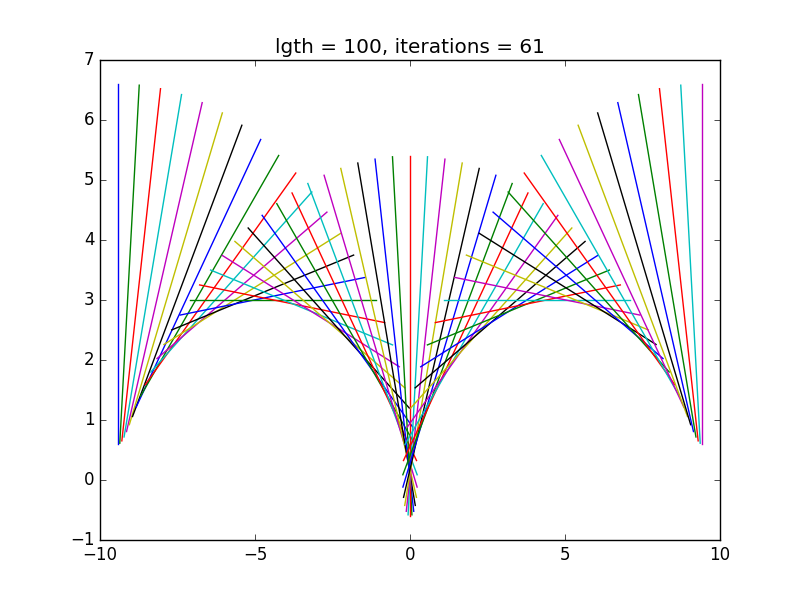
Drawn using Python and Matplotlib. This picture is serendipitous and not intended.

[Grr! While I finished my previous post, I didn’t publish it. Darn it.]

Since I’ve been playing around with computer generated images recently, my thoughts turned to how we see images. When you look at a computer or television screen these days, you are looking at a matrix of pixels. A pixel can be thought of as a very tiny point of light, or a location that can be switched on and off very rapidly.

Pixels are small. There’s 1920 across my screen at the current resolution, and while I can just about see the individual pixels if I look up close, they are small. To get the same resolution with an array of 5cm light bulbs, the screen would need to be 96 metres in size! You’d probably want to sit at about 150m from the screen to watch it.

A closeup of pixels.
A closeup of pixels. (Photo credit: Wikipedia)

The actual size of a pixel is a complicated matter, and depends on the resolution setting of your screen. However, the rating of a camera sensor is a different matter entirely. When I started looking into this, I thought that I understood it, but I discovered that I didn’t.

What complicates things as regards camera sensor resolutions is that typically a camera will store an image as a JPG/JPEG image file, though some will save the image as a RAW image file. The JPG format is “lossy” so some information is lost in the process (though typically not much). RAW image file are minimally processed from the sensor data so contain as much information about what the sensor sees as is possible. Naturally they are larger than JPG format images.


Embed from Getty Images

When we look at a screen we don’t see an array of dots. We pretty much see a smooth image. If the resolution is low, we might consider the image to be grainy, or fuzzy, but we don’t actually “see” the individual pixels as such, unless we specifically look closely. This is because the brain does a lot of processing of an image before we “see” it.

I’ve used the scare quotes around the word “see”, because seeing is very much a mental process. The brain cells extend right out to the eye, with the nerves from the eye being connected directly into the brain.

Schematic diagram of the human eye in greek.
Schematic diagram of the human eye in greek. (Photo credit: Wikipedia)

The eye, much like a camera, consists of a hole to let in the light, a lens to focus it, and sensor at the back of the eye to capture the image. Apparently the measured resolution of the eye is 576 megapixels, but the eye has a number of tricks to improve its apparent resolution. Firstly, we have two eyes and the slightly different images are used to deduce detail that one eye alone will not resolve. Secondly, the eye moves slightly and this also enables it to deduce more detail than would be apparent otherwise.

That said, the eye is not made of plastic metal and glass. It is essentially a ball of jelly, mostly opaque but with a transparent window in it. The size of the window or pupil is controlled by small muscles which contract or expand the size of the pupil depending on the light level (and other factors, such as excitement).

English: A close up of the human eye. Notice t...
English: A close up of the human eye. Notice the reflection of the photographer. (Photo credit: Wikipedia)

The light is focused on to an area at the back of the eye, which is obviously not flat, but curved. Most the focusing is done by the cornea, the outermost layer of the eye, but the lens is fine tuned by muscles which stretch and relax the lens as necessary. This doesn’t on the face of it seem as accurate as a mechanical focusing system.

In addition to these factors, human eyes are prone to various issues where the eye cannot focus properly, such as myopia (short sightedness) or hyperopia (long sightedness) and similar issues. In addition the jelly that forms the bulk of the eye is not completely transparent, with “floaters” obstructing vision. Cataracts may cloud the front of the cornea, blurring vision.

English: Artist's impression of appearance of ...
English: Artist’s impression of appearance of ocular floaters. (Photo credit: Wikipedia)

When all this is considered, it’s amazing that our vision works as well as it does. One of the reasons that it does so well is, as I mentioned above, the amazing processing that our brains. Interestingly, what it works with is the rods and cones at the back of the eye, which may or may not be excited by light falling on them. This in not exactly digital data, since the associated nerve cells may react when the state of the receptor changes, but it is close.

It is unclear how images are stored in the brain as memories. One thing is for sure, and that is that it is not possible to dissect the brain and locate the image anywhere in the brain. Instead an image is stored, as it is in a computer, as a pattern. I suspect that the location of the pattern may be variable, just as a file in a computer may move as files are moved about.

Expanded version, with explanations.
Expanded version, with explanations. (Photo credit: Wikipedia)

The mind processes images after the raw data is captured by the eye and any gaps (caused by, for example, blood vessels in the eye blocking the light). This is why, most of the time, we don’t notice floaters, as the mind edits them out. The mind also uses the little movements of the eye to refine information that the mind uses to present the image to our “mind’s eye“. The two eyes, and the difference between the images on the backs of them also helps to build up the image.

It seems likely to me that memories that come in the form of images are not raw images, but are memories of the image that appears in the mind’s eye. If it were otherwise the image would lacking the edits that are applied to the raw images. If I think of an image that I remember, I find that it is embedded in a narrative.

Narrative frieze.
Narrative frieze. (Photo credit: Wikipedia)

That is, it doesn’t just appear, but appears in a context. For instance, if I recall an image of a particular horse race, I remember it as a radio or television commentary on the race. Obviously, I don’t know if others remember images in a similar way, but I suspect that images stored in the brain are not stored in isolation, like computer files, but as part of a narrative. That narrative may or may not relate to the occasion when the image was acquired. Indeed the narrative may be a total fiction and probably exists so that the mental image may be easily retrieved.

One bubble memory track and loop
One bubble memory track and loop (Photo credit: Wikipedia)


How to change the world

English: Riot police in Washington, D.C. takin...
English: Riot police in Washington, D.C. taking a lunch break at the Old Post Office during International Monetary Fund protests. Français : Des membres de la police anti-émeute font une pause-déjeuner à Washington durant des manifestations contre le Fonds monétaire international. (Photo credit: Wikipedia)

Why do people think that petitions and protests can change the world? Well, they can but only if many, many other factors also fall in line. I’m thinking here of the protests about Post Offices or Bank Branches that are shut down when the demand for the services falls away.

If demand is falling, then the branches will not be financial profitable, and the bank or Post Office will be very unlikely to keep them open. Banks and the Post Office and not charitable institutions and have to make a profit for their shareholders, and they would not be able to do that if the branches are unprofitable.

English: ANZ Bank branch in Temora, New South ...
English: ANZ Bank branch in Temora, New South Wales (Photo credit: Wikipedia)

In the same way cash strapped public services (such as the Police) are also being forced to close public offices. While the Police closures mentioned in the linked article cite the danger to the volunteers who man the offices, and the closures are supposed to be temporary, many people believe that the real reason is costs. In fact the Police management claim that using modern technology police of the street can be more mobile and do not need to use the offices so frequently.

Whatever the true reasons, protest and petitions are unlikely to have any effect. If changes are for operational or financial reasons, then unless the reasons change, the changes are very unlikely to be reversed. Any opposition is going to be ineffective.

English: Graph of profits made by BAIR company...
English: Graph of profits made by BAIR company from 1892 to 1903. The values are taken from page 131 of “The World Abir Made: The Margina-Lopori Basin, 1885-1903” by Robert Harms from Issue 12 of the Journal of African Economic History of 1983. The first two years are averages of a value given for a two year period. The black line represents a general trend described by Harms for years with no data. (Photo credit: Wikipedia)

Sometimes a protest or petition can be effective, but that requires that a lot of things go the the way of the protesters. In this country the Mixed Member Proportional election system was selected in 1996 to be the method of electing Parliament.

There were two main factors that enabled the selection of MMP as the election system. Firstly, there was a feeling that a change needed to occur, as many people thought that with the then existing system a vote for a losing candidate was a wasted vote, and that minor parties were unable to make an impression on Parliament – frequently a minor party would get 10 to 15% of the vote, but would get maybe only one or two seats out of 100.

English: Election signs for the major parties ...
English: Election signs for the major parties plus a sign supporting the MMP side in the referendum in the constituency of Ottawa South. Ontario premier Dalton McGuinty is the Liberal candidate there. (Photo credit: Wikipedia)

In the two previous elections, one party, Labour, had secured more than 50% of the vote, but had lost out to National, because they had won more seats. Naturally the Labour voters were incensed by this seeming injustice.

The second big factor was a small and vociferous group of people who felt that it was necessary to change and the system and who were able to use their political connections to influence media and political commentators to promote their favoured system, MMP. It also helped that they had no effective opposition, as the opposition was politically naive and unorganised.

Crowds outside the National Assembly, with sig...
Crowds outside the National Assembly, with signs calling for the resignation of Prime Minister Said Musa. (Photo credit: Wikipedia)

Dubious tactics were alleged (and probably were used, on both sides), and well before it came to a vote in a referendum on the subject, it was almost a foregone conclusion. Actually the result was closer than many people predicted, though in retrospect that was probably just due to political inertia, and many people voted for the status quo of the time, rather than the new and untested alternative.

There were no real financial or operational reasons for not changing the voting system. If, say, it made it a lot more expensive to run an election, then the voting system would not have been changed, and if it made it a lot more complicated to vote (as did one of the competing systems, STV), then it would not have been changed.


Embed from Getty Images

Similarly, if the proponents of the new system had been disorganised, disunited, or politically naive, then they would not have stood a chance. They would have failed at the first hurdle, which was getting a Royal Commission to look into the options set up.

As an example of how it can go wrong, fairly recently a referendum was held to decide if we were going to keep our existing flag or get a new one. There was no groundswell of dissatisfaction with the existing flag, except for the niggle that it kept getting mistaken for the Australia flag and vice versa.

English: Flag of New Zealand. Taken outside th...
English: Flag of New Zealand. Taken outside the Beehive, Wellington Deutsch: Flagge Neuseelands. Aufgenommen vor dem Beehive, Wellington. (Photo credit: Wikipedia)

There was no politically inspired organisation to push for a new flag and there was no obvious contender for a new flag. Therefore, there was no momentum going into the referendum for a change in the flag. So the referendum came down to firstly choosing between some mediocre choices for a replacement and then a fight off between the existing flag and the alternative.

An interesting point is that the “winning” alternative was not the one that got the most votes at the first count. As the selection was done on the STV system, as flags were removed from the list and the votes were reassigned, the second highest polling flag in the first round gained enough votes to overtake the highest polling flag.


Embed from Getty Images

This demonstrates a deficiency of the STV system, though its supporters would claim that it was an advantage! In any case the alternative flag lost out to the existing flag by a fairly wide margin.

As an example of how to change the world, this debate and referendum was a dud. There was just not enough political nous on the side of those who would change the flag for it to become a reality. In addition, while the change was sponsored by the Prime Minister, it was not adopted by his party in a comprehensive way. It gave the impression that it was a pet project of the Prime Minister, and was not fully endorsed by his party.

So that is brief and by no means exhaustive look at how to change the world. It starts with a small number of dedicated and driven people and builds from there. It doesn’t matter if the ideas are actually good or bad, because if you can get the ball rolling, people will fight to sign up for the cause.

English: Thetford Post Office Centrally locate...
English: Thetford Post Office Centrally located dedicated Post Office at the top of King street. (Photo credit: Wikipedia)

If you can’t build the support, well, then your aims and ideals will go nowhere. That’s why little protests about Post Offices and Bank Branches will never win. They can’t build the momentum.

Enormous snowball made in South Park in a snow...
Enormous snowball made in South Park in a snow-covered Oxford (Photo credit: Wikipedia)

Trivia


Embed from Getty Images


Most people know that bees make cells which are hexagonal to store their honey. As it says in the article, this is the most economical structure in terms of the amount of wax that is needed to construct it, as the linked article describes.

Some people go into raptures about how clever the bees are and assume that they have some instinct which guides them in constructing these almost perfect hexagons. In fact the cells start out round and the bees warm them to make the wax mobile and liquid tension does the rest.


Embed from Getty Images

The same process occurs in bubbles in a bath. If the bubbles are all roughly the same size, they also form a hexagonal array. This sort of diminishes the mystery of the beehive and the seeming ability of the bees to do geometry, but it seems obvious in retrospect. Bees don’t know geometry but they do know (in some sense) the properties of beeswax.

The above is a prime example of trivia. As defined at Dictionary.com trivia is merely inconsequential information. However, it can be more than that, as while the information is (in most situations) totally useless, many people find it interesting and a few find it fascinating.

A Trivial Pursuit playing piece, with all six ...
A Trivial Pursuit playing piece, with all six wedges filled in. (Photo credit: Wikipedia)

For a very few people trivia can become lucrative and even a full-time occupation. The prevalence of quiz shows where people are rewarded according to their ability to recall inconsequential facts shows that the human race as a whole appears to have the ability to remember obscure facts which apparently have little to do with their needs as they navigate through their daily lives.

All humans remember items of trivia. Granny might be able to recall what her sister told her on her wedding day, or exactly what Grandpa said when he returned from the war, but these are probably of no relevance to her Grandchildren. Memory is fluid however, and Great Aunt Mary might have totally different memories of the occasion.

Cathy
Cathy (Photo credit: Wikipedia)

It may be that being able to remember trivia is one of the things that separates us from the rest of the apes. It would presumably be an evolutionary advantage to store great amounts of apparently irrelevant information because one never knows when apparently irrelevant information suddenly becomes relevant.

For instance, staring at the stars and noting their apparently irrelevant patterns suddenly becomes relevant when you notice that about the same time that that particular pattern rises in the sky that the whole river valley becomes flooded and it is time to temporarily move to the hills.


Embed from Getty Images

Some people have minds that soak up inconsequential facts and others do not have that ability to the same extent. I know that my mind does so, and this has gained me invitations to join quiz teams and so on, and I’ve even managed to get onto a TV quiz show, though I didn’t do too well on it.

I’m constantly amazed at what trivia my mind has stored in it. When watching a quiz show on TV I quite often know the answer to obscure questions, and I’ve no idea how I picked it up. Sometimes it is something that I could perhaps only have heard once, in passing, and it for some reason stuck in my head.

Memory lane
Memory lane (Photo credit: Wikipedia)

Memory is fickle though. Many times I have been asked a question or a question has come up on a TV show and I am sure that I know the answer but I’ve been unable to recall it. When the answer is given there is a sense of “Of course!”.

As I mentioned above, memory can be totally false as well. Often an answer to a trivia question will pop into my head, and I’m certain that it is right, only for it to turn out to be wrong. I’m left with a sense of disappointment that my memory is incorrect.


Embed from Getty Images

Some people, call them Quiz Masters, are able to store and remember trivial facts much better than the rest of us. These people star in quiz shows, win prizes and travel the world on the strength of their abilities. It’s not necessarily a sinecure, as they constantly have to top up their knowledge by reading, well, trivia.

On occasions a Quiz Master will mention that they have “just revised” a particular topic. Or that one of their peers has just recently told them something that just happened to occur in a question. A true Quiz Master apparently has to work pretty hard to keep on top of the facts that may occur in a quiz, to the extent of studying facts about something that they have no real interest in.

English: Coronation Stone of the Saxon Kings o...
English: Coronation Stone of the Saxon Kings of England, Kingston Upon Thames, showing the name of Athelstan. (Photo credit: Wikipedia)

I mentioned above that I have no idea why the human race has this ability to store all this useless information. It’s evident that animals remember things, as you would not be able to train your dog if it didn’t remember things. However, it seems to me that other animals do not have this immense capacity to remember seemingly irrelevant information.

Maybe this is part of what leads to out ascendance on this planet. With our vast stores of information about things around us, we can use this information to survive where other animals can’t. Maybe it is this vast store of information, the ability to recall it all, and the ability to use or brains to process and use this information that allowed us to become ascendant.

Information-integration
Information-integration (Photo credit: Wikipedia)

Maybe the Quiz Masters are the intellectual descendants of the proto-humans who worked out that when those stars rose in that place in the sky that the animals that were their prey would be migrating around that time, and it was a good time to visit the migration trails.

Whatever the reason that we have the ability to remember information that appears at the moment of remembering to be totally irrelevant, we can nevertheless enjoy that moment when the Quiz Master on the TV gets the trivia question wrong and we can triumphantly claim “I knew that!”, in spite of the fact that we didn’t know the answers to the preceding twenty or thirty questions.


Embed from Getty Images

Milestones


Embed from Getty Images

The previous post that I made was the 200th since I started writing this blog. I started in January 2013 and intended, at the time to make it about cooking and my successes and failures in that respect. However the cooking has pretty much disappeared (at least for now) and I’ve been writing about things like science, politics and philosophy. It’s strange how things turn out!

200 posts mean 200,000 words, more or less. However some of the early ones are shorter and so I’ve probably not quite reached the 200,000 word point yet. I aim to keep going at least until I hit 250 posts which implies a word count of 250,000 or so.

Marker post, Tattenham Corner - geograph.org.u...
Marker post, Tattenham Corner – geograph.org.uk – 923637 (Photo credit: Wikipedia)

I, and most other bloggers I guess, blog about things that interest me. I don’t do it as a job, and I don’t seek out to address any particular set of people or demographic. I just hope that what I write is at least mildly interesting to those who stumble across it. I have around 100 “followers”, people who have subscribed to this blog, but I can’t tell how many of those skip over the emails that tell them that I have posted a new article.

Posting articles must fulfil some need that I have, but I don’t really know what it is. This is the first time that I’ve done something like this and not failed to keep it going. My random ramblings don’t spring out of a need to “reach out” to those out there. I don’t have a burning desire to see that my message is promulgated to all that will listen. I don’t even have a message.


Embed from Getty Images

Nevertheless, blogs are a way of putting out there the things that interest me, like science, religion, and, basically, philosophy. It’s not a way of sorting out my thoughts and rubbing the rough edges off of my ideas. I don’t even think that my ideas are unique! When I do what little research I do while writing these articles, I often stumble across some article that addresses the same issues that I am writing about, probably in a more organised and coherent way.

I cite Wikipedia quite often, not because I think that it is the best reference collection on the Internet, but because I can almost always find an article on there on whatever topic I am searching for. Wikipedia is often criticised for being potentially inaccurate, and to some extent that is true as it is maintained by enthusiastic amateurs, after all. It does represent a good starting point for research and is generally not that bad.

Wikipedia events haunt you forever. It's true....
Wikipedia events haunt you forever. It’s true. I heard it on the internet. (Photo credit: Wikipedia)

When I started blogging I didn’t have any time schedule in mind, and I hadn’t settled on the target article size of 1000 words. As I recall the first few posts were sporadic and short. Some of the really early ones have been removed. It wasn’t until I settled on an article size of 1000 words and a publishing schedule of once a week that the blog took off (so far as I was concerned anyway) and I have been able to maintain the schedule over the last three years or so.

I originally intended to publish on a Saturday. This has slipped to Monday and I write these articles mainly on a Sunday. I’ve maintained this schedule for three years or so, and the nearest that I came to breaking the chain was when my sister was visiting and I didn’t have the time to write the articles. After she left I worked out how many weeks that I had missed and wrote and published the missing articles over a couple of weeks. It was one of the hardest things that I’ve done.


Embed from Getty Images

I’ve taken inspiration from other bloggers. A friend of mine has a blog that he, until fairly recently updated with his photographs on a daily basis for many years. Well done, Brian!

Deadlines and milestones are, for me, the key to keeping up with this blog. Making a contract with myself to publish weekly affects no one else, unless someone out there is really waiting on the latest instalment of the blog, which I doubt.

English: Deadline Falls on the North Umpqua River
English: Deadline Falls on the North Umpqua River (Photo credit: Wikipedia)

Douglas Adams said about deadlines : “I love deadlines. I love the whooshing noise they make as they go by.” However, when I’ve blogged before I’ve found that missing a deadline has been fatal to my attempts to keep a blog going. Sure, I’ve missed a few but caught up again, and my self-imposed deadline has slipped a couple of times, so there must be other factors.

I think that I probably passed a watershed where I might have stopped if I missed a deadline and that watershed may have been at the 50 or so mark, where I would have been reaching about a year of posts. Anyway the longevity of the blog certainly aids in continuing when things get sticky.


Embed from Getty Images

Things do get sticky. Sometimes I sit down to write, on a Sunday usually, and nothing comes to mind. I’ve never experienced a total “writer’s block”, though. I get through it by basically waffling about something until a theme comes to mind. That is not the case this time though!

Milestones are what we strive for. I want to keep going at least until the 250 post mark, but earlier on in the blog the milestones were far more modest. When I reached 50 posts that was a significant milestone, as where 100, 150, and now, 200.

Madagascar milestone
Madagascar milestone (Photo credit: Wikipedia)

Milestones show us how far we have come, and if we have a destination in mind, how far we have to go. The thing about milestones is that they shouldn’t be too far apart, and indeed a mile could probably be very loosely described as a reasonable distance that can be covered in a reasonable amount of time, and is roughly one thousand paces as measured by Roman legions on the march.

If milestones (general ones, not the specific distance related ones) are too far apart, then we often break that distance down into smaller parts. For instance, if we have a boring job to do, say weeding a garden we may break it into chunks – this bit to that shrub, then that bit to the peonies, then the bit to the small tree, and so on.

Maple Walnut Fudge chunks. From 'Truffles, Can...
Maple Walnut Fudge chunks. From ‘Truffles, Candies & Confections” by Carole Bloom. (Photo credit: Wikipedia)

All the smaller, quicker to accomplish tasks give targets that are short to complete but which still add up to the larger goal in the end. It’s funny how we fool ourselves in this and other ways.


Embed from Getty Images

Seasons (again)

This is a bit of a repeat, since I almost forgot about writing this week. I decided to revisit the seasons thing.

English: Kukulkan at its finest during the Spr...
English: Kukulkan at its finest during the Spring Equinox. Chichen Itza Equinox March 2009. The famous descent of the snake at the temple. (Photo credit: Wikipedia)

We have just begun the season of Southern Hemisphere spring. This officially starts on 1st September and runs through to 1st December. Then summer starts and runs through to 1st March, then autumn runs through until 1st June, and winter extend to 1st September and the cycle repeats.

The reason that the seasons are defined like this goes back to 1780 when an organisation called “Societas Meteorologica Palatina” defined them as above. The organisation chose those dates because the seasons pretty much aligned with those dates in terms of temperature and rainfall and so on. The coldest three months in the Northern Hemisphere tended to be December, January and February, the warmest tended to be June, July and August, and so on.

The mute Hendrick Avercamp painted almost excl...
The mute Hendrick Avercamp painted almost exclusively winter scenes of crowds seen from some distance. (Photo credit: Wikipedia)

Since the seasons are reversed in the Southern Hemisphere, the southern cycle is as described above. We have Christmas on the beach and spend July wrapped up and close to any source of heat!

Astronomers do it differently. They divide the year into four seasons, but the seasons are not aligned climatically, but are defined relative to the Earth’s position in its orbit around the Sun.

English: Illustration shows the relative posit...
English: Illustration shows the relative positions and timing of solstice, equinox and seasons in relation to the Earth’s orbit around the sun. (Photo credit: Wikipedia)

Because the Earth’s axis is tilted relative to its orbit around the sun, the axis is be tilted towards the sun at one time of the year and away from it six months later. When the axis is tilted towards the sun, the sun is at its highest in the sky and more energy is received on Earth per square metre than at any other time of the year. It’s summer and warmer. When it is tilted away, the sun is at its lowest and we receive less energy than at any other time of the year. It’s winter and colder. (But read on).

On Earth, when the sun is high it is in the sky longer than when it is lower. The day is therefore longest and the night is the shortest in the yearly cycle. When the sun is midway between its highest and its lowest, the day and the night are of equal length.

English: Midnight Sun in Tromsø, seen from the...
English: Midnight Sun in Tromsø, seen from the old port. (Photo credit: Wikipedia)

The time when the sun is highest or lowest in the sky is called a “solstice“, either a winter solstice, or a summer solstice. The times when it is half way are called “equinoxes“, either an autumnal equinox or a vernal equinox, and the night and day are equal in length. These are the four main signposts of the seasons, as used by astronomers.

Strictly speaking, to say “Today is the summer solstice” or “Today is the autumnal equinox” are incorrect. Since the day and night lengths are changing all the time, the solstices and equinoxes are points in time, not whole days.

English: Two equinoxes are shown as the inters...
English: Two equinoxes are shown as the intersection of the ecliptic and celestial Ecuador, and the solstice’s times of the year in which the Sun reaches its maximum southern or northern position. Español: Se muestran los dos equinoccios como la intersección del ecuador celeste y la eclíptica, y los solsticios momentos del año en los que el Sol alcanza su máxima posición meridional o boreal. (Photo credit: Wikipedia)

There are four lesser known and less important signposts of the seasons, they are Beltane, Lughnasadh, Samhain and Imbolc. I’ve used the Gaelic names, but they correspond, in order, to the Christian festivals of May Day, Lammas, Halloween, and St Brigid’s Day. These all fall more or less halfway between the four main seasonal signposts.

Astronomically the Winter Solstice, which occurs around 21st December in the Northern Hemisphere. Many sources identify the date of the solstice as the beginning of winter. Similarly the Summer Solstice is identified as the start of summer, and the equinoxes are identified as the start of their respective seasons.

English: Beltane Fire Festival is an annual pa...
English: Beltane Fire Festival is an annual participatory arts event and ritual drama, held on April 30 on Calton Hill in Edinburgh. (Photo credit: Wikipedia)

This is odd, as the climatic seasons are usually considered to start three weeks earlier, with Northern Hemisphere winter climatically starting around the 1st December, and similarly for the other seasons. Starting the astronomical seasons on the 21st (or sometimes 22nd) of the month misses out 3 weeks or nearly a quarter of the season!

It’s also odd for another reason. The Northern Hemisphere winter solstice is when the sun is at its lowest point in its apparent position in the sky, so it is at its turning point in the cycle of the season and indeed the word “solstice” means “the point where the sun stands still”. It seems to me that this should be considered the mid point of the season, not the beginning of it.

English: Wheel of the Year with Fire Festivals...
English: Wheel of the Year with Fire Festivals and Quarter Festivals, Neopagan holidays: Yule, Imbolc, Ostara, Beltane, Litha, Lughnasadh, Mabon, Samhain (Photo credit: Wikipedia)

This is obviously true for the summer solstice too, and the equinoxes, being halfway between the solstices are add the mid points of the sun’s climb or descent to the solstices. They too also should be the mid points of their seasons, not the beginning points.

If the solstices and equinoxes are the middles of their seasons, where are the start end points then? Well, they would then coincide with the Gaelic or pagan festivals of Beltane, Lughnasadh, Samhain, and Imbolc! For example Beltane is about halfway between the Northern Hemisphere spring equinox and summer solstice on 1st May.

Original caption: Jack Frost Battles with The ...
Original caption: Jack Frost Battles with The Green Man at the Imbolc festival in 2008. Stendedge visitor center,Marsden, Huddersfield. (Photo credit: Wikipedia)

Although Beltane is a Gaelic or pagan festival and has mostly fallen out of favour, some cultures do celebrate the festival and some of the customs persist, such as the custom of dancing around a Maypole. Beltane and the other three similar festivals coincide with important agricultural events, such as sowing seeds and gathering in of harvests, so were of interest in earlier times.

However, if the astronomical seasons starts and ends were to be moved to coincide with the Gaelic festivals they would not coincide with the climatic seasons. The reason for this is that there is a seasonal shift because of the time that the seas and land take to warm up in spring and to cool down in winter. This pushes the climatic seasons back a few weeks and the start of climatic spring in the Northern Hemisphere is pushed back to about the 1st March and the same for all the other seasons.

English: Lammas growth on Quercus robur. Eglin...
English: Lammas growth on Quercus robur. Eglinton Country Park, (Photo credit: Wikipedia)

That’s why I think that the current idea of the astronomical seasons starting at the solstices and equinoxes is wrong! They should coincide with the Gaelic festivals instead, and then the astronomical and climatic seasons are related by the seasonal shift, instead of not being related properly at all.

Illumination of the earth during various seasons
Illumination of the earth during various seasons (Photo credit: Wikipedia)

The Olympic Spectacle

English: The Olympic Flag flying in Victoria, ...
English: The Olympic Flag flying in Victoria, British Columbia, Canada, outside the provincial legislature of British Columbia, in recognition of Vancouver’s hosting of the 2010 Winter Olympic Games (Photo credit: Wikipedia)

The Olympics of course roll around every four years. I’m not particularly a sports fan, and in fact I don’t think that I’ve watched any of it this time, except for the excerpts on the evening news show. That doesn’t stop me feeling pleased whenever one of my countrymen wins a medal.

But much of the Olympics is not about the sport. Much of it is to do with how the host nation is coping with the huge sporting event, and this time the host nation, Brazil, has come under fire for a number of reasons. Obviously big spending on sport in a poor country is not a good look, and if things go wrong with the accommodation or the actual venues, then it looks even worse.


Embed from Getty Images

Unfortunately it’s the nature of the beast for things to go wrong. There is a high need for accommodation, for athletes and officials and this pretty much has to be flung up in a hurry given the short time frames. Hence athletes arrive to find unfinished quarters and other such issues.

The same is true of the venues. In a country like Brazil where there isn’t a lot of money to spare, things like water pollution are a fact of life, and a rushed clean up is not going to fix that. Even in this country harbours and marinas can sometimes be less that perfectly clean. Such is life, in spite of strenuous efforts to clean things up.


Embed from Getty Images

I believe it to be true that many of these sports venues may become white elephants after the games, especially those for the minor sports. It is unlikely that there will be the level of usage from local athletes after the Games that would permit them to be kept open. The accommodation areas may fare better in this respect as there is always a demand for accommodation. I believe that this is true for all past Olympic host nations, at least to some extent.

The Olympic Games do draw people to the host country, to spend money on tickets and accommodation, not to mention the myriad of trinkets and souvenirs that they will no doubt purchase. It’s questionable however whether or not the host country is going to profit in either the short term or the longer term from the Games. Of course they hope that people will enjoy themselves and maybe return to spend more money.


Embed from Getty Images

News crews having been going out in Rio and asking the locals their opinions on the Games, and naturally, they are not very positive about them. If you are living in sub-standard accommodation and you see millions being spent on short term accommodation for visitors who will only occupy them for a few weeks, you would likely not be positive either. The locals’ opinions on the news crews who ask silly questions is not, however, recorded.

Most nations have one or two representatives. When a really small nation gets a medal of any colour, the world’s press tend to descend on the winner and breathlessly ask the same old questions. “How does it feel to win a medal?” and “How will the folks back home be feeling right now?”. Of course the athletes are ecstatic and the folks back home will be proud too. Such cookie cutter question and answer session are so predictable that they become amusing.

Medal presentation at the 1936 Berlin Olympic ...
Medal presentation at the 1936 Berlin Olympic games, Sivano Abba-Italy (3rd place) Gotthard Handrick-Germany (1st place) Charles Leonard-USA (2nd place) (Photo credit: Wikipedia)

Of course, that not a comment on the amazing achievements of the athletes from small nations who win medals, some of whom will have scrimped and saved to attend the games and may not have had the opportunity to be coached by the best coaches, but it’s a comment on the predictability of the media’s responses.

Nations always have high hopes for their athletes, and are unreasonably disappointed when they come up against the best in the world and don’t do too well. Of course the athletes from a small nation don’t have the resources and coaches that the larger nations do, and so when an athlete from a small nation claims a medal, it is a significant event, not that this diminishes in any way the achievements of the athletes from the larger nations.


Embed from Getty Images

There are many unique features of the Rio Olympic Games. One of them is the presence of athletes who are competing as refugees. They have (so far) obtained two medals, a gold and a bronze in shooting. These athletes (there are 10 of them) have undergone great hardships, often travelling long distances through multiple countries, and to nevertheless be able to take part in the Olympic Games and even win some medals shows a great deal of fortitude.

Another is the perceived risk from the Zika virus. It’s commendable that so many athletes have ignored the risk and come to Rio anyway. The only group that stayed away purportedly for this reason were some of the golfers. As the linked articles suggest there may have been other reasons for their absence.


Embed from Getty Images

Brazil is not known as a particularly safe country to be in, though it isn’t thought to be as dangerous as many countries can be. However, there does not seem to have been much in the way of trouble between the local population and the athletes, support staff and spectators who have come to Rio.

One notable exception was the case of four American competitors who were supposedly robbed at gunpoint while celebrating a medal win. As it turned out, what really happened was that the four were drunk and trashed a service station. The station’s security guard pulled a gun to prevent them driving off and made them pay US$50 to cover the damage that they had done.


Embed from Getty Images

Scandals are part of the Olympics, and the drugs scandal has been the worst so far. At one stage it looked as if the whole Russian team was going to be banned, as it was alleged that there was a government led doping programme in place.

While it was evident that some athletes do take performance enhancing drugs, the fact that in Russia this was actively encouraged by the state was a shock. In the end Russian athletes who could prove that they were clean were allowed to compete. While this is good for the athletes themselves, it was a let off for the Russian state doping scheme. This is not a good look for sport and unfair to other athletes.


Embed from Getty Images


What comes next?

Second round of the French presidential electi...
Second round of the French presidential election of 2007. (Photo credit: Wikipedia)

Democracy is the system of government favour by most enlightened countries. It’s a simple system, where all citizens can partake in making decisions about the state’s affairs. It sounds fair, doesn’t it? However, many people can’t be bothered to actually take part – often fewer than half the eligible voters actually bother to vote.

This is good in one sense and bad in another. It’s good because it shows that the government is pretty much doing what the voters want, otherwise they would be up in arms, and it is bad because it devolves the running of the country to a few motivated individuals, who naturally favour their own views on what is good for the country.

Southern Sudanese wait in line to vote at poll...
Southern Sudanese wait in line to vote at polling center in Al Gezira state in northern Sudan on January 10, 2011. Mirella McCracken/USAID. (Photo credit: Wikipedia)

If we look at our fellow citizens, we see people like us. We see people with the same point of view as us. We see people with opposite points of view. We see a fair number of weirdos and nutters. We see people who are intelligent, we see people who can only be called dumb.

All these people have the same ability to decide who runs the country as we do. Democracy averages out the abilities and views of the voting population, and once again this is good and bad. It is good because everyone has an input in the running of the country and bad because any decision is dumbed down to the average voter who has average intelligence.

The Representative of Humanity, detail of a sc...
The Representative of Humanity, detail of a sculpture in wood by Rudolf Steiner and Edith Maryon. (Photo credit: Wikipedia)

Democracy is nevertheless the best system that we have used so far, at least in the opinion of most of the voters in a democracy! Many other countries aspire to being democratic in the medium term.

Most countries don’t have direct democracy. The citizens can’t all go along to where the government plies its business and have a direct say in what happens. Most democracies are representative democracies, where the people in a geographic area select one of their number to go along and make the decisions on their behalf. Such selections happen on a regular basis, so that voters can review their selection for their representative and change it if necessary.

Pictured here is former Chinese Chairman Mao Z...
Pictured here is former Chinese Chairman Mao Zedong announcing the founding of the People’s Republic of China on October 1 1949. Italiano: Immagine di Mao Tse-tung che proclama la nascita della Repubblica Popolare Cinese l’1 ottobre 1949 (Photo credit: Wikipedia)

In recent years this country has moved further away from direct democracy and a new type of representative helps govern the country. This new type is selected not by the people themselves but by a political party. Voters have to vote for one party or another to affect the selection of these party representatives, and this removes from the voters the ability to directly select about half the representatives.

So, as we move further and further away from direct democracy, we have to decide if this is ultimately good or bad, and whether or not we need to replace democracy with some other system of governing our countries.

English: BANGKOK. President Putin at the final...
English: BANGKOK. President Putin at the final meeting of the heads of state and government of the Asia-Pacific Economic Cooperation countries. Русский: БАНГКОК. На заключительном заседании глав государств и правительств стран – участниц организации Азиатско-Тихоокеанского экономического сотрудничества. (Photo credit: Wikipedia)

In the past we have tried many other systems. We have tried feudalism, where one person governs a smallish area and has a great deal more rights than the peasants, but that was slowly overturned as power was drained from the rulers and, mostly, given to the peasants.

Feudalism can’t have been all bad, given the times, as it would have been a bad idea for the lord to severely mistreat his serfs, as the serfs did all the work of raising crops and cattle, and if the serfs weren’t able to work, the lord went hungry. The lord also provided protection to the serfs in his domain, should a neighbouring lord fancy what the serfs created.


Embed from Getty Images

The local bigwig may not have been a lord. Religion was strong in those times and the ruler may have been a priest or bishop. The biggest bigwig of all, would be the king (or sometimes the queen). The bigwigs were ranked and only the most powerful got to advise the king – the whole system was basically a pyramid.

Even when the feudal system died out, royalty and the system of titles and rights persisted. Some rights have persisted anachronistically to this day – for instance the right to graze pigs on acorns on common land may still exist, even though the right may not be exercised.

English: Rooting piglets alongside the B3078, ...
English: Rooting piglets alongside the B3078, New Forest These are just five of many piglets that have been occupying the verges of the B3078 as it passes through Brook Wood and up to Long Cross between Ravens Nest Inclosure and Salisbury Trench Inclosure. Pigs are ‘turned out’ onto the open Forest during the pannage season, in order to eat the acorns that would otherwise poison the ponies. (Photo credit: Wikipedia)

Many countries do not have democracy, but they do have a ruler or ruling class. This ruler has almost as many rights as a king, but he or she only rules because he or she has the power base to allow him or her to do so. Usually but not always this requires at least the cooperation of the military, and the top dog may well be a member of the military.

All rulers stand the risk of being replaced. Some rulers may still officially rule, but with reduced powers and rights. Queen Elizabeth II is one such ruler, and she may be replaced with some other titular head of state at some stage, perhaps a President. Other rulers may be overturned by force, by revolution, and this is a frequent case where the ruler is heavy-handed and oppressive.

Elizabeth II wearing babushka-type headscarf a...
Elizabeth II wearing babushka-type headscarf at a meeting with Ronald Reagan, 1982. (Photo credit: Wikipedia)

Whatever the political system, even in communist systems where all are supposedly equal, there is a “head of state”. Usually he/she is a powerful individual and the government he/she presides over may be democratic or not. The President of the USA is frequently called the most powerful man (or maybe, soon, woman) on Earth and the USA is nominally democratic.

Our democracies seem to be hierarchical, as do our non-democracies. While democracy seems to work, more or less, in many countries, other countries seem to get along with other systems. Some have heads of state who are called dictators as they rely on power to remain at the top.

Charlie Chaplin from the end of film The Great...
Charlie Chaplin from the end of film The Great Dictator (Photo credit: Wikipedia)

Sometimes a powerful country will force democracy onto such countries, but it doesn’t always work properly. This rises the question as to whether or not democracy is the best system for such countries, and perhaps it isn’t.

Democracy is the best system that we have come up with so far, but all systems eventually change or mutate and are replaced with other systems. Maybe democracy will be looked on in the future as being a quaint system that was only a step or two better than feudalism.

English: Night of August 4th, abolition of feu...
English: Night of August 4th, abolition of feudality and fiscal privileges Français : Nuit du 4 août, abolition des privilèges (Photo credit: Wikipedia)

Or maybe online systems will enhance democracy so that it becomes an accurate and agreeable way of running countries. I doubt it as most people will not partake in online democracies through lack of interest or motivation. A true democracy requires everyone to take part fully in governing a country.

English: Voters at the voting booths in 1945 C...
English: Voters at the voting booths in 1945 CREDIT: “Voters at the Voting Booths.” ca. 1945. NAACP Collection, The African American Odyssey: A Quest for Full Citizenship, Library of Congress. Americans Observed the First Uniform Election Day Source: LOC (Photo credit: Wikipedia)

Religious matters

English: Christadelphian Meeting Room, Napton ...
English: Christadelphian Meeting Room, Napton This Christadelphian chapel stands on the corner of Howcombe Lane in Napton. (Photo credit: Wikipedia)

Seen on the signboard of a Christadelphian Church : “Seminar: Brexit and Bible Prophecy”. What?? Anyway, that started me thinking about religion again.

In the days that religion was developing as a means of understanding the world, when natural occurrences like storms and earthquakes were hypothesised to be caused by supernatural agencies, such as spirits and gods, the details didn’t matter too much to people.

English: Cains Folly Landslide (2) Very active...
English: Cains Folly Landslide (2) Very active landslide, Greensand sitting on Lias. (Photo credit: Wikipedia)

If your neighbour believed an evil spirit caused a landslide, it didn’t matter too much if he thought that the spirit was male, while you categorised it as female, and your other neighbour didn’t assign the spirit a gender at all.

Eventually problems arose with this approach. When Johnny arrived home with a bloody nose because he had insisted that the spirit was female and Nigel next door had been told that it was male, issues arose. Nigel always was a bit of a bully, as was his dad.

Bloody nose 1
Bloody nose 1 (Photo credit: Wikipedia)

The tribe as a whole would, over time, discuss the matter and come up with a consensus. The landslide djinn had to be female as it didn’t actually try to kill anyone, but made work for the men, who had to clear the slide from the track.

As time passed, the original idea of the evil spirit would become embedded in a mythos or body of myths, as the spirit’s role and actions are extended upon, firstly by grandparents telling kids scary stories to keep the kids awake at night, then embedded into the structure of the society as the adults, more or less jokingly at first, try to appease the wrathful spirits.

Dance of the Lord of Death, Paro
Dance of the Lord of Death, Paro (Photo credit: Wikipedia)

Eventually people starting taking the stories seriously. A whole structure of myths and stories got inflated into a cosmology and a rationale for the way things were. Johnny’s and Nigels’ descendants took all the stories and hypotheses and treated them as if that was the way things were, and to some extent they were correct.

Except that the daemon that started the rock slide was called gravity and it was not a active being with human characteristics but a force of nature, impassive and impartial.

Lightning.
Lightning. (Photo credit: Wikipedia)

Having experienced the scientific revolution, most societies on Earth these days recognise that earthquakes and landslides are not caused by malevolent supernatural beings, but by the forces of nature, but this has to be taught to kids.

As they grow up they believe in fairies and Father Christmas, but they soon learn to distinguish truth and fact. They may well believe in these beings for the benefit of adults and the possibility of presents and money for some time, but their belief in these beings is ambivalent. Eventually their belief is fake, and everyone knows that. It becomes a game.

Oberon, Titania and Puck with Fairies Dancing
Oberon, Titania and Puck with Fairies Dancing (Photo credit: Wikipedia)

Without any knowledge of science, our ancestors did the best that they could, and make the best guesses as to causes of phenomenon using the tools that they had at the time – myths and stories, based around being of unlimited power and dominion.

With the advent of writing, these myths and stories could be written down. The writings did not change, so the views of people were now tied to these fixed stories. A class of people arose who existed for the single purpose of understanding the writings and even interceding with the supernatural beings.

Illustration from a collection of myths.
Illustration from a collection of myths. (Photo credit: Wikipedia)

Some of the sages, magicians and priests would have been wise individuals who, fundamentally, did not believe the myths and stories in the writings, but who could see an opportunity, but the vast majority of the religious officials would have really believe the religious corpus.

When two culture came into contact there would have been a mismatch in the religious beliefs. Since the supernatural beings were, in general, born from disasters, such as floods and landslides, it would not do to offend them.

Brisbane City Floods
Brisbane City Floods (Photo credit: Wikipedia)

But the guy from the city over there believed that the seas came from the salt tears of the goddess, while you knew that the seas arose when the god split the rocks and the seas sprang from the depths of the earth.

What to do about this? Well, in most cases the traders or travellers would have no problem with this, most people being practical in nature, but when the priests heard, well all hell would break loose.

Priest with cross at Lalibela
Priest with cross at Lalibela (Photo credit: Wikipedia)

At the very least, some people would travel to other lands to try to persuade the inhabitants of their errors, and they would either succeed of fail. If they failed, they could be cast out or, possibly, put to death in various horrible ways.

If the missionaries were put to death, why then that would escalate things and war could be the end result. After all, yours was the one true religion and we can’t have heathens looping off the heads of true believers can we?

A group of believers
A group of believers (Photo credit: Wikipedia)

So we get religious wars, crusades and jihads. Remember, although we cannot really conceive it these days, religion was the only explanation people had of the world. Science would be along in a few centuries. In this rational and largely atheistic world that we live in, we can’t really understand the fundamental belief in religion that used to prevail.

We teach religion as a subject in schools, like maths or geography. It’s largely been dissociated from feelings and even belief. This is why in the Western nominally Christian world we are uneasy when people believe deeply in religion. It seems to us like a sort of throwback to more ignorant times.


Embed from Getty Images

Religion is still strong in the rest of the world, though it does appear to be waning in influence. From our less religious point of view, the rabid followers of Islam seem insane and wrong, and it is hard for us to understand them at all. More moderate Muslims probably think that the so-called “radicals” are wrong, and are horrified by their actions, just as Westerners who are nominally Christian are horrified by the actions of the Klu Klux Klan or other extreme Christian cults.

Religions can and do exist side by side in many societies, but it is an odd situation. So long as people keep their views to themselves and practice their religion discreetly people get along. But if someone believes that their religion is the only true religion and that others are going to burn in hell or whatever, then that person would consider themselves to be justified in trying to save the others from themselves, by force if necessary. Or maybe that person believes that their deity requires them to force others to believe, and the same applies.


Embed from Getty Images

Maybe this is not the end of the story. Science is an explanation of the world, observation based. It is possible, though unlikely in my view, that this world view is as misguided as religion is misguided. Maybe our descendants may look on science as we look on religion, as necessary, but ultimately wrong headed view of life.

Science and Religion are portrayed to be in ha...
Science and Religion are portrayed to be in harmony in the Tiffany window Education (1890). (Photo credit: Wikipedia)


Britain’s exit from the European Union

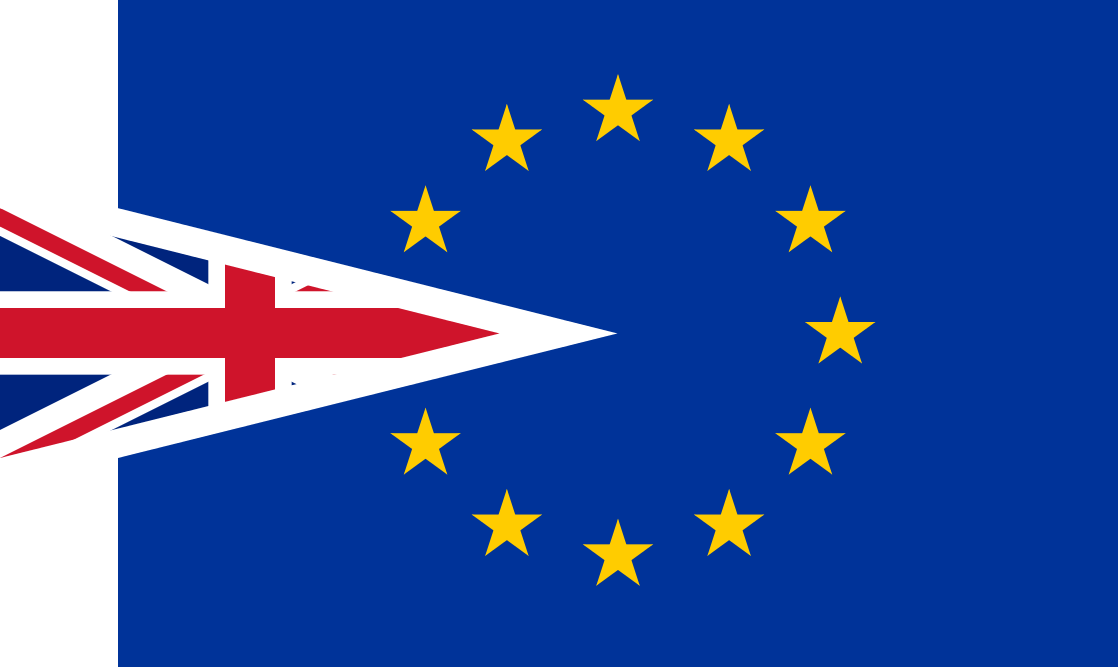
BrExit
By Rlevente [CC BY-SA 4.0], via Wikimedia Commons

In recent days we have seen Great Britain vote to withdraw from the European Union. While it is a significant event in itself, it perhaps points to a global trend of fragmentation, with large countries or unions splitting into smaller countries. These smaller countries are often ethnically different from other component countries that made up the original country.

The European Union (EU) started in 1951 as the European Coal and Steel Community which gradually extended its remit to cover almost every aspect of community in Europe. The UK was not part of the original member states but partially joined in 1973. In 1975 there was a referendum on whether or not the UK should leave the EEC or (then) Common Market. The vote was to remain part of the EEC.

EEC
By Eec2016 (Own work) [CC BY-SA 4.0 (http://creativecommons.org/licenses/by-sa/4.0)%5D, via Wikimedia Commons

It’s fair to say that the 1975 referendum was a non event. People of course did not know what the future would bring and the aims and purposes of the EU were, I believe, not understood. I saw no particular benefit and I was proved correct by events. (I’ve just realised the pun hidden in that – in fact the vote was not ‘non’ but ‘oui’).

Would trade between member countries have suffered if the UK had not voted in 1975 to continue to be part of the EEC? It’s impossible to say. Looking through the list, there is nothing there that really strongly calls out to me, and most of the items could have been achieved regardless of whether or not the UK remained or not.

EU Referendum Results 2016
By Brythones (Own work) [CC BY-SA 4.0], via Wikimedia Commons

From the perspective of countries outside of the EU, the EU is a disadvantage. The EU has a big hand in all trade agreements, and countries like Australia and New Zealand can’t target their traditional markets in the UK.

One of the big advantages of the EU is supposed to be the freer travel between member countries. This sounds great on paper, but passports are mostly still needed when people travel between countries, even though visa are not needed. While there is closer cooperation between member states on matters like drug trafficking, this will be offset to some extent by the freer travel between states.

Drugs
Illegal drugs

Some people claim that the freedom of travel between member countries means that immigrants find it easier to travel between member countries and from the UK’s point of view this is all bad. An immigrant could obtain a passport in one country and immediately be able to travel to the UK for example.

It’s difficult to quantify some of the so-called advantages. For instance, being part of the EU supposedly provides greater influence in world affairs. However the leaders of countries outside the EU do not in practise seem to meet with the leaders of the EU, instead meeting with representatives of the individual countries, and to outside countries, the EU typically appears to be a barrier to trade because of the huge amount of bureaucracy that surrounds anything to do with the EU.

Meeting
Meeting

When the UK removes itself from the EU, it will be able to deal directly with non-EU countries once more. Since the UK is one of the largest economies in the world, ranking sixth in GDP, it should have no difficulty forging favourable trade links with other countries. Even trade with EU countries should not be affected too much – as someone said, Mercedes Benz will still want to sell their cars into the UK.

If the split of the UK from the EU goes ahead as it seems likely to do, this may result in other countries deciding to exit. This is not surprising of course, but this referendum may ultimately result in the dissolution of the EU back into member states.

Ballot Box
Ballot Box

This follows a trend which seems to be gathering pace. In 1991 the former Soviet Union dissolved into its constituent states. In 1993 Czechoslovakia spilt into two states. In 2014 Scotland narrowly voted against independence from the United Kingdom. Potentially the USA could split into separate countries, with the biggest state, Texas, being the most likely to secede from the union. China, is a huge country and is another candidate for potential division.

The EU is a huge bureaucracy and even the Pope has warned that the rules and regulations are onerous. While there are many euro-myths, it can’t be denied that the EU rules and regulations tend to be wordy and overbearing, and it seems that they do not replace local rules and regulations but add to them.

No Dogs in Inn
Rules and regulations

For instance, I was looking at Directive 2000/13/EC which relates to the labelling of foodstuffs. It runs to 36 pages and there are 9 amendments and one correction to the document. It is full of references and cross-reference and exceptions and special cases. One of the paragraph reads, in full, “Ingredients shall be listed in accordance with this Article and Annexes I, II, III and IIIa”.

Much of this verbiage is designed to protect the end consumer of course, and this is good, but I can’t imagine that the local butcher, or even a supermarket butcher, has read all the regulations relating to the way he labels his merchandise. Yet a provider can be in trouble if he/she doesn’t comply with these regulations as enforced and possibly modified by member governments.

Food labelling
Food labelling

So, I think that Britain has done the right thing to start its withdrawal from the EU. It will cost a lot. Billions, over a number of years, but the price will be worth it. Scotland may decamp, but there were signs that that alliance was under strain anyway.

It’s a miracle though, that they decided to leave, as many people seem to be having second thoughts, even calling for a new referendum on the subject, with more than 2.5 million people signing a petition to hold one.  I can foresee a time when the 14th referendum on the subject is held and the question will be “Come on people! Make up your minds! Do we really, really want to exit the EU, or not? Please let’s make this the last time, OK?”

Petition
By Cafe cafes Cafe cafes (Own work) [CC BY-SA 4.0], via Wikimedia Commons

There is a distinct note of concern in the comments of the man in the street about the result of the referendum. One guy admits to have voted “Leave”, but says that he didn’t think his vote would matter, and that he is now very worried. I think that this is mere nerves and the burden of having made a scary decision, but I believe that they got it right. Others are happy with their decision.

Watching
Watching