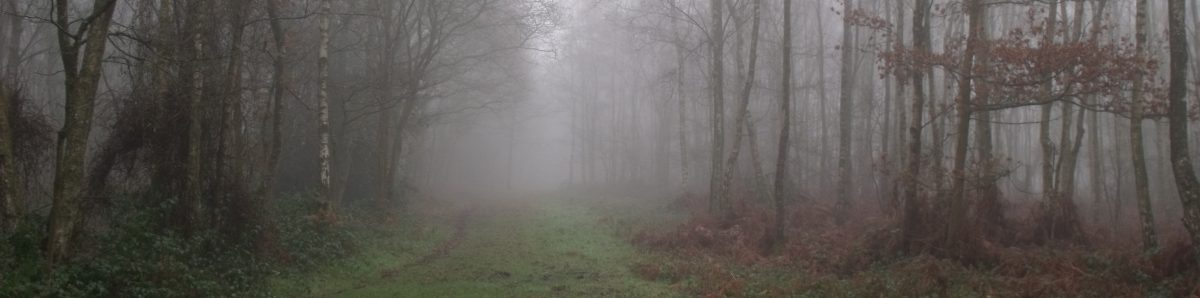
Thinking my Thoughts

Swirling thoughts
Swirling thoughts (Photo credit: Wikipedia)

Thoughts. We pump them out like a sausage machine pushes out sausages.Some of them we even push out onto paper or a computer screen and some pass on to other people by way of speech.

Thoughts are private to us and are never visible to the outside world. Each of us has their own thoughts, unless you are all zombies and my thoughts are the only ones that exist. Most people, I would guess, have thoughts that they would rather that other people do not know about, which would embarrass them if made public.


Embed from Getty Images

Descartes believed that since he thought, that he must exist. One can chip away philosophically at that belief, but there is no doubting that Descartes exists and that he thought. We all do, solipsistic philosophy aside, even if Descartes’ argument is not correct.

The difficulty comes when we look at where thoughts come from and, indeed, what thoughts are. We may think “Did I leave the gas on?” or “I must change my library books”. Thoughts seem to happen unconsciously at first, and then move into the consciousness, at some level or other.


Embed from Getty Images

The type of thought that I mention above about the gas and the library books spring right to the front or top of the consciousness, sometime surprising us. Other thought don’t impact so much on the consciousness, such as the thoughts that occur during a conversation.

For instance, suppose that you were chatting to friends, someone might question how you all got onto a subject. You are having coffee and find that you are discussing Amazonian Army Ants. How did you get on to the subject? On thinking back you piece together a chain of thought, that goes back to some totally unrelated topic, like the quality of fruit in the supermarket.


http://www.gettyimages.com/detail/576831345

To be sure, I’ve suggested a conversation between several people, but similar happens in one person’s brain, as you can verify for yourself. Just grab a passing thought and work backwards from there and you will see what I mean.

Thoughts tend to be like cetaceans or some varieties of fish that live beneath the surface but sometime broach the surface before sinking back into the depths. It appears that the actual generation of thoughts happen below the level of consciousness, and then sink back into the unconscious. Memories of past thoughts can however be retrieved.


Embed from Getty Images

Although we do not perceive thoughts being created, the thoughts passing through our consciousness and things happening external to our minds play a part in creating our thoughts. If I think of the first few digits of π, it is because I am looking around for an example of prior thoughts affecting current ones – I consciously decide to think of an example, and immediately became a past thought and so I thought of the first few digits of π.

I suggested that we pop out thoughts like a sausage machine pops out sausages. Unfortunately that analogy breaks down somewhat as current sausages are not influenced by prior sausages unless you really stretch the analogy by saying that the delicious taste of past sausages leads you to create the current sausage!


Embed from Getty Images

The analogy does help a little though. What comes out of the sausage machine depends on what is put into the hopper. You won’t get pork sausages by filling the hopper with bits of beef of course, and in much the same way you will only get certain thoughts coming out if you have certain inputs going in.

The type of thoughts that we have can be changed by various methods, including repetition and example. We can learn by example and it influences what thoughts we have. If we see people standing for others in the train, we think to do this on other occasions.

English: Seat on Hoist Point A very smart new ...
English: Seat on Hoist Point A very smart new seat in a dramatic position with astonishing views (see 1511570, for instance). At the risk of being thought churlish, however, I have found more comfortable seats on which to rest aching legs. (Photo credit: Wikipedia)

A group of people will often start to think similarly, as the group forms and develops. A team that works well together may act as if they are reading one another’s minds, simply because they have learned to think in similar ways, and the team is said to have gelled.

It’s possible to force someone to think the way that you want them to think, by repetition and making things uncomfortable for them. This is called brainwashing and is for obvious reasons frowned upon. A fictional example come from the end of the book 1984 where Winston Smith is brainwashed into loving Big Brother by O’Brien.

Big Brother (David Graham) speaking to his aud...
Big Brother (David Graham) speaking to his audience of proles. (Photo credit: Wikipedia)

When people live closely together they tend to start to think alike as in the sports team mentioned above. Another example would be the cases where hostages have come to espouse the aims and objectives of the people who have taken them captive, such as the heiress Patty Hearst who was kidnapped by a terrorist group but came to support their cause even to the point of taking part on in armed robberies.

Thoughts can be directed by a person, but only to an extent. One can concentrate one’s thoughts on study, but it is difficult to know how that happens. The experience of study (or the loosely related one of computer programming) can an in depth totally encompassing one, leading to a condition known to programmers as “being in the zone“. This can also apply in other fields of human endeavour too.


Embed from Getty Images

Often though, without the person being aware, the zone drifts away and the person ends up in the day dream state, thinking of things other than the topic that is supposed to be being thought about. This usually happens when the person has difficulty in concentrating on the topic as it bores them or they don’t understand it.

Some thoughts are completely below the level of the conscious, such as those that one has when one is asleep. Like all thoughts they soon fade into the depths and mostly leave no impression on the memory. Occasionally though, some dreaming thoughts survive in the memory through the process of waking, but they often seem bizarre or irrelevant to anything to do with our conscious lives. Sometimes though, they can be source of inspiration, as in the case of one of the inventors of the sewing machine, Elias Howe.

Sewing machine, type Calanda 17
Sewing machine, type Calanda 17 (Photo credit: Wikipedia)

Feedback

A Kahn process network of three processes with...
A Kahn process network of three processes without feedback communication. Edges A, B and C are communication channels. One of the processes is named process P. (Photo credit: Wikipedia)

When an output of a process is taken and fed back to the input of a process it causes changes to the output. This changed output is then fed back to the input and so on. This basic idea has myriads of applications, in nature, in science, and in real life.

Feedback can be positive or negative. If it is positive, it adds to the input, which increases the output, which is then fed back to the input, which increases it still more, and we have a runaway increase. This is what causes the howl that occurs when the output from a microphone amplifier is accidentally fed back to the microphone.

US664A University Sound Dynamic Supercardioid ...
US664A University Sound Dynamic Supercardioid Microphone (Photo credit: Wikipedia)

Negative feedback subtracts from the input, which can result in a reduction of the output  of the process. It won’t necessarily result in NO output however, as the amount of feedback is reduced as a result of the output being reduced, and therefore the output may drop to a fixed value. There are relatively complex equations which govern feedback behaviour which I’m not going to go into here.

Of course the input and output must be related for feedback to be possible. Electrical circuits are a classic example, of course where the input and output are both voltages, and in the case of a cruise control system, the speed of the car is converted to a signal (which may be a voltage, I’d guess) and the feedback is via a signal applied to the fuel control system, which again could be a voltage.

Illustration for bowden cable. Highlighted vie...
Illustration for bowden cable. Highlighted view of the throttle cables on a 1998 model Chrysler Town & Country minivan. To the best of my knowledge, one cable comes from the gas pedal and one comes from the cruise control. (Photo credit: Wikipedia)

Feedback is inevitably delayed with respect to the inputs. In any real system the input takes time to be fed back, and sometimes this interferes with the intended operation of the feedback loop. It can cause swings in the size of the output, and the system state oscillates.

This is how electronic oscillators are designed to work, but in control systems such oscillations are unwanted and could be destructive. One way to deal with this is to “damp” the circuit, which effectively slows the feedback so that the system state moves more slowly towards the desired state rather than attempting to jump directly to it. Such damping helps reduces overshoot where the momentum of the raw feedback would cause the output to go past the required value.


Embed from Getty Images

The input and output together with the feedback form a feedback loop. Feedback loops can be found everywhere, in mechanical and electrical systems, in climate systems and biological systems.

One interesting question is whether or not there is a long term feedback loop that will react to global warming to reduce the effects after a while. If so, would the feedback be more detrimental to the human race than global warming itself.


Embed from Getty Images

Such feedback could be something like increased storms and disappearance of seasonal rain that will eventually finish off the human race, perhaps. According to the Gaia hypothesis the Earth is a dynamical system that help to maintain life on Earth. If that is true, it may be broken by global warming, or it may react against global warming in ways which may not yet be apparent.

Systems may have more complex feedback going on than a single simple positive/negative. A process may have several independent positive and negative feedback loops operating at the same time. The various loops may be connected in complex ways and the behaviour may be impossible to accurately predict.

A general representation of a closed loop feed...
A general representation of a closed loop feedback system (Photo credit: Wikipedia)

A biological example is the case of the rabbits and the foxes. The population of the rabbits depends on many things – how many bunnies there are, the extent of their food supply, the maturity of the average bunny – how many are mature enough to be able to produce more bunnies. Similarly such factors apply to Basil Brush and his cohorts.

If the rabbits food is plentiful, then they will breed, well, like rabbits and the population will rise. This provides an increased food supply for the foxes and their population increases. Eventually the rabbits manage to increase to the stage where the food becomes limited and the population stops increasing.

Die Gartenlaube (1889) b 497
Die Gartenlaube (1889) b 497 (Photo credit: Wikipedia)

Alternatively the increase in the fox population may grow faster than the rabbit population. The foxes kill more rabbits than the rabbits can replace and the rabbit population crashes. The foxes then starve to death as the rabbits start to recover. There are various opinions as to the exact mechanism is concerned, but there is no doubt that boom and bust cycles are seen in the predator/prey relationship, and there is no doubt that feedback cycles are involved somehow.

It is often said that negative feedback acts to return the system to equilibrium. While this may be true in the short term, any such equilibrium is temporary, and as the rabbits and foxes example shows, it is more likely that a system will only temporarily return to the equilibrium and often a system will pass through equilibrium many times as it oscillates too and fro.


Embed from Getty Images

In fact, in most cases the “equilibrium position” will rarely be occupied by the system for any length of time. The typical system that oscillates about an “equilibrium position” is a pendulum. A pendulum is travelling its fastest when it passes the lowest point of its arc. The “feedback” in this case is provided by gravity of course.

Feedback also describes the missives and reports sent to an organisation about its services. The organisation may have sought such feedback by distributing questionnaires, by links on a web site, or maybe by word of mouth. Respondents have the opportunity to provide both positive and negative feedback depending on their experience with the organisation.

English: Overview of four different options to...
English: Overview of four different options to be A/B tested for Wikimedia’s Article Feedback Tool V5. This A/B test would let us compare these different options for an improved feedback form, to find out which version is most effective for engaging readers and improving article quality. See project page (Photo credit: Wikipedia)

Such research and feedback is called “market research” and has seen organisations change their stance on some topics. McDonald’s Corporation has banned plastic food containers (in 1990) and plastic drink containers (in 2013) as a result of feedback from environmental lobby groups.

Politicians also get feedback from the voters in the form of opinion polls and surveys. It would be a brave politician (perhaps a soon to be former politician) who ignores the opinion polls. Such a politician would be looking for a fresh job after the next election.

UNDP Helen Clark meeting with New Zealand Prim...
UNDP Helen Clark meeting with New Zealand Prime Minister John Key (Photo credit: Wikipedia)

(I believe that I am now all caught up on the posts that I missed. Yeah!)


Nebulosity

English: Cumulus cloud above Lechtaler Alps, A...
English: Cumulus cloud above Lechtaler Alps, Austria. Español: Nube cumulus sobre los Alpes austriacos. Deutsch: Cumuluswolke über Lechtaler Alpen, Österreich. (Photo credit: Wikipedia)

Clouds are collections of water droplets suspended in the air. A cloud is formed as the water vapour in the air condenses onto particles of dust or other water droplets. The water in a cloud weighs tonnes! It’s a good job that the droplets don’t have time to coalesce into great balls of water before they reach the ground, but I suppose that to insects a droplet is a huge ball of water, and able to cause havoc.

As anyone who has flown in an aircraft is likely to know, clouds are not well defined, and in fact they could be described as nebulous or hazy. From a mathematical point of view they are fractal and the fractal dimension (a measure of their fuzziness) varies depending on the cloud.

Fractal plant curve, made using an L-system
Fractal plant curve, made using an L-system (Photo credit: Wikipedia)

A common pastime on a summer’s day is to imagine shapes in the clouds. That one may look vaguely like a car, that one like a dog, and so on. But really, the only shape that clouds have is “cloud-like“.

There are many types of cloud shape, depending on the conditions and the altitude where the cloud is forming, but the usual depiction of a cloud generally looks like a cumulus type. This type forms the usual shape like piles of cotton wool in the sky, with mountain, canyons, and even castles.


Embed from Getty Images

There is always water vapour in the air, even if it doesn’t form clouds, although we cannot see it. As I said above, clouds are formed when this water vapour condenses on small particles in the air (and other conditions are right). Sometimes there are attempts to make rain by “seeding” a cloud with small particles to increase the rate of condensation and thus increasing the size of the water droplets.

At a certain  size the droplets become to big to be buoyed up by the air and start to fall, picking up more moisture as they do. As I understand it, this cloud seeding process is limited in its success, but I may be wrong.

Cessna 210 (OE DSD), rebuilt for cloud seeding...
Cessna 210 (OE DSD), rebuilt for cloud seeding, with 2 silver iodide generators (Photo credit: Wikipedia)

Clouds sometimes form at ground level, if the conditions are right, and then we call them fogs or mists. This often happens when light rain is falling and there is a lot of moisture in the air, but it can happen simply because the conditions are right.

Living where I do, I occasionally have reason to visit the local airport in Wellington. The airport is situation on a section of land that was brought up by a an earthquake, so that it is on a narrow stretch of land between two sets of hills. Over the hills to the East of the airport is the entrance to the Wellington Harbour.

English: Aerial view of the Miramar Peninsula,...
English: Aerial view of the Miramar Peninsula, Wellington, New Zealand. Wellington International Airport is visible and the beach just above the left-hand end of the runway is Lyall Bay. Downtown Wellington city, the harbour and port can be seen in the distance. (Photo credit: Wikipedia)

On several occasions I have seen sea mist roll in from Cooks Strait to the South and extends tongues of thick mist over the airport and the Harbour entrance. This causes the airport to shut down until the conditions have cleared, spoiling the travel plans of hundreds of people.

Other clouds which are familiar to many are the stratus clouds. These clouds are layers which cover all or most of the sky under some conditions. They often presage rain or other forms of precipitation. Stratus clouds range from light to dark and in many cases might cause a drop in one’s spirits.

English: Stratus undulatus clouds. I took this...
English: Stratus undulatus clouds. I took this picture out the car window on the way to Vancouver. (Photo credit: Wikipedia)

Certainly the dark stratus has that effect on me, and there is little that is more spectacular than breaking through a layer of cloud in a plane. The tops of the clouds will be brightly lit by the sun, and sometimes whorls or rivers of cloud can be seen from above.

The tops of the clouds can be quite lumpy and cumulus-like, and descending into the clouds is like descending into mountains and canyons and the lumps and bumps of the cloud can whizz past like scenery on a train, until the plane finally breaks through the greyer, darker ceiling of the cloud layer.

English: "The two main cloud types are St...
English: “The two main cloud types are Stratocumulus mixing with Cumulus in the foreground with Cumulus beyond” ~ Identified by http://www.cloudappreciationsociety.org/ (Photo credit: Wikipedia)

However, broken stratus clouds are the clouds which produce amazing sunsets as the sun drops through the layers and gaps in the clouds. Very often a beam of sun breaks through a stratus layer and lights up the water droplets or dust producing what looks like a column of light. These rays are known as crepuscular rays.

Add to that the amazing colours that result from the breakthrough sun beams and the dust and water droplets and sunsets can be very beautiful, even if the sun light is in fact refracting or reflecting from pollution in the air.

Crepuscular Rays and over
Crepuscular Rays and over (Photo credit: Wikipedia)

When the sun has gone below the horizon, it can still illuminate clouds above the horizon causing them to glow with an orange light, as the blue light is absorbed by the thick layer of atmosphere these rays which are almost tangential to the earth’s surface have to pass through.

Cumulus clouds are often sought out by glider pilots, since they are often formed by an up welling of air over a particularly warm piece of land. The up welling of air provides the glider pilot with extra lift, which allows them to travel vast distances, but a downside is that some clouds can be chaotic and turbulent. Birds will often guide a pilot to the up draughts there is no cloud.


Embed from Getty Images

Another totally different sort of cloud has appeared over recent years, and that is the Internet cloud. The Internet cloud is also somewhat nebulous, and allows us to take a photograph on one device (computer phone or tablet) and view it almost immediately on another device.

The cloud (often the Cloud) also allows for automatic backups for devices – if your device implodes or is lost or stolen, your data is safe. Mostly. For if you sync (synchronise) your device with the Cloud, and then delete a photograph, it will shortly be removed from the Cloud and lost.


Embed from Getty Images

To prevent data loss, you can backup to somewhere else on the cloud, so there are two (or more) cloud copies, or you can backup to a local computer or local storage, so that if you delete something by mistake you can always get it back. As anyone in the computer business will tell you, one backup is never enough!


Embed from Getty Images

HIJKLMNO

Impact from a water drop causes an upward &quo...
Impact from a water drop causes an upward “rebound” jet surrounded by circular capillary waves. (Photo credit: Wikipedia)

The title of my post may look odd, but it represents one of the most important chemical compounds on earth. Without it, life would not exist and the search for evidence of the possible existence of life on other planets often comes down to looking for this molecule. It is of course, water.

If you still don’t understand my title, the formula for water is H2O, where the “2” should be subscript representing the fact that there are two Hydrogen atoms in water and one Oxygen atom. This could be misheard as “H to O”, hence my title.

The water molecule with its electric charges
The water molecule with its electric charges (Photo credit: Wikipedia)

Water could be considered to be an oxide of hydrogen, or hydrogen oxide. There is a closely related compound called hydrogen peroxide (which has two oxygen atoms) which is sometimes used as a bleach and disinfectant. Surely everyone over a certain age has heard of “peroxide blondes“.

Water is sometimes referred to, usually jokingly, as dihydogen monoxide. This silly pseudo-scientific name in sometimes used to create fake polemics against water to trick gullible people, causing them to call for a ban on this noxious and toxic chemical!

The logo of DHMO.org, primary current residenc...
The logo of DHMO.org, primary current residence of the dihydrogen monoxide hoax (Photo credit: Wikipedia)

We see water all around us, in all three normal states of matter, solid, liquid and gas. Well, ice and water can be nearly transparent, and water in the gaseous state is invisible – we can only see the water vapour that forms when water in the gaseous state condenses into small particles of liquid water suspended in the air.

Water molecules have a slight “V” shape which gives it some amazing properties. it has a minimum density at 4 degrees Centigrade. It freezes at 0 degrees Centigrade so ice is slightly less dense than liquid water and the ice floats. This results in icebergs and the inevitable reference to the Titanic, which as everyone knows hit an iceberg on its maiden voyage, and endless discussions on whether or not both Jack and Rose could have survived the disaster.

TITANIC life boats on way to CARPATHIA
TITANIC life boats on way to CARPATHIA (Photo credit: Wikipedia)

Not only does ice keep our drinks cool, but it also forms a skin over ponds and puddles in winter which has the effect of protecting small plants and animals from the worst of winter. This is because the ice acts as an insulating layer and allows some warmth to remain in the waters of the pond.

Most animals can’t survive freezing but some really small ones, like certain frogs and toads and some spiders and insects survive being frozen solid. It is believed that this is because of some constituents of their blood acting as an anti-freeze agent, prevention the destructive formation of ice crystals in the cells and blood of the animal.

English: Frozen pond The water here has frozen...
English: Frozen pond The water here has frozen hard. It is believed to be excess field water not a natural pond. (Photo credit: Wikipedia)

Gaseous water is found all around us. It is dissolved, as it were, in air. It’s the water in the air which gives it its humidity. Gaseous water is swept up by the air and boosted to high altitudes by air currents and condenses to clouds, which are masses of water vapour. Ultimately the water falls to earth as rain and runs off into the seas. This whole cycle is driven by heat energy from the sun which causes the evaporation.

On average a human being’s body contains approximately 60% water. It can be higher as in a new-born baby or lower as in obese persons. If a normal person refrains from drinking liquids he or she may become dehydrated, which can result in mental issues and physical ones (which usually go away if the person is rehydrated.

(From source) This cholera patient is drinking...
(From source) This cholera patient is drinking oral rehydration solution (ORS) in order to counteract his cholera-induced dehydration. The cholera patient should be encouraged to drink the Oral Rehydration Solution (ORS). Even patients who are vomiting can often be treated orally if they take small frequent sips. Their vomiting will subside when their acidosis is corrected. (Photo credit: Wikipedia)

A person loses water by sweating and by urinating. If he or she is in an arid environment, such as a desert, he or she will lose water faster than usual, and if it is not replaced, the dehydration could kill. In hot humid climates, sweating is less effective in controlling the person’s temperature and he or she may die of overheating.

Our planet is (mostly) blue from space mainly because the presence of the water that makes up the seas. However in small quantities and in very shallow depths the colour of water is often due more to the mineral content of the water than anything else. This leads to rivers being called “Blue Nile” (because of the black sediment carried by the river – the word for black is also used for blue in the local dialect) or “White Nile” (because of the light clay sediment carried by the river) for example.

The Earth seen from Apollo 17.
The Earth seen from Apollo 17. (Photo credit: Wikipedia)

Apart from making up most of our bodies, and being essential for the body’s proper functioning, water has a myriad of uses to humans. It forms a part of many industrial processes for example, and it often provides the power for them, by way of hydroelectric generation. It helps make our crops grow, and we use it and flavour it to provide our beverages.

We also use water for recreation. We swim in the seas and rivers, we sail on them and we dive under them. We hike many kilometres in some cases to view places where water flows over a drop, and we even explore the caves created by the action of water on some rocks.

A windsurfer with modern gear tilts the rig an...
A windsurfer with modern gear tilts the rig and carves the board to perform a planing jibe (downwind turn) close to shore in Maui, Hawaii, one of the popular destinations for windsurfing. (Photo credit: Wikipedia)

The deep waters of the seas provide much of our food. Our fishermen haul great numbers of them from the seas with some difficulty and at some expense. There are people who believe that we are doing great damage to the planet by doing this, and that we are causing much marine life to become extinct, which seems to be a big risk to us in the future.

We look for water on other planets, to determine whether or not they will or have supported life. The reasoning behind this is that our way of life, and the way of life of all creatures on Earth depends on water. We cannot conceive of a life form that does not depend on water in some ways. That doesn’t mean, of course, that such life forms do not exist, but just that we can’t currently conceive of a way that such a life form could exist. As Mr Spock might say “It’s life, Jim, but not as we know it”.


http://www.gettyimages.com/detail/180977745

Puzzles

Pieces of a puzzle
Pieces of a puzzle (Photo credit: Wikipedia)

I’ve been musing on the human liking for puzzles. I think that it is based on the need to understand the world that we live in and predict what might happen next. A caveman would see that day followed night which followed the day before, so he would conclude that night and day would continue to alternate.

It would become to him a natural thing, and in most cases that would be that, but in a few cases an Einstein of the caveman world might wonder about this sequence. He might conclude that some all powerful being causes day and night, possibly for the convenience of caveman kind, but if his mind worked a little differently he might consider the pattern was a natural one, and not a divinely created phenomenon.


Embed from Getty Images

Puzzling about these things is possibly what led to the evolution of the caveman into a human being. Those cavemen who had realised that the world appear to have an order would likely have a survival advantage over those who didn’t.

The human race has been working on the puzzle of the Universe from the earliest days of our existence. Solving a puzzle requires that you believe that there is a pattern and that you can work it out.


Embed from Getty Images

The Universal pattern may be ultimately beyond our reach, as it seems to me that, speaking philosophically, it might be impossible to fully understand everything about the Universe while we are inside it. It’s like trying to understand a room while in it. You may be able to know everything about the room by looking around and logically deducing things about it, but you can’t know how the room looks from the outside, where it is and even what its purpose is beyond just being a room.

Solving a puzzle usually involves creating order out of chaos. A good example is the Rubik’s Cube. To solve it, one has to cause the randomised colours to be manipulated so that each face has a single colour on it.

English: Rubik's Cube variations
English: Rubik’s Cube variations (Photo credit: Wikipedia)

A jigsaw puzzle is to start with is chaos made manifest. We apply energy and produce an ordered state over a fairly long time – we solve the jigsaw puzzle. After a brief period of admiration of our handiwork we dismantle the jigsaw puzzle in seconds. Unfortunately we don’t get the energy back again and that’s the nature of entropy/order.

Many puzzles are of this sort. In the card game patience (Klondike), the cards are shuffled and made random, and our job is to return order to the cards by moving them according to the rules. In the case of patience, we may not be able to, as it is possible that there is no legal way to access some of the cards. Only around 80% of of patience games are winnable.

Empire Patience Playing Cards, Box
Empire Patience Playing Cards, Box (Photo credit: Wikipedia)

Other games such as the Rubik’s Cube are always solvable, provided the “shuffling” is done legally. If the coloured stickers on a Rubik’s Cube are moved (an illegal “shuffle”) then the cube might not be solvable at all. A Rubik’s Cube expert can usually tell that this has been done almost instantly. Of course, switching two of the coloured stickers may by chance result in a configuration that matches a legal shuffle.

When scientists look at the Universe and propose theories about it, the process is much like the process of solving a jigsaw puzzle – you look at a piece of the puzzle and see if it resembles in some way other pieces. Then you look for a similar place to insert your piece. There may be some trial and error involved. Or you look at the shape of a gap in the puzzle and look for a piece that will fit into it. One such piece in the physics puzzle is called the Higgs Boson.

English: LHC tunnel near point 5. The last mag...
English: LHC tunnel near point 5. The last magnets before the cavern. (Photo credit: Wikipedia)

The shape is not the only consideration, as the colours and lines on the piece must match the colours and lines on the bit of the puzzle. In the same way, new theories in physics must match existing theories, or at least fit in with them.

Jigsaw puzzles are a good analogy for physics theories. Theories may be constructed in areas unrelated to any other theories, in a sort of theoretical island. Similarly a chunk of the jigsaw could be constructed separately from the rest, to be joined to the rest later. A theoretical island should eventually be joined to the rest of physics.


Embed from Getty Images

Of course any analogy will break down eventually, but the jigsaw puzzle analogy is a good one in that it mirrors many of the processes in physics. Physical theories can be modified to fit the experimental data, but you can’t modify the pieces of jigsaw to fit without spoiling the puzzle.

The best sorts of puzzles are the ones which give you the least amount of information that you need to solve the puzzle. With patience type games there is no real least amount of information, but in something like Sudoku puzzles the puzzle can be made more difficult by providing fewer clues in the grid. A particular set of clues may result in several possible solutions, if not enough clues are provided. This is generally considered to be a bad thing.

Solution in red for puzzle to the left
Solution in red for puzzle to the left (Photo credit: Wikipedia)

Some puzzles are logic puzzles, such as the ones where a traveller meet some people on the road who can only answer “yes” or “no”. The problem is for the traveller to ask them a question and deduce the answer from their terse replies. The people that he meets may lie or tell the truth or maybe alternate.

Scientists solving the puzzle of the Universe are very much like the traveller. They can question the results that they get, but like the people that the traveller meets, the results may say “yes” or “no” or be equivocal. Also, the puzzle that the scientists are solving  is a jigsaw puzzle without edges.

English: Example of a solution of a Hashiwokak...
English: Example of a solution of a Hashiwokakero logic puzzle. Deutsch: Beispiel einer Lösung eines Hashiwokakero Logikrätsels. (Photo credit: Wikipedia)

Everyone who has completed a jigsaw puzzle knows that the pieces can be confusing, especially when the colours in different areas appear similar. For scientists and mathematicians a piece of evidence or a theory may appear to be unrelated to another theory or piece of evidence, but often disparate areas of study may turn out to be linked together in unexpected ways. That’s part of the beauty of study in these fields.


Embed from Getty Images


Shopping

A New World Department Store located at New Wo...
A New World Department Store located at New World Centre Shopping Mall (Photo credit: Wikipedia)

When I do practically anything, I tend to muse about the origins of whatever it is I am doing. This is my way of looking at something in a different way. So today I’m going to think about shopping.

In the days before money, people would presumably have gone around trading for the things that they needed, which makes shopping in the way we understand it difficult and complicated. Role specialisations (butcher, baker, candlestick maker) would probably have arisen well before money was invented and shops as we know then would be unlikely to have existed.

English: Traditional Butcher Shop in Abbotsbury.
English: Traditional Butcher Shop in Abbotsbury. (Photo credit: Wikipedia)

Trade would have been, for example, a barrel of apples for a side of pork, and complex networks of obligations would have arisen as Peter owes Paul a dozen eggs, while Paul owes Saul a side of pork, who owes Roger a hour or so labour to repair a pig byre, and Roger owes the blacksmith some wheat for his knives, and so on.

Once the human race invented money, this would all have become a lot easier. The value of the side of pork or the labour to repair the pig byre  could be assessed and indebtedness could be quantified more accurately. The advantages were obvious. Instead of passing around obligations, one could use money to pay for things.


Embed from Getty Images

Of course, the underlying principle is the same, the exchange of one thing of value for another thing of value, but the big advantage was the decoupling of the direct “thing for a thing”. An intermediate “thing of value” or money, enabled the keeping track of indebtedness much easier.

A smithy would be naturally located in a central position, as would the mill. Other suppliers would maybe not be so central – the proto-butcher might travel around the countryside killing and butchering animals, and the proto-baker probably worked from home and may have dealt with the passing trade and also delivered. Perhaps the proto-milkman might have distributed his spare milk and butter around the countryside too.

Bread rolls
Bread rolls (Photo credit: Wikipedia)

It’s likely that market places existed before money was invented, as places for people to trade their surpluses for other people’s surpluses, but the invention of money would probably have boosted the use of market places, and specialist traders would turn from prototypes to more specific traders.

And a retail/wholesale split may have happened pretty much as a result of the invention of money. The beef and pig farmer may have completely dropped any attempt to grow grain, or to keep a milk cow, if he could sell all his animals to the butcher and buy bread, grain, milk and cheese and butter from similar specialists.

English: Office candlestick in brass, made by ...
English: Office candlestick in brass, made by Skultuna mässingsbruk, Sweden. Svenska: Kontorsljusstake i mässing från Skultuna mässingsbruk. (Photo credit: Wikipedia)

So, the market place may have started out as place to trade produce, but it would have swiftly changed to a place where one could buy stuff. Pretty soon it would have occurred to the market traders that the hassle of setting up stalls and taking them down each day was a waste of time. They would use the new money to buy a house in or near the market, not to live in, but to store and even market their goods.

From the point of view of the customers, as well as the new class of merchants, this was a great move. Instead of travelling to the butcher, the baker, and indeed the candlestick maker, they only had to go to one place, the new expanded market. It would not be long before the houses around the market were modified to make buying and selling easy and for merchants to display their wares. Shops were invented.

English: Mindpro_Citinall_Giordano_Shop
English: Mindpro_Citinall_Giordano_Shop (Photo credit: Wikipedia)

More exotic products, such as spices from abroad and fabrics from other parts of the country would have started to make their way in to the market places as distant merchants could send large quantities of their goods and would know that a local trader could buy them, and sell them on to local people. Of course, a profit was to be had at each stage of the process.

Shops would naturally tend to arise near the market (which would still be used for livestock and work fairs), so shopping areas would have arisen, well placed in the town centres.

Oskargallerian, a shopping mall in Örnsköldsvi...
Oskargallerian, a shopping mall in Örnsköldsvik, Sweden (Photo credit: Wikipedia)

In the largest centres of all, the cities, this concentration of shopping gave rise to problems for the shopkeepers, such as where to store one’s wares, and, inevitably, how to attract customers. Attractive shops help with the attraction, as does a large range of wares. Warehouses slightly out of town and large storeroom solve some of the other problems.

A larger range of wares means that some shops would have started to sell multiple types of wares. A clothier may sell clothes for all purposes, gender and ages, and may also sell raw materials for clothes making and the tools for making clothes. A hatter may also start to sell suits, maybe from the clothier, wholesale.

The Milliner (hat maker)
The Milliner (hat maker) (Photo credit: Wikipedia)

Some time  in the 20th century the so called department stores became popular. These store sold wide ranges of things for as many household needs as possible. They were called department stores as they were divided up into departments – clothes here, crockery and other cooking equipment there, haberdashery here, gardening requisites there. Even jewelry would perhaps be found over there.

We are seeing the ultimate in bricks and mortar shopping these days, in the big shopping malls. These are usually based around a supermarket or a department store and contain many smaller speciality stores. Since they are truly “single places to shop” or “one stop shopping” they can be locates away from the town or city centres, to the detriment of any remaining city centre shops.

English: Bentalls Kingston department store wh...
English: Bentalls Kingston department store which is now incorporated into the Bentalls centre shopping mall. (Photo credit: Wikipedia)

But in this virtual age, virtual shopping is becoming more important. You can buy almost anything that you can think of on line these days, even your daily groceries, and it is usually cheaper. However, there may be a limit to this, as many people like to touch and feel and pick and choose what they purchase, and clothes often need to be tried on. So while the on line trend in shopping is gathering pace, it is probable that bricks and mortar shops will survive, in some form, at least for a moderate amount of time.


Embed from Getty Images

Holidays

English: Holiday in village
English: Holiday in village (Photo credit: Wikipedia)

I should imagine that going on holiday, for many people would be a relatively new thing. While those with money might decide to shift operations from home to another location, which might or might not be near a beach, those who work from them would mostly have no respite from day to day toil, since their employers would still require looking after as usual.

As ordinary people became wealthy, and the old social structures faded away for the most part, it would have become more usual for ordinary people to go away, just as their employers used to.

Rangiputa, Karikari Peninsula, Northland, New ...
Rangiputa, Karikari Peninsula, Northland, New Zealand. Rangiputa is a beach and bach (holiday home) community on the west side of the peninsula (Photo credit: Wikipedia)

The word “holiday” itself is a  contraction of “holy day”, and on holy days there were celebrations and less formal work. The word has come to mean a day on which one does not have to work. Most countries these days would have statutory holidays on which which people would not have to work. There may be other restrictions, such as legislation that shops should remain closed.

It’s understandable that some countries require shop closures, as this means that shop staff get the holiday too, but many countries these days allow shops to stay open if they wish and some of the best retail days are on statutory holidays. Usually shops that stay open are required to compensate staff who are required to work.

English: Brixham - Harbourside Shops These sho...
English: Brixham – Harbourside Shops These shops mainly cater to the holiday trade who visit the harbour. (Photo credit: Wikipedia)

Holidays are disruptions to normal schedules. When one goes away, one is in a different environment and one has to make do. Even something as simple as making a cup of tea may be complicated by the need to find a spoon, a cup, and a teabag, not to mention the need to figure out the operation of a different jug!

These things are not an enormous issue, and in fact draw attention to the fact that one is on holiday. All schedules are voided and one can do whatever one wants. Often this may amount to doing nothing.


Embed from Getty Images

A “holiday industry” has evolved, which provides accommodation, and resources for those temporarily away from home. It also provides entertainments or “attractions” if the holiday maker doesn’t just want to lay on the beach. The holiday maker may do all sorts of things that he or she doesn’t usually do, from the exciting (bungy jumping or similar) to the restful (a gentle walk around gardens or maybe a castle visit or may a zoo).

These facilities are all staffed by helpful people who arrange things so that the holiday maker can enjoy his or her self without worries. These people are of course employed by the facilities, but many of them enjoy their work very much anyway. It’s a sort of bonus for helping people.

English: Ultra Dynamics Dowty Turbocraft water...
English: Ultra Dynamics Dowty Turbocraft waterjet boat (Photo credit: Wikipedia)

Holiday makers must also be fed, and this has become a huge industry too. In any seaside towns so-called fast food outlets can be found in abundance, along with more up market restaurants and cafés, for more leisurely eating. For many people one of the advantages of being on holiday is that one doesn’t have to cook, and one can choose to eat things that one doesn’t normally eat.

Holidays can be expensive. Since we are close to the Pacific Islands, like Tonga, Samoa and Fiji, many people fly out to the islands on their summer holidays. This means flight and accommodation has to be booked and paid for.

English: Great Frigate Birds (Fregata minor) o...
English: Great Frigate Birds (Fregata minor) on Johnston Atoll, Pacific Island Wildlife Refuges (Photo credit: Wikipedia)

When the holiday makers arrive at their destinations, they have to pay for food and entertainment. Other expenses may be for sun screen cream, snacks, tours, tips, and the odd item of clothing which may have been accidentally left at home.

Holiday entertainment may comprise guided tours, or visiting monuments or zoos. Amusement parks are often an attraction as are aquariums. All this can cost a lot, but unless you are content to veg out on the beach, you’ll have to pay for it. Even vegging out on the beach comes at a cost, from sun protection through to drink to offset the dehydration caused by the sun.

English: Roller coaster, M&Ds Theme Park, Stra...
English: Roller coaster, M&Ds Theme Park, Strathclyde Country Park The larger and older of the two roller coasters, at the very southern end of the park. (Photo credit: Wikipedia)

So, why do we throw over the usual daily regime, and drag our family on an often uncomfortable road, sea, or plane trip, to a location where we know little of the environment, which will cost us money, to spend the days traipsing from “attraction” to “attraction” spending more money and feeding on often costly food of unknown quality or provenance?

Part of the answer is that the daily regime becomes boring and descends into drudgery. Removing ourselves from the daily regime allows us to escape that drudgery for a while. As far as the cost goes, well, one is prepared to spend a certain amount of money to escape the drudgery for a while.

Money for All
Money for All (Photo credit: Wikipedia)

Removing ourselves from the usual means that we can try the unusual. We may try Mexican food, or Vietnamese food. Or even Scottish cuisine if we choose. The world is our oyster.

We can try sports and pastimes that we have never tried before. Bungee jumping. Skiing, water or snow. We can visit a “Theme Park”, ride a roller coaster, or other ride. We can scare ourselves and excite ourselves.

Skiing
Skiing (Photo credit: Wikipedia)

We can experience different cultures, different scenery, but at the end of the day we know that we will be returning to our mundane lives. We have at the back of our minds the cosy ordinariness of our usual lives, as a sort of safety harness.

We know our comfortable house will be there for us to return to, and while we may enjoy the beds in our hotel, motel, holiday home or tent, we look forward to the return to our own beds. We look forward to drinking the brands of coffee and tea that we prefer and fill the fridge with the foods that we prefer to cook.

English: Hotel room in the Waldorf Hilton, Ald...
English: Hotel room in the Waldorf Hilton, Aldwych, London. (Photo credit: Wikipedia)

Few people would want to live in hotels and sleep in strange beds as a way of life, but there are some people who do so. While we enjoy being on holiday, as a break from our usual lives, we would probably not want to live that way for an extended period. Those who do are unusual people.


Embed from Getty Images

Success

Winner
Winner (Photo credit: Wikipedia)

Everyone likes to succeed at their endeavours, but not everyone is able to succeed for a number of reasons. People have varying drives to succeed, with some having little drive and others have a high level of the drive to succeed.

Maybe “succeed” is not the right word here as what I am referring to is the drive to create a company, or an artwork, or some other goal. Some people seem to have this urge almost from birth, such as top sports people, and some have some sort of “Damascene Moment“, where some event gives them reason to achieve some goal.

the Conversion of Saul on the road to Damascus...
the Conversion of Saul on the road to Damascus as painted by Michelangelo. (Photo credit: Wikipedia)

Actually St Paul is probably not a good example of what I am talking about as he already had a goal (persecution of the Christians) and his goal was changed dramatically. Many others, however, have experienced conversion events to many different religions. Some however have experienced more gradual conversions.

It is not my intent to argue that sudden or gradual conversions to any religion or creed are real mystical or religious events. They may give the person a life long belief in the creed or religion, but in many cases such conversion may moderate or fade over time.

English: Parish church of the conversion of Pa...
English: Parish church of the conversion of Paul the Apostle, Vrhnika, Slovenia. Slovenščina: Župnijska cerkev spreobrnitve Sv. Pavla na Vrhniki (Photo credit: Wikipedia)

In the big religious revivals in the US such as those run by Billy Graham people at the rallies were encouraged to make a public declaration of their faith and millions did so. The pressure and excitement engendered by the event most likely resulted in people being swept along and making declarations and later reconsidering.

People who succeed in things are focussed individuals who have a clear goal, and do not see or discount the difficulties in achieving their goals, whatever they might be. Others, who are less driven would more likely see the difficulties, and indeed, such difficulties may be overwhelming.

Depth-of-focus
Depth-of-focus (Photo credit: Wikipedia)

The media is happy to promote success stories, such as this one, and they are supposed to be inspirational. The person mentioned in the article appears to have been successful, with a high powered job and a similarly high powered lifestyle, only to lose it all. The story ends on an upbeat as the person succeeds in turning her life around.

This little example shows a couple of things. Firstly, although she was successful, her life crashed and burnt, and secondly, she turned her life around but her goals were now set much lower.


Embed from Getty Images

Many people who attempt to become successful crash and burn like she did both before and after becoming successful. Also, she was successful in turning her life around, achieving a different sort of success.

That’s an interesting point – one form of success is to acquire lots of money, property, possessions. Another form of success is to be able to enjoy oneself in a hedonistic way, usually as a result of acquiring money, property, etc.

English: "The" Cranstal Cottage (now...
English: “The” Cranstal Cottage (now vacant and for sale) near Cranstal, Isle of Man My grandfather came from the Isle of Man to Missouri back in 1852 and became a successful farmer. We (my wife and I) have visited the IOM twice and love it! We were looking for property to buy and found Cranstal Cottage, the same one shown in the photo with the palm tree in the front, taken front on back in 2005 [33942] Now it is quite overgrown with no one living there and for sale. (Photo credit: Wikipedia)
However, such successes may not provide happiness, and indeed money may not buy happiness for many people. To achieve happiness one may need to give up such worldly wealth and adopt a simpler life. Others may find other ways to achieve happiness, for instance, in a job which they enjoy, and achieving happiness may, in many cases, equate to achieving success in life.

Personal success can come as a result of success in other fields, of course, and worldly success, such as starting and running a successful business, is almost always considered to be any achievement worthy of public approbation.

English: A Chinese man going about his business.
English: A Chinese man going about his business. (Photo credit: Wikipedia)

However many newly started businesses fail. This does not hurt just the entrepreneur, but also anyone who has come to depend on the new business and those who have invested in the business. Normally a start up gets finance from friends and relatives in the first place and only wins finance from other sources later.

Some entrepreneurs have a history of failure. Some fail multiple times causing severe financial distress to friends and relatives. However, if such start ups were banned, this would severely hamper the evolution and growth of businesses. Such companies as Microsoft, Apple, IBM, Facebook, and Google, not to mention Amazon and similar would perhaps not have come about.


Embed from Getty Images

However, it is worth noting that Richard Branson, whose Virgin companies are well known, and who is now trying to conquer space commercially, came from a fairly well to do family. Mark Zucherberg, also came from a fairly well to do family. Bill Gates of Microsoft had a similar background. It seems that having a well to do family helps one succeed as an entrepreneur.

Of course, that’s a sweeping generalisation and would need a lot more data to justify. It might be that the reason, if there is one, for such a correlation, is genetic, and successful people may often come from families that have an entrepreneurial gene. It may be that the reason if cultural, and that children of successful people learn from their families how to succeed.

English: Renowned speaker, author, entrepreneu...
English: Renowned speaker, author, entrepreneur and artist Jewel Daniels (Photo credit: Wikipedia)

If there is a correlation, this doesn’t bode well for the children of the less well off. They either don’t have the genes for success, or the don’t have the environment for success. Nevertheless some of them do succeed, against the odds.

A successful businessman or woman is like a successful athlete – an athlete is more likely to be successful if he comes from a successful sporting family. Such a family is more likely to provide the support that any aspiring athlete needs and will have provided a successful gene set to their sporting children.

English: Owen Hamilton represents Jamaica in t...
English: Owen Hamilton represents Jamaica in the 800 meter track and field team event at the 1984 Summer Olympics. (Photo credit: Wikipedia)

A family that knows how to compete will be able to inspire in their children the will to succeed if they follow in the family footsteps. However the child will need to have the intrinsic ability to perform, if he or she is to approach or even exceed parental achievements.

I think of this whenever someone points to someone who has achieved success in business or their life and remarks that this person shows what dedication and hard work can achieve. The implication is that anyone who does not succeed isn’t dedicated enough and is lazy.


Embed from Getty Images

This implication is just not true. No matter how hard I try, if I trained every day, there is no way that I could become a top athlete. Such athletes are anomalous phenomena. They are gifted individuals, and this should be recognised. In business, as in athletics, it takes more, much more, than hard work and dedication to succeed. Thomas Edison‘s adage is true, but without the one per cent inspiration, which comes to few, it is all just sweat.

None of my inventions came by accident. I see a worthwhile need to be met and I make trial after trial until it comes. What it boils down to is one per cent inspiration and ninety-nine per cent perspiration.


http://www.gettyimages.com/detail/556444419

Home grown

Chauvin, Louisiana, 1972. Woman selling home g...
Chauvin, Louisiana, 1972. Woman selling home grown produce. (Photo credit: Wikipedia)

I often wonder about the economics of “growing your own”. Usually you have buy your plants, buy compost, fertilizers, and some times special food with added stuff to encourage growth. Then there’s water, which you may get charged for in some locations.

Then the crops may not be that heavy, the fruit small, maybe bug eaten, and weather battered. It makes me wonder if the effort is economically worth while, and that is before I’ve considered the fact that the cost of the labour that you put in is not inconsiderable.

English: Home grown tomatoes, Omagh One enterp...
English: Home grown tomatoes, Omagh One enterprising occupant of a house in Georges Street proves that these plants can be still successfully grown in a small greenhouse, despite the continuous overcast skies [565288] (Photo credit: Wikipedia)
However, people reckon that the taste of home grown vegetable is better than those bought in a shop. That may be, but it is difficult to justify the amount of work that home grown produce entails on that basis.

Others worry about the pesticides and growth additives that are added to commercial produce and it is a justified concern, but many, many people never eat home grown produce and it doesn’t seem to seriously affect the majority of them.


Embed from Getty Images

Genetic manipulation has given such people something else to worry about, but really, crops have been genetically modified for millennia, by selection of certain strains. Also, people have subjected seeds to toxic substances such as acids and alkalis, which has the effect of changing the genetic structures of plants.

In particular, the grains that are grown commercially have been manipulated in such a way as to cause a doubling of the genetic material in the plant and such plants are termed tetraploid or octoploid, depending on the number of times the genetic material is multiplied in the seeds.

English: The edge of a wheat crop south of Cla...
English: The edge of a wheat crop south of Clanfield In the green strip beside the wheat were some oat plants. (Photo credit: Wikipedia)

Those opposed to genetic manipulation rarely if ever mention the multiploidity (a word I may just have invented), and raise a nightmare scenario where all so-called “natural” crops are displaced by genetically modified plants. This is a scenario that I find to be extremely unlikely.

If you have ever been around farms you will see the farmer working very hard to support his specialised plants, genetically modified or not. Some genetically modified plants, modified to give higher yields, require insecticides to keep down the pests which may devour them. Other genetically modified plants have genes inserted to deter pests from eating them.

This image shows the coding region in a segmen...
This image shows the coding region in a segment of eukaryotic DNA. (Photo credit: Wikipedia)

Outside of the cultivated fields, in patches of unusable land, grow plants which are escaped crop plants, but they don’t resemble the crop plants very much. Over just a few generations they have in the main reverted back to ancestral types, and that common leggy plant with yellow petals and lumpy seeds pops is such a plant. It may well be an escaped brassica, or wild cabbage, or maybe an escaped oil seed rape plant, the cultivated version of which supplies canola oil for margarines.

Wild growing plants are vigorous growers and over power or inter breed with the escaped crop plants and the more delicate genetically modified versions lose out to the ancestral varieties. Of course, there is a one in many billions chance that a genetically modified plant might supply a gene that causes the loss of other ancestral genes, but it is much more likely that I win a lotto jackpot! The odds are astronomical.

Brassica oleracea (Wild Cabbage) - naturalised...
Brassica oleracea (Wild Cabbage) – naturalised population growing on seacliffs below a mediaeval monastery at Tynemouth, Northumberland, UK (Photo credit: Wikipedia)

It is sheer hubris to believe that our first forays into genetic modification would produce organisms which are more robust than those produced by millions of years of evolution. It is slightly more likely that genetically modified genes might find there way into ancestral organisms, conferring some advantage on those organisms. The likelihood is, however, as I said above, that modified genes would be lost in the genetic battle between genetically modified and ancestral versions of an organism.

Modern crops, even the ones which have not been genetically modified, need a lot of tending. They need (in many cases) irrigation, fertilizers, pesticides, and that’s after the preparation of the land and the sowing of the seeds. It is big business and the margins need to be considered at every stage.

Furrow irrigation system using siphon tubes
Furrow irrigation system using siphon tubes (Photo credit: Wikipedia)

Because the produce is grown in standardised conditions, to maximise yield it is pretty much all the same size and quality and this is pretty much become the standard. Consumers have come to expect uniformity in their produce and producers have been driven to provide this.

Grape tomatoes.
Grape tomatoes. (Photo credit: Wikipedia)

Home grown produce is usually much more variable. Tomatoes may vary in size and shape, and may even be misshapen. Potatoes may vary from large to really small. Peas and beans may have variable numbers in the pods. People who are used to shop bought produce may be disappointed in home grown produce.

I’m told that great satisfaction can be gained from growing your own crops, and indeed, we have raised beans, silver beet, spinach and some other things, and we have enjoyed them as much if not more than shop bought stuff. But I’m no gardener. Gardening plays havoc with my fingernails!

English: Fingernails, about 2mm long Deutsch: ...
English: Fingernails, about 2mm long Deutsch: Fingernägel, etwa 2mm lang (Photo credit: Wikipedia)

For those who do decide to produce their own crops, I feel that they should do it for the satisfaction of the act, rather than for any perceived economic reason. The economics are debatable, as I suggest above. As I also say above, the taste of home grown food is supposedly superior to that of shop bought food.

It is certainly true that the flavours of home grown food can be stronger than those of shop bought food.

English: Produce grown at organic community ga...
English: Produce grown at organic community garden in Santa Clara, Cuba. Most of the workers are retired. Profits are shared based on how much time is worked. (Photo credit: Wikipedia)

Home grown tomatoes, for example, tend to be fleshier, or more solid, than shop bought ones and, although they may vary in size and colour, they do taste good.

One big advantage of the home grown movement is that a section of the movement has taken on the task of keeping alive the ancestral strains of various vegetables and fruit trees. This means that if commercial produce production were to experience an apocalypse that perhaps ancestral strains could be used to rebuild the produce industries.

English: Well tended fruit trees Wimpole Hall ...
English: Well tended fruit trees Wimpole Hall walled garden. (Photo credit: Wikipedia)

Also, people in the home grown movement have maintained varieties of vegetables and fruits that are slightly different to common commercial varieties – such as purple carrots or yellow tomatoes. The more variety that we have in our vegetables and fruit the better, even if it means that some people get their fingernails dirty!

Carrot diversity
Carrot diversity (Photo credit: Wikipedia)

Weather or not.

English: Cliffs of Moher - Inclement weather a...
English: Cliffs of Moher – Inclement weather again! (Photo credit: Wikipedia)

(One day late again – this is becoming annoying!)

The human race probably evolved language for the single purpose of being able to discuss the weather. It’s one of the first things that people learn about when learning a foreign language. Obviously, when language had been evolved, the human race found other uses for the facility.

Weather would have been very important for early man, as it would be next to impossible to hunt animals in a downpour as rain washes out tracks and scents and makes the task of getting from point A to point B difficult in itself. Heavy rain cuts off hunters from possible hunting grounds.

English: Forest track in spruce plantation I s...
English: Forest track in spruce plantation I suspect this would look bleak regardless of the weather, but mist and heavy rain certainly doesn’t help. (Photo credit: Wikipedia)

Visibility is also reduced by rain making location and tracking of prey difficult. Also, prey hunkers down in inclement weather, hiding away in inaccessible dens, or perching in inaccessible trees.

When early man developed techniques of agriculture, he would have been aware that his crops were dependant on the weather. Too much rain might cause the crops to rot in the ground or not develop properly, while too little rain (and more sun) would dry out and kill the crops and prevent them from fruiting.

English: This is a Tsuga canadensis in zone 6 ...
English: This is a Tsuga canadensis in zone 6 that may be suffering from early drought. (Photo credit: Wikipedia)

The early farmer would have had to consider carefully where to plant his crops. It would not be a good idea to plant crops in area prone to flooding (unless the plant, like rice needs flooding, during its development). It would also not be a good idea to plant the crops too far from water, so that watering them would not be too onerous.

Being able to predict the weather would enable the early farmer to take actions to look after his crops. The ancient Egyptians, one of the first societies of whose agriculture we have some knowledge, lived in the Nile basin and took advantage of the annual floods, and developed a complex system of irrigation. This led the Egyptians to develop mathematics, astronomy, and other sciences in order to predict when the floods were likely to happen.


http://www.gettyimages.com/detail/116475354

Arguably the need to predict the weather had a lot to do with the fact that the Egyptians developed civilisation in the first place. Arguably the rise of civilisation goes hand in hand with such developments of science and technology.

Predicting the Nile floods is prediction of the weather on a long time scale, and it is likely that the floods could be a little earlier or a little later than predictions. Such large scale weather patterns are both easier and harder to predict than smaller scale weather patterns, because the floods would come sooner or later in most years, but the extent of the floods would likely vary from year to year.


Embed from Getty Images

Since the exact timing of the floods and the extent of the flooding was not predictable, it was almost inevitable that the ancient Egyptians looked for supernatural guidance, and religion became associated with agriculture, and this appears to be a general rule. In a culture, supernatural beings, gods, are associated with agriculture, often a pantheon of them.

As part of the tasks associated with agriculture, the gods were considered to be responsible for the weather both short and long term. Interestingly while the gods were supposed to be responsible for the weather, this did not stop enquiring minds looking for the mechanisms of the weather, how the gods worked, so to speak.


Embed from Getty Images

We know a great deal more about the weather and how it happens, now. Science has moved on a great deal and we have discovered more and more about how the gods create and manage the weather, to the extent that we have taken the task away from them and given it to the scientists. I’m not debating religion per se, but some people think that we have taken everything away from the gods, removing their very necessity of being.

If forced into a corner and asked for my opinion, I’d probably agree, but there is something comforting to many people in the concept of gods or a God, and billions of people express a belief in a deity or deities, or some other supernatural influence. This may be something that we will leave behind as the human race matures, we can’t tell. It may be that science, with its laws, theories and predictions is just the latest in a succession of descriptions of the world, and may itself be ultimately seen as a simple rationalisation of what we see around us.

English: "The ancient Egyptians were accu...
English: “The ancient Egyptians were accustomed to appease the god of the Nile and induce him to bestow a bountiful inundation by throwing as a sacrifice into its sacred water a beautiful virgin.” (Photo credit: Wikipedia)

It appears that the weather is getting wilder. Scorching temperatures are measured in some places, while other places are in the grip of freezing temperatures. Storms are continually being labelled the biggest in so many years. Flood protection schemes are being overwhelmed. Crippling droughts have hit many countries and ice is reportedly retreating in the Arctic and Antarctic.

This is, for good reasons, labelled global warming and the temperatures do seem to be rising all over the globe. I’m aware that controversy surrounds the whole topic, with allegations of bad science, conspiracy, and manipulation of data on both sides of the “debate”.

Temperature predictions from some climate mode...
Temperature predictions from some climate models assuming the SRES A2 emissions scenario. (Photo credit: Wikipedia)

The trouble with the global warming discussion is around the time scales involved and the rates of temperature rise. The period of time when we have reliable temperature measurements doesn’t go back very far, and the temperature rise is small and difficult to measure.

Those opposed to the idea of global warming point out that while measured temperatures may have risen slightly, if there is any rise it could be explained by natural changes unrelated to human activities, such as variations in the output of the sun, and that in any case, the data is insufficient to show any upward trend at all.


Embed from Getty Images

Those in favour of the idea, counter that with the claim that the temperature rise is real and that the fact that it has risen in such a short time is a concern, and that action is essential.

It may never be formally decided. As we get better at predicting the weather it may turn out that the models which fit the data may solve the problem, and that one or the other side in the debate will fade away. As in the debate on evolution, the opposition to which gradually faded in favour of Darwin’s theories as time passed, I believe the same is likely to happen in the global warming debate.

English: Human evolution scheme
English: Human evolution scheme (Photo credit: Wikipedia)