Eggsactly

Embed from Getty Images

A woman has, within her ovaries, all the ova or eggs that she will ever have. No ova develop in a woman during her lifetime. When she ovulates one egg passes through her reproductive system and embeds itself in the wall of her uterus. If it is not fertilised, it gets shed with the lining of her womb during menstruation.

Actually, I skipped a point above. What a woman has in her ovaries are oocytes, or objects which have the potential to form ova. Even before oocytes form, the future baby girl has seven million oogonia, most of which die, some few hundred of which become oocytes.

Embed from Getty Images

If you are wondering why I started thinking about ovulation and all that, the answer is chickens! Chickens lay eggs roughly every day once they start laying and lay for two to three years at least. Some lay for much longer.

I knew that ova, or rather oocytes, are not formed in human females once they are born, and I sort of thought that chickens would be similar. If my maths is correct, human females are born with five hundred or so oocytes, given that one ova is used up during each reproductive cycle and they have thirteen or so cycles per year for approximately forty years.

Embed from Getty Images

Chickens however lay one egg per day, for up to four years or so, meaning that chicken ovaries have at least fourteen hundred to fifteen hundred oocytes, assuming a similar system to the human female system. Ah, Google showed me this article which pretty much confirms the above.

So, chickens are pretty much big bags of potential eggs. I found it interesting that chicken have an internal production line for eggs operating inside them, and several may be on their way to the outside world at any one time. When I read that it reminded me of my Gran, who used to pluck and gut her own chickens, showing me the immature eggs in a chicken’s oviduct. There can’t be many of the younger generations who have seen that!

Embed from Getty Images

Of course a chicken egg must contain a life support system for the embryo (assuming the egg is fertilised, of course), whereas the life support system for mammals is contained within the mother’s body. This does allow humans to grow larger than chickens – the size of an external human egg would have to be at least as large as a small football, and probably larger, as the developing human embryo takes nourishment from the mother’s body, and an external egg would have to contain all that nourishment at the time that the egg is laid.

Another difference between chickens and humans is that the chicken’s offspring have to immediately be able to walk, eat, and largely look after themselves. The human offspring however can feed off the human mother’s milk for sometime, and can gradually get used to normal human foods, like pureed pears, laced with sugar in a glass jar. Yes, well, that’s a side track I can get into another time, I guess.

Embed from Getty Images

In the animal group called the marsupials, this dependency on the mother is extreme. The babies (joeys) are so dependant on the mother’s milk and are born so small, that they are kept in the mother’s pouch until the become big enough for independent life.

So, which is the best strategy? Well, all things being equal a chicken could have at least a hundred or two offspring, but we aren’t drowning in chickens, so of the thousands of eggs that a chicken lays, only a small number don’t end up as scrambled eggs or feeding a predator. There is huge “wastage”.

Embed from Getty Images

Humans on the other hand, well, we are drowning in humans, one might claim, so the strategy of having only a few, but initially very dependent offspring, seems to work for us as a species. In spite of the fact that children could be totally independent of their parents by the time they are reaching the end of their teens, most human children are so bonded to their parents that only the death of the parent breaks that bond.

Another advantage of laying eggs is that humans like eggs. Boiled, scrambled, fried, poached eggs. Eggs used in cooking. As result, rather than searching the landscape for eggs, humans have domesticated chickens. Everywhere humans are, there are chickens. They have even gone into space with us. On that measure chickens have been very successful. In exchange for a few unfertilised embryos chickens have gone further than chicken-kind has gone before. It’s even possible that when mankind sets up outposts on the Moon or Mars that chickens will accompany them.

Embed from Getty Images

Of course, chickens are often kept in conditions which are, to put it mildly, not very nice. It’s even possible that at least partially because of this, that at some time in future, chickens as a food source may be phased out in favour of some sort of artificial egg production process. However, if we manage to visit and maybe colonise earth-like planets, we won’t initially be able to ship out vast protein manufacturing plants.

No, since we probably won’t know what we will find on a distant planet, we will probably ship along some chickens, or at least some eggs. In addition, if the chickens eat the local vegetation and then keel over, we will know that it is harmful, at least to chickens. In addition, the sound of clucking chickens is restful, and would remind the settlers of a distant of what they have left behind them. They would be a comfort, as well as providing a self replicating source of protein in several forms.

Embed from Getty Images

In understand that scientists can produce chicken meat by using a chunk of chicken and feeding it with nutrients. They can then carve off chunks of it and feed it some more. I don’t know if they have actually tasted such meat, and what the pitfalls are for this scheme. There will be some. It’s likely that it is a cumbersome and tricky process.

No, I suggest that when we travel to the stars we take our chickens with us. Our motto could be “ad astra per alia pulli”. To the stars on the wings of chickens.

Embed from Getty Images

[A note about Gettyimages. Gettyimages is a site that provides images, some of which are free and embeddable in WordPress, and no doubt other similar sites. I’ve decided to use images from Gettyimages to decorate my site. The images may or may not bear any relationship to my text, and I do not endorse any views represented or implicated by the images. They are just decoration. I highly recommend Gettyimages.]

Oddities

Embed from Getty Images

Humans and not very good at calculating odds and how probabilities work. For instance, if we are tossing coins and we get six heads in a row, the probability of getting yet another head is still fifty-fifty. Yet people feel that after a series of heads that it is more likely that more tails than heads will turn up for a while, so that the ratio of heads to tails returns to the expected one to one ratio.

But the expected ratio of heads to tails for all subsequent tests is one to one. It’s as if a new set of tests is being started, and so any lead that has already built up is, in all probability, not going to be reduced.

This seems odd. If we have done one thousand trials and have turned up 550 heads to 450 tails, the ratio of heads to tails is about 0.818 and the ratio of heads to the number of tests is 0.55. Surely more tests will take the ratios closer to the expected values of 1.0 and 0.5? Surely that means that there will be more tails than heads in the future?

Embed from Getty Images

Well, the answer to both questions is no, of course. The ratios for the whole test may move closer to 1.0 and 0.5, but equally, they may move further away. In the extreme case, there may never be a tail again. Or all the rest of the throws may result in tails.

Interestingly, if the subsequent tests produce a series of heads and tails, the difference between the number of heads and tails stays at around 100, but the ratio of tails to heads for the whole test slowly creeps closer to 1.0 and the ratio of heads to the total number of tests closes in on 0.5 as more and more trials are done. By the time we reach two million tests, the two numbers are not very far from the expected values, being 0.9999 and 0.5000 respectively.

So, if you think to yourself, as you buy a lotto ticket “Well I must eventually win, if I keep buying the tickets”, it doesn’t work like that. You could buy a lotto ticket forever, literally, and never ever win. Sorry.

Embed from Getty Images

Lotto and sweepstakes are, I believe, a different type of gambling from other forms, such as betting on horses or poker and other gambling card games. Lotto, sweepstakes and raffles involve no element of skill, and the gambler’s only involvement is buying the ticket. Betting on horses or cards involves skill to some extent, and that skill comes down to things like working out the probabilities of a particular card coming up and the probabilities of other players having certain cards in their hands.

Both types of gambling encourage the gambler to gamble more. If a gambler doesn’t win on the Lotto he or she might say to his or herself “Better luck next time.” Of course, luck does not exist, but probabilities do, and this is a mild form of the Gambler’s Fallacy described above. Nevertheless, people do win and the winners appear on television for us all to see and emulate.

Embed from Getty Images

There’s two sorts of strategy for winning the Lotto. First there’s the “always use the same numbers” strategy, and then there’s the “random numbers” strategy. If you always use the same numbers, goes the theory, then eventually there must be a match. That’s wrong of course, since the number combination may not appear before the end of the universe.

The random number strategy argues that there is no pattern to results so it is silly to expect a particular pattern to eventuate. This strategy acknowledges the random nature of the draw, but doesn’t give the gambler any advantage over any other strategy, even the same numbers strategy. It is certainly easier to buy a randomly generated ticket than to fill in a form to purchase the same numbers every time.

Embed from Getty Images

Some people experience a run of luck. They might have three things happen to them, so go and buy a lotto ticket while their luck holds. Then is they win they attribute it to their lucky streak. It’s all nonsense of course. They conveniently forget the many, many times that they bought a ticket because of a lucky streak, only for the ticket to be a loser.

The proceeds from the sales of lotto tickets don’t normally all go to holders of winning tickets. Firstly the operators of the system need to recoup their costs. It’s not cheap to own and operate those fancy machines with the tumbling balls and it also costs to employ the people to check that the machines are fair.

Embed from Getty Images

If one of the balls is dented, will that affect the probability of that ball being selected? Maybe, just a little, but the draw should be fair so those providing the lotto equipment spend a large amount of effort to ensure that they are fair, and the costs of that effort must come out of the prize funds.

Secondly, the state or maybe the lotto organisation itself will often withhold part of the lotto sales takings for local or national causes, such as cancer research, or societal things, like the fight against teen suicide. The money for humanitarian causes is deducted from the prize funds.

Embed from Getty Images

One of the humanitarian causes is often the fight against problem gambling. It’s ironic and somewhat appropriate that funds from gambling are used to combat problem gambling. It seems that some people get such a thrill from gambling that they use all their, then borrow or steal from others to continue to gamble.

They invoke the Gambler’s Fallacy. They suggest that their luck must change sooner or later. It doesn’t have to, and may never change, but they continue to spend money on their gambling. They also don’t take account of the fact that they might win, eventually, by sheer chance, but it is unlikely that their winnings will cover what they have already gambled away. They have a tendency to believe that one big win will sort things out for them. It won’t of course.

Embed from Getty Images

So, the only true fact about Lotto and similar draw is that you have to be in to win. But just because you are in doesn’t mean that you will win. You probably won’t. The best way to treat Lotto and other similar games is that you are donating to a good cause and you might, but probably won’t get something back. So, I’m off to buy a lotto ticket. I might win thirty million dollars, but I won’t cry if I don’t.

Embed from Getty Images


Round it up!

Circle of Life
Circle of Life

Quite often a visit to Wikipedia starts of a train of thought that might end up as a post here, and often I forget the reason that I was visiting Wikipedia in the first place. However in this case I remember what sparked my latest trip to Wikipedia.

I was looking at the total number of posts that I have made and it turns out that I have posted 256. This is post number 257, which is a prime number incidentally. To many people 256 is not a particular interesting number but to those who program or have an interest in computers or related topics, it is a round number.

US 256
US 256

A round number, to a non-mathematician is a number with one or more zeroes at the end of it. In the numbering system with base 10, in other words what most people would considered to be the normal numbering system, 1000 would be considered to be a round number. In many cases 100 would also be a round number and sometimes 10 would be as well.

In the decimal system, which is another name for the normal numbering system, the number 110 would probably not usually be considered a round number. However, if we consider numbers like 109, 111, 108 and 112, then 110 is a round number relative to those numbers. Rounding is a fairly arbitrary thing in real life, usually.

We come across round numbers, or at least rounded numbers in the supermarket on a daily basis, if we still use cash. Personally I don’t. I recall when the one cent and two cent coins were introduced people were appalled that the supermarkets would round their bills to the nearest convenient five cents.

5 lirot
5 lirot


So a person would go to a supermarket and their purchases would total to, say, $37.04. The cashier would request payment of $37.05. Shock! Horror! The supermarket is stealing $0.01 off me! They must be making millions from all these $0.01 roundings. In fact, of course, the retailer is also rounding some amounts down too, so if the bill was $37.01 the customer would be asked to pay only $37.00. So the customer and the supermarket, over a large number of transactions, would end up even.

Then of course the 5 cents coins were removed and this added an extra dilemma. What if the total bill was $37.05? Should the customer’s bill be rounded to $37.00 or to $37.10? This is a real dilemma because, if the amount is rounded up, then the supermarket pockets five cents in one ten cases, and if it is rounded down the supermarket loses five cents in one in ten cases. If the supermarket a thousand customers in a day, one hundred of them will pay five cents more than the nominal amount on their bill, meaning that the supermarket makes a mere five dollars.

Big Money
Big Money

The emotional reaction of the customer, though, is a different thing. He or she may feel ripped off by this rounding process and say so, loudly and insistently. Not surprisingly most supermarkets and other retailers choose to round such bills down. Of course, all the issues go away if you don’t use cash, but instead use some kind of plastic to pay for your groceries, as most people do these days.

There are degrees of roundness. In one context the number 110 would be considered round, if you are rounding to the nearest multiple of ten. If you are rounding to the nearest multiple of one hundred, then 110 is not a round number, or, in other words a rounded number. If we are rounding to the nearest multiple of three, then 110 is not a rounded number but 111 is (111 is 37 multiplied by 3).

Binary Backdrop
Binary Backdrop

Real numbers can be rounded too. Generally, but not always, this is done to eliminate and small errors in measurement. You might be certain that the number you are reading off the meter is between 3.1 and 3.2, and it seems to be 3.17 or so, so you write that down. You take more measurements and then write them all down.

Then you use that number in a calculation and come up with a result which, straight out of the calculator, has an absurd number of decimal places. Suppose, he said, picking a number out of the air, the result is 47.2378. You might to choose to truncate the number to 47.23, but the result would be closer to the number that you calculated if you choose to round it 47.24.

Currency Symbols
Currency Symbols

A quick and easy way to round a real number is to add half of the order of the smallest digit that you want to keep and then truncate the number. For the example number the order of the smallest digit is 0.01 and half of that is 0.005. Adding this to 47.2378 gives 47.2428, and truncating that leaves 47.24. Bingo!

Another way of dealing with uncertain real numbers such as results from experiments is to calculate an error bound on the number and carrying that through to the calculated result. This is more complex but yields more confidence in the results than mere rounding can.

Tube
Tube

To get back to my 256th post. Why did I say that this is a round number in some ways? Well, if instead of using base 10 (decimal), I change to using base 16 (hexadecimal) the number 256 (base 10) becomes 100 (base 16), and those trailing zeroes mean that I can claim that it is a round number.

Similarly, if I choose to use base 2 (binary), 256 (base 10) becomes 100000000 (base 2). That is a really round number. But if I use base 8 (octal), 256 (base 10) becomes 400 (base 8). It’s still a round number but not as round as the binary and hexadecimal versions are, because it start with the digit 4. As a round number its a bit beige.

It’s interesting (well it is interesting to me!) that there are no real numbers in a computer. Even the floating point numbers that computers manipulate all the time are not real numbers. They are approximations of real number stored in a special way (which I’m not going to into).

General Double Precision Float

So when a computer divides seven by three, a lot of complex conversions between representations of these numbers goes on, a complex division process takes place and the result is not the real number 2.333333…. but an approximation, stored in the computer as a floating point number which only approximate, while still being actually quite accurate.

One third
One third


Once a week

English: Lunar libration. see below for more d...
English: Lunar libration. see below for more descriptions Français : Librations de la lune. Voir une description détaillée en dessous. (Photo credit: Wikipedia)

I’ve been pondering the topic of ‘the week‘. Not the ‘topic of the week’. The week, as in seven days. It’s an unusual number to use as a unit for a length of time, as it is a prime number of days, and this makes using fractions of a week a bit tricky. Half a week is 3 and a half days long, so it’s not usual to, for instance, agree to meet someone in ‘half a week’.

No, we say ‘See you in three days’, or four days. We might say ‘this paint will take 2 and a half days to fully dry’, but this is a bit odd. We’d usually say something like ‘this paint will take between 2 and 3 days to fully dry’. We usually treat days as ‘atomic’ when counting days. The number of days is usually an integer, although we could break days down and use fractions or real numbers with them.

Unusual Calendar
Unusual calendar. 12 months 9 days in week

The fact that the number of days in a week is a prime integer also makes converting from weeks to days and days to week interesting. Quick, how many days in seventeen weeks? The answer is 119. How many weeks is 237 days?  The answer is 33 with six days left over. It’s not easy.

Four weeks is 28 days, which is approximately a lunar cycle. It is also very approximately one month. There are approximately thirteen 28 days period in a year, assuming a 365 days year which is approximately correct. This is probably why some calendars have thirteen months.

Lunar eclipse
Lunar eclipse

The lunar cycle is around 29 and a half days, whereas the month defined as one twelfth of a year is around 30 and a half days. Nothing fits! The month is based on the lunar cycle, and the ancients noticed that that the twelve lunar cycles is 354 days which was close to the 365 and a bit days that comprise a year.

So, they decided to make it fit. They divided the year into 12 months, which left them with bits of days just lying around. This was obviously untidy so they scrunched up the bits into one days and tagged them onto the various months more or less at random. The final left over bit that they ended up with they ignored.

Monthly bus pass
Monthly bus pass

That’s how we ended up with mnemonic rhyme “30 days hath September, April, June and November…” with that horrible line that doesn’t scan. That’s rather appropriate really, as the reason that the rhyme is needed is because the days don’t fit properly into the months. It’s an uneven rhyme for an uneven scheme.

The ancients ignored the odd bit of a day that was left over until someone noticed that the year was still sliding out of synchronisation with the seasons. So they added or took away a day or two here and there in special, short or long years. Problem solved.

Leap year 1908
Leap year 1908

Well sort of. They ended up with a super complex list of rules for working out how many days there are in a month, where to fit extra days into the calendar, and when to fit them in. Horror!

Finally scientists decide to cut through all this confusion and define a second by using an atomic clock. Providing you don’t accelerate the clock to a significant fraction of the speed of light and keep it at absolute zero. Easy!

First atomic clock
First atomic clock

Again, sort of. The standard second times sixty give a standard minute. The standard minute times sixty gives the standard hour. The standard hour times twenty four gives the standard day and the standard day times seven gives the standard week. Yay, you might say.

Unfortunately the actual day and therefore the actual week is not exactly equal to the standard day or week. It would be quite legitimate to claim “Wow, this is a long week, it’s 0.608111.. standard seconds longer than a standard week”. But don’t expect much sympathy.

Leap second 2016
Leap second 2016

Seven days is actually a pretty reasonable length to a week. We divide it into “the weekend” and “the rest of the week”. If it was a couple of days longer, it would be a long time between weekends. We’d probably be tempted to add an extra day to each weekend, or maybe alternate weekends…. But now we’re getting complicated again.

If the week was shorter, we’d probably get less work done. If the week was five days and we still had a two day weekend then time available for work would be about 17% less. Of course five day working weeks are fairly recent in historical terms, but I’m not going to work out the numbers for a 6/7 working week and a 4/5 working week.

Aztech Sun Stone Replica

Speaking of work, and assuming that most people would not work unless they have to, we have developed various coping strategies. We count the days to the weekend. “Only three more days to the weekend.” Tomorrow is Thursday and that means only one more day to the weekend.”

We designate Wednesday as “Hump Day”, since it is the middle of the week and if we reach Hump Day before having a breakdown or perhaps killing someone, that’s a win. There’s only half the week to go and we’ve broken its back.

We celebrate Fridays, often with a quick drink, then shoot off to enjoy the weekend. We come in on Mondays, faced with five more days of toil. On Tuesdays, we’ve at least knocked off one day, but it’s still a bit beige. Wednesday is Hump Day and we’re halfway there! When Thursday comes we’re almost there, and Friday is relatively easy. It’s practically the weekend, when we block out the thought of Monday all together if we can.

TGIF - switch off
TGIF – switch off

The week has a sibling called the “fortnight”. Two weeks, as a chunk. At one time the fortnight was usually reserved for a summer holiday. A fortnight at the beach or the bach. Time away with the kids. Idyllic golden weather by the sea. Of course, we only remember the good times, and forget the bad ones, but still it would be summer, it would be fairly warm, and the weather is usually better in the summer.

Weeks are the medium sized sections of our lives, often used to split up the humdrum from the pleasant parts of our lives. We should appreciate our weeks, no matter how many standard seconds long they are.

Girl on a swing
Girl on a swing

Choose! Choose now!

Fractal tree
Fractal tree

Life throws many choices in our way. One view of the world is that it is like a many branched pathway, with our every day choices causing us to thread a particular path though this maze of branches, to reach the ever growing tip of the tree of events that is our past.

The future is yet to come into being but we can see dimly into it, and we use this limited view to inform our choices. The view into the future is like a mist. Things appear dimly for a while only to fade and be hidden from view. Sometime in the future is the instant of our demise. We know it’s coming but we do not usually know how and when.

Misty Morning
Misty Morning

We try to compensate for our inadequate view of the future by trying to cater for all possibilities, and one way we do this is by making a will, to prescribe how we would like our things, our assets, to be distributed when we are dead.

Some people try to predict the future. Some people gamble, on horses or whatever, trying to guess the winner of a race. There are two sorts of such people, those who estimate the odds and then build in as much of a safety margin as they can. These are usually the ones who run the books, while the other sort take a more optimistic view and gamble that the bookmakers are wrong. The first group is generally happy to make small profits while the second group want high returns. Generally the first group does a lot better than the second group over a reasonably long time frame.

Bookmakers at Higham

The interesting thing about choice is that it is a discrete thing. We choose from one or more possibilities and the number of those possibilities is an integer. Often it is a choice between option one or option two. Pretty obviously it isn’t option one point five.

If we have two possibilities, call them A and B, then the probability of A occurring might be thirty percent. This means that the probability of B happening is seventy percent. The two must always add up to one hundred per cent.

Choice of paths
Choice of paths

So there is a mapping here between discrete events and continuous probabilities. Between integers and real numbers. One way of looking at this is that “event A” is a sort of label to the part of the probability curve that represents the event. Or it could be considered that the probability of the event is an attribute of the event.

It could be that when a choice is made and the probability of making that is more probably than making the other choice then that it is similar to making a choice of road. One road is wide and one is narrow. The width of the road could be related to the probability of making that choice.

Choice of routes to Pinnacle Hill

The width of the road or the probability of the choice may well be subjective of course. I might choose to vote for one political party because I have always voted for that party. The probability of me voting for that party is high. The probability of my voting for another party would be quite low. However for someone who is the supporter of another party, the road widths are the other way around.

Is it true that when I vote for the party that I usually vote for that I exercise a choice? Only in a weak way. Merely doing things the way that one has always done is just taking the easy way and involve little choice. The reason for taking the easy choice may be because one has always done it that way and there is no reason to change. Habit, in other words.

A or B?
A or B?

Most choices we make are similar. We have a set of in-built innate or learned reactions to most situations, so that we don’t have to trouble to make a choice. If you make a choice, if you drill down far enough you will find that there are always reasons for a choice that you make. Your father always voted for the party, so you do out of loyalty and shared beliefs.

Every choice, when you examine it, seems to just melt away into a mass of knee jerk reactions and beliefs. When you examine choices you find that there was in fact no other way that we were likely to choose and free choice doesn’t really exist.

Spoilt for Choice
Spoilt for Choice

We have all been to a fast food restaurant only to find that the person before us is unable to make up their mind. This is probably because they do not have strong preferences so that they don’t have any reason to choose one dish over the other, or they dislike all the dishes equally.

If we put people in a situation where they have no reason to prefer one course of action over another and we force them to make a choice, they will often think up ludicrous reasons for making the choice that they finally make.

Reason Why lobby card

For instance on game shows where they have to make a selection from a multiple choice question in a limited amount of time, quite often they will say something like “I haven’t pressed B in a while”, or “I guessed A last time and it worked out for me so I did it again”, even something like “It’s my boyfriends favourite colour.” It’s hard to know if they really used that reasoning or whether they are justifying their choice after the event.

Another way to cause people to make a random choice is to try and remove all distractions. I can envisage an experiment where people are placed in a room with a screen and two buttons. They are then told by a message on the screen to press the correct button within ten seconds and a count down starts. Since they have no knowledge of which is the correct button they will be forced to choose any button to press or to let the timeout expire. Then they will asked why they chose that particular button. The results of such a test would be interesting.

Random Walk Trace
Random Walk Trace

Mental Illness

Woman diagnosed with mania

More and more people are being diagnosed with mental illnesses these days. At least that’t the way it appears. Depression, which I suffer from a little, is rife and almost everyone knows someone who suffers from depression or suffers it themselves.

Schools now have special teachers or teachers’ aides to assist in the management of children with autism and other similar conditions. Sometimes these children cause significant disruption in classrooms and measures to handle this are almost always put into place.

It is unclear whether or not there is a real rise in these conditions. It may be that better diagnosis of these conditions is the cause of the upwards trend in the number of diagnoses of these conditions. Certainly I don’t recall there being a lot of mentally ill people when I was growing up. There were always people who were “different” in some ways, and as a result were often teased or tormented by others of the same age. Hopefully that at least we have left behind us.

Mental illness - blanket man
Mental illness – blanket man

It’s in the lesser mental ailments that I think that we have seen more diagnosis and consequent steep rise. For instance, one hears of the “autism spectrum”. I had erroneously assumed that everyone was on the autism spectrum somewhere with most being on the very low end and that those diagnosed with “autism” were located higher up the spectrum.  Reading a few items on the Internet seems to prove me wrong and that there are people on the spectrum and people who aren’t.

When I was young everyone knew of someone whose mother always smelled of alcohol and who had perhaps crashed a car while drunk. Alcoholism was not mentioned as such, so I’m unsure if such a thing was recognised in those days. Alcoholics Anonymous was started in 1935, and I certainly heard of them at some stage when growing up.

AA awareness
AA awareness

Also most families had a creepy uncle who was kept away from the young girls and boys of the family. These days we have “online grooming” and paedophile registers. When I was young scandals were usually dealt with in the family, and steps were taken to avoid situations occurring that led to the scandal. Unfortunately this meant that the scandal was hidden and the victims were often made to feel guilty, when it was not their fault in any way.

With online grooming, the guilty person can be a complete stranger to the child, and this opens a whole new can of worms. Do parents severely restrict a child’s online access and police them every minute that they are online, or do they educate the children about the dangers? Obviously they need to do both. The first strategy mitigates the danger and the second prepares the child for those occasions when the first strategy fails.

Danger
Danger

When I was young, there was an occasional person who we learnt to avoid. The man on the corner with the fierce dog. The crazy cat lady who constantly talked to herself. The compulsive hoarder who built up a pile of junk in their front yard. These people are still with us, but now they have their own television programmes! They’ve always been with us, and likely always will. They are much more noticeable these days because the television programmes, but I suspect that there aren’t any more of them than there used to be.

I recall one old lady who lived alone. I think that she would, these days, be diagnosed with dementia or Alzheimer’s disease or similar. She would wander the streets in her nightie and her robe and have to be taken back home by someone, usually a neighbour or the police. Now and then one of these confused older people would wander off and get lost sparking full scale searches. This still happens today and sadly, not all such cases are resolved happily.

Dementia Praecox
Dementia Praecox

In some ways the rise of the nuclear family and the relative decline of the extended family may have led to the higher visibility of mental illness in society. The nuclear family, mum, dad, and kids has no room for those who mentally don’t fit in. The extended family however can handle the less mentally stable family members to some extent. Adult children can take turns at looking after granny, or maybe pay for grannies care between them. The cousin who is socially inept or who is slightly autistic can find a niche in an extended family.

This can lead to less visibility of much mental illness as the family is unlikely to mention such problems outside of the family and the ill person may be helped by the familiar and nurturing environment.

Asylum
Asylum

Some mental illnesses, however, can’t be handled in this way. The mentally ill person may be violent towards other or to themselves. They may be dangerous to the public, as in the case of the drunk or drugged driver. They may be so out of tune with the world that they need professional help.

In today’s world professional help is often available. In some cases drugs can be effective, as in the case of depression and bipolar disorder. In others there is the possibility of committal to a psychiatric hospital. Such places are generally not nice. The patients are generally gravely ill, and nursers and carers in the hospitals have utmost respect. Often such hospitals are underfunded and can be over crowded. Efforts to make them look better often make then look sad.

Sadness
Sadness

In the past, even in some cases in the near past, mental hospitals or asylums were places of horror. The patients often lived in squalor, were strictly restrained and were subjected to horrific “treatments”. Fortunately treatment of mental illnesses has improved significantly over the last hundred years or so. Let’s hope it continues to get better.

Of the two hypotheses as to why the rate of mental illness has increased, I definitely think that the better reporting has been the main cause. That is exacerbated by the reduction in the level at which such problems are reported. Depression would not have considered an illness at one time, for example, and autism is reported more frequently because people are aware of it. I certainly don’t believe that there is more mental illness that when we were young. It’s certainly a lot more visible.

Sadness or depression?

The Universe in a Hair Tie

Hair Ties
Hair Ties

I’m constantly bemused by the Universe. Why are some things the way they are? What is the Big Bang all about? Why Quantum? Why do people seemingly like to kill other people? Obviously on average this last is untrue, but that’s little comfort when a significant portion appears to be inflicting mayhem, in the forms of wars, terrorism, traffic accidents and even simple murder, on other people.

But let’s not get too serious. One quirk of the universe caught my eye in the supermarket. No, it wasn’t the solid wall of fizzy and sugary drinks. It wasn’t the half wall of cotton wool masquerading as bread. It wasn’t even the rows of vegetables liberally sprayed to make them look fresh, or the wall of salty crunchy snacks indistinguishable in look and taste to everyone except teenage boys who are picky connoisseurs of the things.

Chip Aisle
Chip Aisle

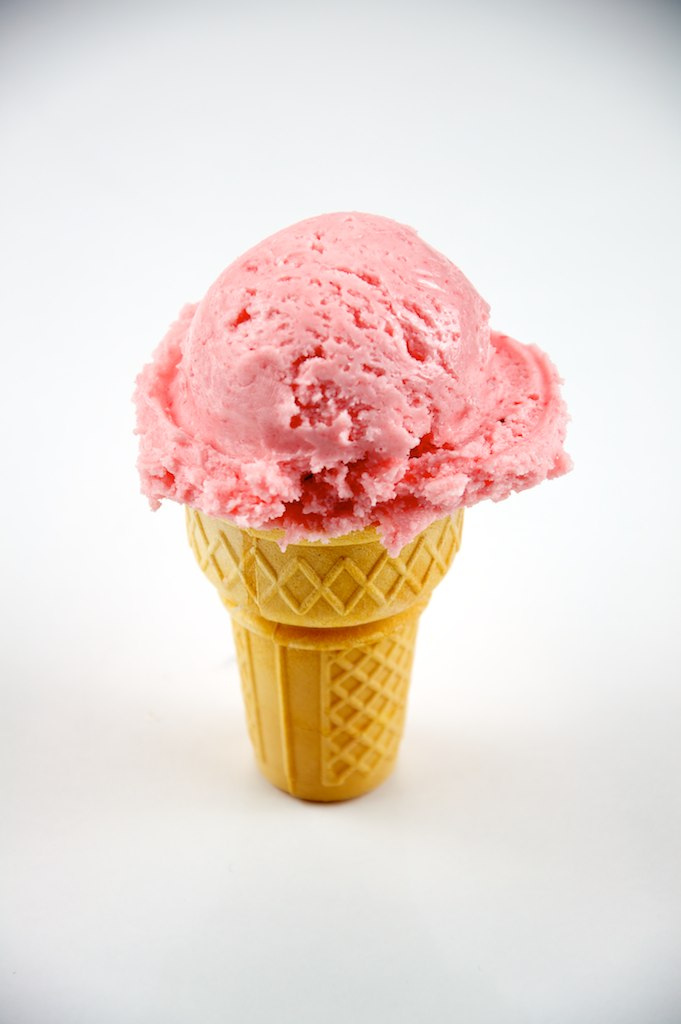
No, it was a humble object, a truncated ice cream cone shaped in plastic containing a small bag of hair ties, the sort of thing that girls use to put their hair in bunches. At first sight a good idea. It can sit on the dressing table, resting on the flat base, and the owner can remove one or two ties as required and replace them in due course.

Except – The truncated cone didn’t look very stable and the ball just rested on the cone, and would presumably roll away if the cone was upset. And the ball. In my limited experience of hair ties, they end up capturing loose hairs, the sparkly sheath snaps exposing the elastic core, or the elastic core breaks rendering them useless. They don’t have a long life.

Pigtails
Pigtails

In addition they get lost. Just like the planet of lost pens there is a planet of lost hair ties. Like the pens the hair ties rings around the planet just as ice and rocks form rings around Saturn. Just like a pen you can put one down anywhere and when you come back the hair tie has completely disappeared. Because of some law of probability or something sometimes there’s a pen in its place bearing the logo of some firm that you’ve never heard of and which operates in a different area to the one that you live in.

So after a while the semi stable holder of a ball of hair ties becomes a depleted bunch of hairy broken hair ties and a tipped over holder which has rolled off under the bed. I admit that much of the above is speculation. I’m not a girl, don’t wear hair ties, and I’m not an astronomer or statistician. But I suggest you try the experiment. Buy an ice cream holder and hair tie ball set and observe what happens. I reckon that it will be uncannily like the scenario I suggest above.

Ice Cream Cone
Ice Cream Cone

But think of all the unlikely things that had to happen to create that unlikely supermarket item. Firstly we had to have the Big Bang. But not just any Big Bang. This one. A slightly different Big Bang may not have resulted in a liveable Universe. The Big Bang might also have created a liveable Universe but not one where life evolved.

Life evolves on planets. Planets revolve around stars. Stars and planets have to be of right sort that life can evolve on. One of the things that is essential is a mix of elements which can only be created in the heart of a star. You see, the Universe is mostly hydrogen, as free protons, the occasional hydrogen atom, and the even rarer hydrogen molecules.

Pens
Pens

And that would be it, but some of the hydrogen/protons condensed into clumps or clouds, which grew until gravity compressed the hydrogen atoms to the point where they fused and produced helium and gave off energy. Stars. Generation I stars. Eventually pressures increased to the point where other elements started to be produced, and finally the stars exploded!

The Big Bang that started all this is the precise one that embodied or encoded all the nuclear interactions that I’ve just mentioned. Oh, there is a possibility that there was only one possible Big Bang – the one that led to us, but that doesn’t explain why all the universal constants have the values that they do. If any had been slightly different we wouldn’t be here.

Big Bang
Big Bang

When the stars exploded all the elements necessary to life were blasted into space. Over billions of years these very rare elements condensed to become our sun, and our earth. The earth and any rocky earthlike planet consists of a vast collection very rare atoms. We consist of a vast collection of very rare atoms that have somehow sprung to life. You can almost see the point of that religionists make when they say that such happenings as you and I could not have occurred by chance.

But of course they are wrong. Chance is the only reason for things happening, and it is so long since the Big Bang that unusual clusters of rare atoms, such as us, even though they are of very low probability, have come to pass, and all this was implicit in the Big Bang.

Periodic Table
Periodic Table

By some chance some collection of very rare elements sat down one day and thought about hair ties and how to keep them tidy and protect them from being lost and came up with the ice creme cone concept. I’ve wondered about the concept above, and whether or not it is in fact a useful one. My feeling is that the flaws outweigh the advantages, but of course I may be wrong.

For all I know, the concept works fine, and is the greatest advance in hair tie technology since someone had the original concept of a hair tie. When you think about it, it is a pretty cool technology which does away with the need for ribbons and strings, and the difficulties of tying and adjusting them. The ice cream cone holder concept could be the next step in the evolution of hair technology.

Hair Tie Balls
Hair Tie Balls

The truly wondrous thing though, is that the ice cream cone hair tie holder concept and its execution and appearance on the supermarket shelves is implicit in the Big Bang. The Big Bang led to stars, supernovas, more stars, planets, life, supermarkets and ice cream cone hair tie holders, and that is truly amazing.

Supermarket
Supermarket

The Lurg

The Lurg
The Lurg. This lady does not have the lurg. She looks amazingly healthy so this is a set up. If she had the lurg you would not instantly and would contemplate being elsewhere as soon as possible.

The invading army expanded in both directions from their beachhead. Soon they were almost everywhere, even invading the outlying areas. The resistance had little time to prepare, but soon they were building up their forces. The battle raged everywhere, noticeably raising the temperature.

Yes, I have the lurgy. It started a week ago with a sore throat and progressed to a crippling cough. Soon I was aching all over and doing anything at was getting very hard. My muscles ached from coughing and my back hurt, probably as a secondary result of the coughing.

Coughs and sneezes spread diseases

I felt hot and sweaty, and got an appointment with the doctor. She told me that it was a “viral infection” and that I had to “last it out”. I didn’t have bronchitis or pneumonia fortunately, so I came out of the medical centre with no prescription. That’s fine by me. Antibiotics wouldn’t help with a viral infection and most cold “remedies” are hokum.

What I had was a bit more than a cold though, so over the next few days I was mostly collapsed in bed, sometimes listening to radio or playing games on the tablet. Did I feel sorry for myself? Not really, but my mood was sombre. Even in the depths of depression I haven’t felt sorry for myself and I rarely do. It seems a pointless way to feel, and depression, for me, is colouring of the world as grey (but see below), not a personal attack by the Universe.

Depression
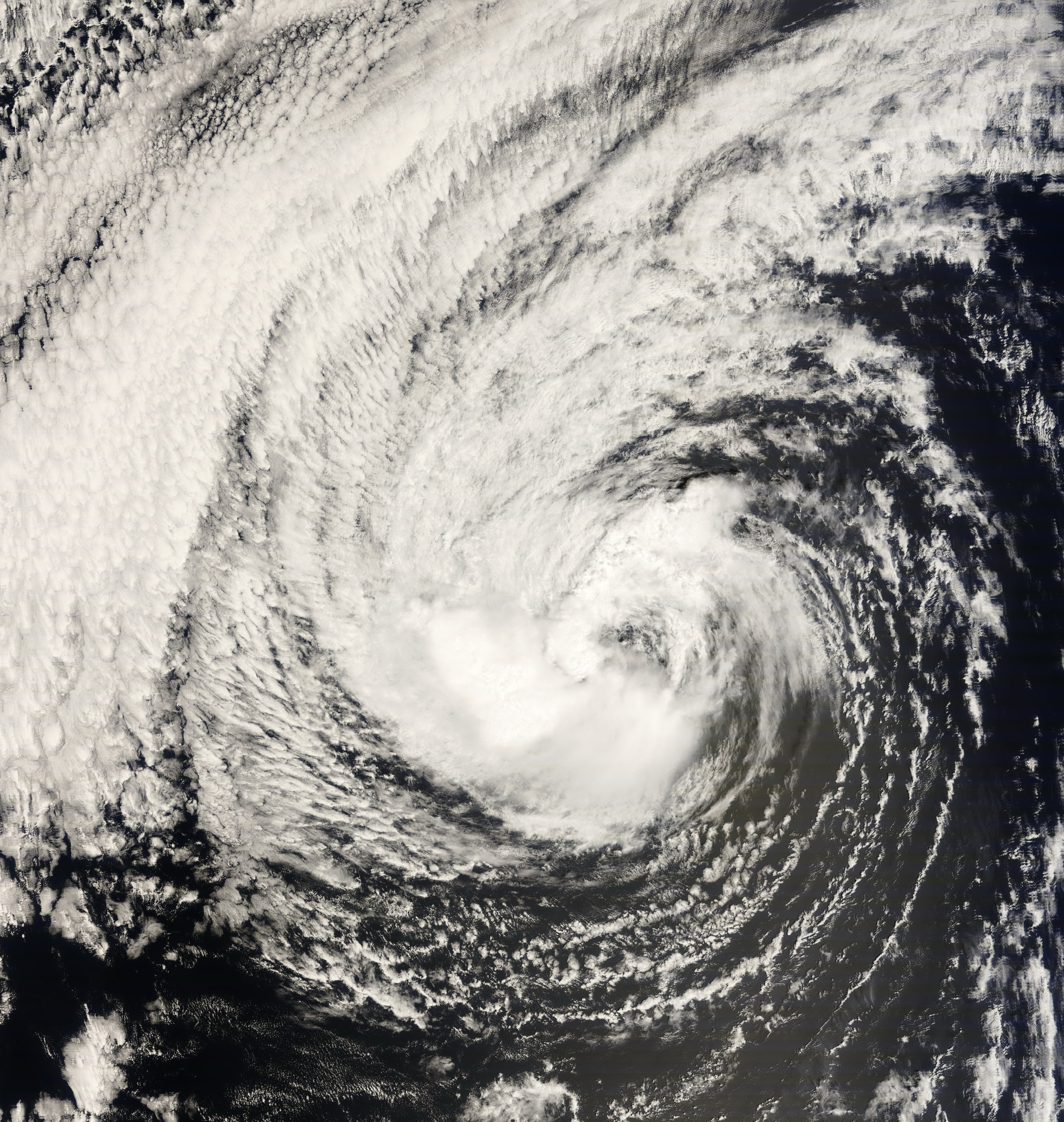
Depression means many things. I was searching for an image related to the mental condition but came up with the meteorologic phenomenon instead.

The thing about this particular “viral infection” is that it has left me feeling weak and tired 24 hours a day. Sleep has not been easy as I wake up sweating and coughing several times a night, once I drop off. It hasn’t been too good for my wife who has been disturbed by my nocturnal coughing spells.

Only once, fortunately, was I woken by the shivers. I hate the shivers. I felt reasonably warm in bed but my body decided it wasn’t. I struggled against the shivers for a while then snaked an arm out to grab a sweater. Fighting the weakness and the shakes I managed to pull the sweater on and still the shivers without getting out bed, then relaxed into the warmth. Of course I was soaking in sweat when I woke up. Yuck!

Warm bed
Warm bed

A deep cold or maybe flu like this makes things hard to do. There’s a general feeling of weakness, but I think that’s mostly a mental thing. I had to swing an axe at some blocks of wood out of necessity (It’s winter here) but I was able to do it, albeit with lengthy pauses to cough my lungs out, Muscles complain if you ask them to do work, but with “viral infection” they do that anyway.

Maybe the system is marshalling all resources to attack the invader and resents having to let resources go to other ends. Speaking of resources, food and drink lose their savour with a cold like this. Solid food tastes of nothing much and tea and coffee taste strange. (I don’t actually drink coffee so I’m extrapolating here!) I don’t know why this happens, but it’s like half of your taste buds are MIA and the others only have time to register “food of some sort”.

Tastebuds
Tastebuds

Also you eat at strange times. Struggling out of bed, it is often quite late in the morning before breakfast happens. Since my usual breakfast is pretty bland (oat biscuits and milk) you can imagine what it tastes like… Well pulped cardboard would probably have more flavour.

Lunch time has been straying into the early afternoon. Whatever is for lunch, it is probably quick and easy. Tinned soup, something on toast, or similar. Not that I can taste what it is, of course. I made scrambled eggs today (whisk eggs, pinch of salt, milk if wanted, pepper if wanted) and I had eaten half of it before I realised that I had forgotten the pinch of salt In normal times I would have spotted that in the first mouthful, even though I only use a little.

Scrambled eggs
Scrambled eggs

The really annoying thing, though, over the course of the battle for my body is that my brain functions have been “softened”. I think that’s the best word. Just like a landscape is softened by a veil of rain, my brain feels a little fuzzy, like an out of focus photograph. The sharp edges are still there, though it is more of an effort to utilise them.

Puzzles, for example, are doable, but with more effort than usual. I quite like Sudoku puzzles and can complete them at my usual level, but I’m tired afterwards. Even Solitaire (what else can you do when you can’t go out, when you’ve completed all the Sudoku puzzles available to you) can seem like a pretty daunting proposition.

Sudoku
Sudoku

I was going to mention colour, wasn’t I? Colour leaches from the world much like it does when depression hits. You look at something and the colours are there – you can notice to a block of red in something for instance – but somehow colour doesn’t figure much in the composite image that your eyes report to your, or is dropped as irrelevant by your brain. Something in the visual presentation of your vision system appears to dial down the colours.

It doesn’t go completely monochrome (though deep depression does, occasionally, for me). It’s just that colour seems to lose significance. It’s AS IF everything was grey and white until you actually look specifically at something. Still it is not as unpleasant as those time when depression blasts everything with light, where everything feels metallic, there is a metallic taste in the mouth. Total sensory overload that won’t stop. I call it the “neon world”.

Grey Skies - Belgium
Grey Skies – Belgium

I’m approaching the end of this post, which shows that I must be much improved from how I was before! Yeah! Yeah, the defenders of my internal galaxy! I still have the nose runs and still have the coughs, but the aches have retreated to only the coughing muscles. I think that I’m going to survive. Well, I always knew I would really, but it’s hard to maintain the positiveness when you’ve been coughing for 10 minutes and can’t see the end.

White blood cells
White blood cells

Parallel worlds or a Continuum?

Spooky Cat
Spooky Cat

A cursory search on the Internet doesn’t tell me one way or another if Erwin Schrodinger owned a cat. Nevertheless he could have owned a cat, so the existence of Schrodinger’s actual cat is unknown to me. David Deutsch might possible argue that Schrodinger’s decision to own a cat or not own a cat resulted in two parallel worlds.

The above is obviously a play on the original scenario outlined by Schrodinger, the famous Schrodinger’s Cat thought experiment. The cat’s state before the box is opened is a strange state, referred to as a superposition, where the cat is both alive and dead. When the box is opened it is argued that this state is somehow resolved with cat being definitely alive or dead.

It's a trap!
It’s a trap!

Suppose that we install a detector in the box with the cat which determines whether or not the cat is dead and notes the time when  it dies. Does this resolve the paradox? After all, if the detector says that the cat died three minutes ago, then we now know exactly when the cat died.

This doesn’t resolve the issue, though, as the detector will also be in a superposition until the box is opened – we don’t know if it has been triggered or not. Of course, some people, including Schrodinger himself, are not happy with this interpretation, and it does seem that, pragmatically, the cat is alive until the device in the box is triggered and is thereafter dead.

Superposition of waves

However the equation derived by Schrodinger appears to say that the cat exists in both states, so it appears as if Schodinger’s “ridiculous case” (his words) is in fact the case. Somehow the cat does appear to be in the strage state of superposition.

If we look at the experimenter, he (or she) has no clue before opening the box whether the cat is dead or not. Nothing appears to change for him (or her), but in fact it does. He (or she) is unaware of the state of the cat, so he (or she) is in the superimposed state : He (or she) is unaware whether or not the cat is alive or whether it is dead, which is a superposition state.

Dead Cat Bounce
Dead Cat Bounce

Yet we don’t find this strange. If we remove the scientific gadgets from the box, this doesn’t really change anything – the cat may drop dead from old ages or disease before the box is open. Once again we cannot know the live/dead status of the cat until we open the box.

So, what is special about opening the box? Well, the “when” is very important if we consider the usual case with the scientific gadgets in the box. If we open the box early we are more likely to find the cat alive. If we open it later it is more likely that the cat will be dead. Extinct. Shuffled the mortal coil.

Mortal Coil
Mortal Coil

So it is the probability of atomic decay leading to the cat’s death that is changing. It may be 70% likely that cat is dead, so if we could repeat the experiment 1000s of times 7/10th of the time the cat is dead, and 3/10th of the time the cat is still alive. Yeah, cat!! (There’s also a possibility that the experimenter gets a whiff of cyanide and dies, but let’s ignore that.)

But after the box is opened, the cat is 100% alive or 100% dead. Apparently. How did that happen? Some people claim that something mysterious called “the collapse of the waveform” happened. I don’t think that really explains anything.


Collapse of the waveform

The same thing happens in the real world. If I don’t check my lotto tickets I’m in a superposition state of having won a fortune and not having won a fortune. When I check them I find I haven’t won anything. Again! I must stop buying them. They are a waste of money.

The many worlds hypothesis gets around this by postulating the splitting of the world into two worlds whenever a situation like this arises. After I check my lotto ticket there are two worlds, one where I am a winner and one where I am not. How can I move to the world where I’m a millionaire? It doesn’t seem fair that I stuck here with two worthless bits of paper. does it?

Lotto tickets
Lotto tickets

And what does the probability mean? In the lotto case it is 1 in an astronomical number that I come out a winner and almost 1 that I get nothing. In the cat case it may be 60/40 or 70/30, and in the cat case it changes over time.

If the world splits every time a probabilistic situation arises, then the probabilities don’t actually mean much. What difference does it make if a situation is “more probable” than another situation if both situations come about in the multiverse regardless? It doesn’t seem that it is a meaningful attribute of the branches. What does it mean, in this model that branch A is three times more likely than branch B? Somehow a continuum (probability) reduces to a binary choice (A or B).

Spectrum
Spectrum

We could consider that the split is not a split at all, but that reality, the universe, whatever, has another dimension, that of probability. Imagine your worldline, a worm travelling through the dimensions of space and the new one of probability. You open the box and lo! Your worldline continues, and the cat is now dead or alive, but not both.

But which way does it go? That is determined purely by the probabilities, by the throw of the cosmic dice, but once it chooses a path, then there is no other possibility. In the space dimensions you can only be in one place at a time. If you are at A you cannot be at B, and similarly in the probability dimension, if you are at P you cannot be at Q.

Alphabet
Alphabet

However any point P (the cat is still alive!) is merely a point on the probability line. There are an uncountable number of points where the cat is alive and also an uncountable number of points where the cat is deceased. But the ratio between the two parts of the line is the probability of the cat’s survival.

Many Worlds
Many Worlds

Virtually real

Antonin Artaud
Antonin Artaud

Reputedly the French avant-garde playwright Antonin Artaud took the view that illusion was not distinct from reality, advocating that spectators at a play should suspend disbelief and regard the drama on stage as reality. We do, in fact do this all the time.

From the slightly different perspective as spectators we watch our films and our soaps and our nature programs and we enter the reality shown on the screen while ignoring , to a large extent, what is going on around us. We even turn down the lights so that the brighter reality on the screen dominates. We cry for the characters, we laugh for and at them, we cheer their successes even though, at some level we realise that they are not “real”.

Movie Theatre
Movie Theatre

When we go to the cinema, we get the same thing only stronger, bigger and brighter. The theatre sound system knocks dust from the pelmets and detaches spider from the roof. The screen is so wide and we are so close that we are thrust deep into the action. The 5 metre high image of a face 15 metres away makes the same angle in the eye as a 200mm high face at arms length.

But we don’t need technology to enter a different reality. In a book we read of heroes and heroines, ogres and business men, of warfare and love making, of atoms and galaxies, of amoeba and star clouds. We use our imagination to enter their worlds and we get lost in them. We may beg, buy, borrow or steal a “page turner”, a book that we have to read through to the end, to find out the fate of the characters in it. We may purchase a travel book and visit in the imagination lands that we will never physically visit.

Books
Books

Photographs draw us in, religious books promise us heaven or hell, text books inform us and guide us, map books (or GPS) show us the way from A to B. Our games enter us into a different reality, sometimes one where it is kill or be killed, or where we get lost in a maze, or where we simply have to solve a puzzle. Games introduce us to a multilevel reality – we first enter the reality of the computer or PlayStation or XBox, or Nintendo, then we enter the reality of the game within the device.

Of course we may prefer old style board games like chess. Imagine a world that consists of 32 black and 32 white squares and black and white player pieces, which, quantum like, can only exist in one square at a time and when captured, cease to exist, so far as the reality of the chessboard is concerned. Players enter this reality in their minds and navigate their pieces in a war of black versus white, which starts with a given configuration and ends when the contest is decided, then returns like a cyclic Big Bang to the original configuration.

Big Bang
Big Bang

The fact that we can embed one reality (the fictional) inside another (the real) leads to the idea of an infinite regression of realities. In “The Matrix“, which I have never seen(!), Neo’s supposed reality turns out to be a simulation, and the real world is much more unpleasant than the supposed reality (not that unpleasant things don’t happen to Neo and others in the supposed reality).

The mathematician, the logician, the philosopher says “Only two?” If there are two realities, could it be possible that there are more? Maybe the real world of the Matrix is itself a simulation. Maybe that simulation is a simulation.

Wake up Neo
Wake up Neo

So we end up with the possibility of an infinite series of nested realities. There is one thing about the realities that I’ve been talking about though and that is that they are in our minds. If that pattern were to apply, every one of the nested realities would be in a mind. In the case of the Matrix Neo’s reality was imposed on his mind from outside, as it was for every other human in the Matrix.

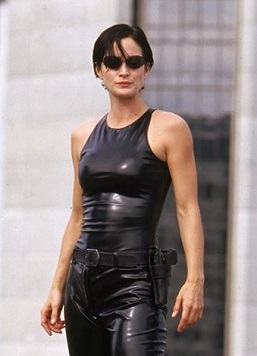
The really clever thing about the Matrix was not that it was imposed on every human’s mind, but that it integrated all inputs from all the human minds into a consistent whole. For instance, if Neo sees a door and opens it, this information has to update the Matrix, and get downloaded into the minds of all the others in the Matrix, such as Trinity, who is waiting on the other side of the door.

Trinity (Matrix)
Trinity (Matrix)

That’s an impressive feat! The updating of the Matrix by all the human minds and the broadcasting of it back to all human minds is a much more impressive task than creating the Matrix in the first place. It is several orders of magnitude harder.

For instance, consider the immersive and interactive virtual realities which we have built and which generally involve the wearing of special gear such as VR helmets and VR gloves and connection to a fast computer which holds the information about the VR “world”.

VR Helmet
VR Helmet

If there are two individuals using the VR “world” at the same time, when Player One raises his hand, the information is fed to the computer and updates the VR “world”. Player Two’s view of the world has to be updated to show the avatar of Player One with his hand raised. If there are even more players all moving around the problem becomes much worse. Each player’s updates need to be fed to all other players (or all the “close” players to each player). The traffic rises exponentially.

But most of the time we don’t need fully immersive virtual reality to achieve a virtual reality. A simple book can do it. A movie can do it, probably even better. A play will do it too. All it requires is the suspension of disbelief, and the ability of the mind to draw pictures and fill in the gaps. It may be apparent to a person who walks in on the performance that Inspector Goole is only an actor, as are the member of the cast. The set is not really the sitting room of the Birlings, but a roughly painted lath and hardboard approximation.

An Inspector Calls
An Inspector Calls

But in the minds of the audience, for the duration of the play, J. B Priestly gives them a view into a different reality. One that is not fully immersive, but which uses the power of the human mind.

Phrenology
Phrenology