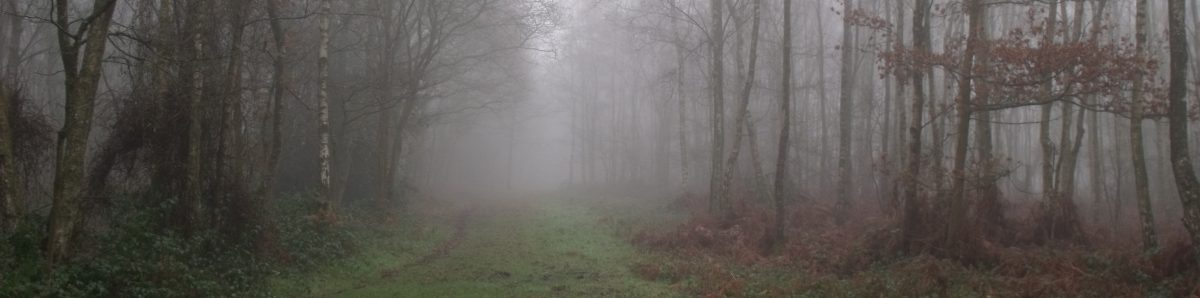
Why did he do it?

Embed from Getty Images

Why do people become murderers or rapists, or even petty thieves. I mean, sure, sometimes a person could irritate you to the point where a fleeting thought of carnage crosses your mind. But most people would immediately shut down that thought and even be shocked and revolted by it. They certainly wouldn’t act on it.

Surely no one wakes up one morning and thinks “Oh, I’ll become a career criminal,” or “Oh, I’ll violently attack someone today.” It’s easier to explain when the person is immersed in a culture where crime is normal and maybe even expected of one. But there are law abiding people even within the worst of environments, where crime is common.

Embed from Getty Images

Fear of consequences is often used to try to deter people from crime, but in many cases the fear of consequences is not enough to prevent a person committing a crime. Prison may be seen as normal and expected. So called petty criminals may expect to be thrown in to jail many times in their lives and to them it cannot be much of a deterrent.

Of course, one’s better judgement can be nullified by drugs or by alcohol. Many assaults happen when the person who assaults another person is drunk or high on drugs. Other crimes like rape, burglary, and vandalism are also more likely to happen when a person is intoxicated.

Embed from Getty Images

One way that is often suggested to reduce crime is to increase the severity of the punishment, so that fear of consequences is increased. However, this has limited effect only. People still committed murder even when capital punishment was still used. When in a blind rage, if a person is mentally ill, or if the person believes that they can get away with a crime without being caught, then the consequences often do not come under consideration.

In a court of law it is assumed that the person knew that consequences and still continued with their action. In many cases I believe that this is simplistic to say the least. A person sees another person leave a phone or wallet somewhere that the first person can take it from. Often the first person doesn’t think through the consequences of the theft. They don’t even consciously think that they can get away with it. They just react to the item being accessible.

Embed from Getty Images

Also each successful theft reinforces the thief’s feeling that he or she will not be caught, so they do it again. In fact, of course there is a chance that they will be caught each time that they commit the theft, and the more times that they commit the crime, the more likely it is that they will eventually get caught.

If they are likely to get away with the crime nine times out of ten, then if they commit the crime seven times, the chance of them getting caught is better than even. Maybe one way to reduce crime is to teach criminals statistics!

Embed from Getty Images

It seems that the propensity to commit crime is inherent in human beings. It is not related to social standing, as crimes of theft and of fraud are seen to be committed by people of all social standings. The criminals, even those higher up the socioeconomic ladder tend to make the mistake of repeating their crimes, which, as I mentioned above, renders them more likely to be caught.

Of course those lower down the socioeconomic ladder commit simpler crimes like theft and violence often fuelled by alcohol and drugs, and those higher up commit the so-called white collar crimes. A person’s position on the ladder doesn’t seem to bear much relation to whether or not they commit sexually related crimes, and in fact, a person’s higher standing often seems to protect them against being caught – they are able to convince people to look the other way when such a crime is committed, by using their influence or by using their money to buy people off.

Embed from Getty Images

If the propensity for crime is to be found at all levels of society, and the punishment of criminals is relatively ineffective as deterring criminals from committing crime, what is there that we can do about it? In my opinion, not a lot. But nevertheless we need to try, if only to reduce it to the minimum possible.

That is what society, from the beginning up to the present day is trying to do, of course. The consequences of being caught committing a crime don’t stop everyone, but it is likely that they do stop some people. Over harsh penalties from crimes don’t work beyond a certain point, and this has been recognised in societies that have dumped capital punishment.

Embed from Getty Images

We try to keep down crime by locking up those who are caught committing it. Again this has only limited effectiveness as well as, effectively, targeting those at the low end of the socioeconomic ladder. A rich person who is fined for jumping a red light is likely to notice it much less than a poor person. The fines represent a much bigger portion of a poor man’s income than that of a rich man.

The only way to reduce crime to zero is to change the human race. If the genes for criminality and violence were to be bred out of the human race, then we would have no problem with crime. Women would not be raped and funds would not be embezzled. People would not drink drive, and would not bash other people.

However, the genes for criminality might be perilously close to the genes for creativity. Creative individuals are often those who break the rules, who go beyond what is allowed. Creative individuals also tend to be those who are close to the boundary between sanity and insanity. They are the eccentrics among us, the ones who do not fit in.

Maybe we could prevent crime by changing the human race, but we risk creating a society which also has no artists, no eccentrics, and essentially no Leonardo DaVincis, no Isaac Newtons, no Shakespeares, no Albert Einsteins. Society would be the poorer for that.

Embed from Getty Images


Meditation – sort of

English: By kac's meditation
English: By kac’s meditation (Photo credit: Wikipedia)

Meditation brings a lot of contentment to a lot of people, but it is not for me. Oh, I’ve tried it, but I can’t get around a feeling that I’d rather be doing things than sitting there musing on things. Introspection yields practically nothing for me.

That doesn’t mean that I don’t ponder on life, the Universe and all that as anyone who has ever read any of my pondering in this blog and elsewhere will know. In particular I have a fascination for numbers and mathematics. I’ve also wondered about most of the things that occur as topics in philosophy at one time or another.

English: Square root of x formula. Symbol of m...
English: Square root of x formula. Symbol of mathematics. (Photo credit: Wikipedia)

These musings occur mostly when something triggers them, like a comment in a blog that I’m reading, or the title of the latest book on philosophy. Or even something as mundane as a lotto draw. Or washing up. Any of those can trigger a period of thought about some topic.

In case anyone is wondering, washing up can trigger thoughts about bubbles, or caustic curves, or music when two items of crockery produce a note when they touch during the process. Why, for example does an octave resonate in our minds.

Embed from Getty Images

A note sounds remarkably like a note one octave above it, while sounding different to it. Two notes clash or alternatively resonate, and we call them consonant or dissonant. OK, part of the answer to that one is that if the ratio of the frequencies notes is simple, then the notes are consonant, whereas if the ratio of the frequencies is not simple, the notes are dissonant. However, it is not as simple as that.

Three notes for a chord and things get even more complex, and yet composers seem to intuitively know the rules and complexities and use and even bend them for their own purposes. One composer’s consonance is another composer’s assonance.

Embed from Getty Images

Meditation seems to have benefits for many people, and some organisations have reported benefits from introducing meditation into the workplace. Presumably these benefits outweigh the cost of the time lost in meditation, otherwise it would be of little benefit to the organisation.

That’s the crux of the matter, really. Is the time spent in meditation worth the cost in time taken to meditate? Is it better to spend your time out in the open walking and observing the views, the plants and animals around you, or to stay in one spot and meditating on a flower or whatever? Of course, you can tramp the trails and meditate as some level as you go.

Embed from Getty Images

A form of meditation is introspection, where the person who is meditating tries to examine his or her conscious thoughts or feelings. I’ve tried to do this many times and I find it frustrating. It is easy enough to gauge one’s mood and how one is feeling at a particular time, but I have never ever had a glimpse of any conscious thoughts.

Never have I observed my thoughts when I am thinking about something. For instance, I can imagine that I am staring at something green. I can gain no insight into what it means to be looking at something green. Try it yourself. Close your eyes and imagine a uniform greenness. I would say that you can think of greenness, and you can think of yourself thinking of greenness but you can’t think of yourself thinking of greenness at the same time that you are thinking of greenness.

Embed from Getty Images

Similarly, we can think of ourselves winning the lotto and what we would do with the money, but we can’t, at the same time, think of ourselves thinking of winning the lotto. We can think about our thoughts, but only after we have thought them. We can’t think of the while they are happening.

Out thoughts don’t have to be about real things. There are people, usually mathematicians who try to visualise objects in four dimensions rather than the usual three. Actually, visualising three dimensional objects is hard enough. Try this. Imagine a flexible torus (doughnut shape). Imagine that you make a small puncture in it and pull the edges of the puncture over the torus.

In other words, try to turn it inside out. What shape do you get? The answer turns out to be another torus, but it is not easily visualised. In addition while you can imagine yourself visualising it, you can’t think about yourself visualising it while you are actually doing it. In other words, our consciousnesses seem to be single threaded.

Actually, if you could observe yourself thinking about something, you could presumably observe yourself observing yourself thinking about something, and so on. This would, in theory lead to an infinite layers of you observing yourself.

Embed from Getty Images

Meditation on thoughts or deeds, as I understand it as a non-practitioner, then comes down to a focused concentration on thoughts that have already been thought, as it were, and I guess that meditation could bring one awareness of why one thought those thought or did that deed. This is no doubt beneficial as such meditation could identify things about thoughts and deeds that one could change, perhaps simply by making one aware of why one had those thoughts or did that deed.

For example, if you meditate about what you have done on a particular occasion you might form the conclusion that you should have done something different. When the situation arises next, you will have a considered analysis of what you did before and it may influence you to do something different.

Or you may conclude, during your meditation, that certain events led you into that situation, and you could then avoid those events, thereby avoiding the situation. For instance, you may conclude that rashness is an issue for you and that you should avoid rashness. Tying this to a mantra or key phrase could enable you to avoid rashness, by reminding you of your conclusion and enabling you through the mantra to avoid it. This of course depends on you being able to determine when you are about to do something rash and therefore trigger the mantra and the avoidance.

[I’m not too happy with this post. But let it stand for now. I’ll maybe revisit this later.]

Embed from Getty Images


Oddities

Embed from Getty Images

Humans and not very good at calculating odds and how probabilities work. For instance, if we are tossing coins and we get six heads in a row, the probability of getting yet another head is still fifty-fifty. Yet people feel that after a series of heads that it is more likely that more tails than heads will turn up for a while, so that the ratio of heads to tails returns to the expected one to one ratio.

But the expected ratio of heads to tails for all subsequent tests is one to one. It’s as if a new set of tests is being started, and so any lead that has already built up is, in all probability, not going to be reduced.

This seems odd. If we have done one thousand trials and have turned up 550 heads to 450 tails, the ratio of heads to tails is about 0.818 and the ratio of heads to the number of tests is 0.55. Surely more tests will take the ratios closer to the expected values of 1.0 and 0.5? Surely that means that there will be more tails than heads in the future?

Embed from Getty Images

Well, the answer to both questions is no, of course. The ratios for the whole test may move closer to 1.0 and 0.5, but equally, they may move further away. In the extreme case, there may never be a tail again. Or all the rest of the throws may result in tails.

Interestingly, if the subsequent tests produce a series of heads and tails, the difference between the number of heads and tails stays at around 100, but the ratio of tails to heads for the whole test slowly creeps closer to 1.0 and the ratio of heads to the total number of tests closes in on 0.5 as more and more trials are done. By the time we reach two million tests, the two numbers are not very far from the expected values, being 0.9999 and 0.5000 respectively.

So, if you think to yourself, as you buy a lotto ticket “Well I must eventually win, if I keep buying the tickets”, it doesn’t work like that. You could buy a lotto ticket forever, literally, and never ever win. Sorry.

Embed from Getty Images

Lotto and sweepstakes are, I believe, a different type of gambling from other forms, such as betting on horses or poker and other gambling card games. Lotto, sweepstakes and raffles involve no element of skill, and the gambler’s only involvement is buying the ticket. Betting on horses or cards involves skill to some extent, and that skill comes down to things like working out the probabilities of a particular card coming up and the probabilities of other players having certain cards in their hands.

Both types of gambling encourage the gambler to gamble more. If a gambler doesn’t win on the Lotto he or she might say to his or herself “Better luck next time.” Of course, luck does not exist, but probabilities do, and this is a mild form of the Gambler’s Fallacy described above. Nevertheless, people do win and the winners appear on television for us all to see and emulate.

Embed from Getty Images

There’s two sorts of strategy for winning the Lotto. First there’s the “always use the same numbers” strategy, and then there’s the “random numbers” strategy. If you always use the same numbers, goes the theory, then eventually there must be a match. That’s wrong of course, since the number combination may not appear before the end of the universe.

The random number strategy argues that there is no pattern to results so it is silly to expect a particular pattern to eventuate. This strategy acknowledges the random nature of the draw, but doesn’t give the gambler any advantage over any other strategy, even the same numbers strategy. It is certainly easier to buy a randomly generated ticket than to fill in a form to purchase the same numbers every time.

Embed from Getty Images

Some people experience a run of luck. They might have three things happen to them, so go and buy a lotto ticket while their luck holds. Then is they win they attribute it to their lucky streak. It’s all nonsense of course. They conveniently forget the many, many times that they bought a ticket because of a lucky streak, only for the ticket to be a loser.

The proceeds from the sales of lotto tickets don’t normally all go to holders of winning tickets. Firstly the operators of the system need to recoup their costs. It’s not cheap to own and operate those fancy machines with the tumbling balls and it also costs to employ the people to check that the machines are fair.

Embed from Getty Images

If one of the balls is dented, will that affect the probability of that ball being selected? Maybe, just a little, but the draw should be fair so those providing the lotto equipment spend a large amount of effort to ensure that they are fair, and the costs of that effort must come out of the prize funds.

Secondly, the state or maybe the lotto organisation itself will often withhold part of the lotto sales takings for local or national causes, such as cancer research, or societal things, like the fight against teen suicide. The money for humanitarian causes is deducted from the prize funds.

Embed from Getty Images

One of the humanitarian causes is often the fight against problem gambling. It’s ironic and somewhat appropriate that funds from gambling are used to combat problem gambling. It seems that some people get such a thrill from gambling that they use all their, then borrow or steal from others to continue to gamble.

They invoke the Gambler’s Fallacy. They suggest that their luck must change sooner or later. It doesn’t have to, and may never change, but they continue to spend money on their gambling. They also don’t take account of the fact that they might win, eventually, by sheer chance, but it is unlikely that their winnings will cover what they have already gambled away. They have a tendency to believe that one big win will sort things out for them. It won’t of course.

Embed from Getty Images

So, the only true fact about Lotto and similar draw is that you have to be in to win. But just because you are in doesn’t mean that you will win. You probably won’t. The best way to treat Lotto and other similar games is that you are donating to a good cause and you might, but probably won’t get something back. So, I’m off to buy a lotto ticket. I might win thirty million dollars, but I won’t cry if I don’t.

Embed from Getty Images


Looking for Inspiration

Embed from Getty Images

I suppose that everyone has seen the so-called “Inspirational Quotes“. If you haven’t, it is unlikely that you have been using the Internet a lot! Inspirational Quotes are short sentences, usually totally devoid of context that, supposedly, provide guidance or inspiration for those who need it. Usually the quotation is in large font applied over the top of a sunset, or a couple hand in hand, or a cute puppy or other animal.

Since the quotation is usually without context, the reader is free to apply it however he or she wants. You can apply it to your own situation, whatever that might be. A large portion of the quotes exhort the reader to just get up and do it, whatever it might be. The idea is that one should take one’s chance and go for it.

Embed from Getty Images

This is all well and good if the advice is appropriate. The original writer has no way of knowing this. Someone might take the message as a sign to get out of a situation where they are safe and comfortable and to take risks. Unfortunately, if this turns out to be a mistake, there is usually no way back.

Many of the inspirational quotations have a religious slant to them.  Søren Kierkegaard reportedly said “Now, with God’s help, I shall become myself.” It’s easy to make fun of inspirational quotes, both religious and secular, such as the foregoing. After, if he wasn’t himself when he made the quotation, what was he? It is so devoid of context that one can’t help asking oneself what one is supposed to do to become oneself?

Embed from Getty Images

Can the quotations be dangerous? I suppose that if one is depressed or suicidal it would be unfortunate to come across a quotation that said, basically, “just do it,” but it is unlikely that a simple quotation like that would actually incite suicide.

I suspect that most of the inspirational quotations are pretty benign. People look at them and are momentarily uplifted or cheered up by then, but then just carry on with their lives. The quotations may help them cope with a difficult situation or help them be happy in the situation that they find themselves in. I doubt that the motivation goes deep enough to completely change their lives, but I don’t know if anyone has ever checked or studied the phenomenon.

Embed from Getty Images

After I started thinking about inspirational quotations, I wondered who it is who writes the things. Someone must spend a lot of time either extracting them from online books and pages and maybe they even type them up from paper books! In many cases they then paste the text onto pretty pictures of all sorts of things. Sunsets seem to be a favourite.

Then I discovered the on-line generators for these things. Some of them just allow you to type in whatever you like, but some of them will generate the whole thing for you. One that I’ve played with a bit is InspiroBot, which produces quotations using some sort of algorithm, and calls itself an Artificial Intelligence. It produces image/quote combinations which range from ones which seem sense free to those that seem like they mean something.

Embed from Getty Images

I was wondering how the meme arose, then I though back to the times when computers were just entering the workplace. Way back when printers could only print letters and numbers people would draw something using just letters and numbers. If you went up close you could see the letters and numbers but from a distance the different densities of the letters looked like a image of something, so people covered whole walls with, say, a picture of an astronaut, or a pinup.

When printers could print images these were replaced with smaller pictures of astronauts or pinups or someone’s kids. Then someone somewhere decided to inspire their staff with a poster or picture with an inspiring caption. Naturally spoof and satires of these soon appeared, and also people started putting up quotations that had inspired them, and spoofs and satires of those also appeared.

Nowadays of course, the whole thing has moved to “social media”. People spot a quotation which appeals to them and post it on Facebook. This quite often means that you might see the same “inspirational posting” several times, as other people share it with their friends which might include you!

I’m intrigued by the programs that produce the quotations by algorithmic means. Since they produce only a short sentence, there’s more chance that you can see sense in the result, than there would be if the algorithm produced a whole article or something. I’ve found one site where an algorithm produces a small article on each refresh, and the results seem to me to be a bit odd when I try to make sense of them.

Embed from Getty Images

It reminds me of a famous hoax perpetrated by Alan Sokal on the unwary editors of an academic journal. Sokal wrote an article which was composed of buzzwords and references to Post Modern writers, since he believed that all that was required of an article to get it published was the buzzwords and the gratuitous references to Post Modern writers.

He succeeded in getting it published, which ironically gives the article meaning of exactly the sort that he was ridiculing. While it had no meaning in the context of an academic article, it was an unfavourable commentary on the meanings and lack of rigour espoused by the Post Modern movement. If you are interested in producing your own Sokal-type article, there is a web site called “The Post Modern Essay generator, which will do it for you.

Embed from Getty Images

So, are all, or the majority of inspirational quotations generated by an algorithm or do people create them and post them themselves? I think that most are created by people. At least the quotes are, but the actual postings may not be. The quotes seem to, in most cases, almost make sense, but they don’t always seem to match with the pictures. I’d guess that people are using a generator but posting their quotes, whether gleaned from elsewhere or created by themselves, and the picture is more or less random and may not match the quotation.

“Yes” means “No!!!”

Young lady
Young lady

No one likes being ignored, with the exception of a few individuals who prefer to remain in the background. This applies to both halves of the human race, male and female. With the exception, again, of a smallish number of individuals, males are attracted by females and vice versa.

Whenever a female wants to attract a male she will dress attractively and behave in a way that indicates that she finds the male attractive. And vice versa of course. Males do dress up when they want to attract women. They shave, they use “aftershave” and “deodorants”, they dress smartly.

Girls at a party
Girls at a party

Females do all that, or the equivalent, but while males tend to favour paler more muted colours, and plain fabrics, females tend to go for brighter colours, and clothes tend to be more revealing of the female’s body, with low cut tops and short skirts. Women also tend to use more make up than men almost to the point of caricature. Eyes are enhanced by eyeliners, skin is smoothed and rendered apparently blemish free with foundation and lips are enhanced with bright red lipsticks.

Everything about the look of a female who is trying to look attractive says “come and get me”, but it would be a stupid male who took that literally. Unfortunately there are many stupid males out there.

Party
Party

The male psyche seems to expect instant gratification, while the female psyche seems to want a slower and steady build up. Of course this could all be due to the effects of societal gender stereotyping, but I don’t think so. This inevitably leads to conflict, as males get impatient with the slower pace, which females just want things to build steadily.

What complicates things even further is that females are trying to impress other women by their appearance, at the same time that they are trying to attract males, while males are largely uninterested in the appearance of other males. Males are more interested in linking up with a female than in whether or not one of their pals is using a new hair gel. More stereotyping? Maybe, but that is the way that it seems to work at present.

Man with makeup.
Man with makeup.

When you add alcohol into the mix, things become more explosive. It removes or reduces any inhibitions. A male may try harder than he otherwise would, because, after all, most males would want the female he is interested in to be happy with his approaches, and alcohol dulls his perception of how his approach is going, or makes him less aware of any negative signals that the female is putting out.

The female on the other hand, if she is drinking alcohol is less likely to be choosy when interacting with a male and is less likely to put out the negative signals. If excess alcohol is involved, it is likely that all inhibitions are removed, and the female may well be incapable of making reasonable decisions. This is a real danger.

Three drunken women
Three drunken women

If the female is incapable of making reasonable decisions, the responsibility devolves to the male. However, in situations involving alcohol the male may be rendered as incapable as the female. If the male is intoxicated and the female is not, then the situation is even worse.

People indulge in alcohol to be relaxed and to make social interactions, which can be fraught, a little easier. Unfortunately, with alcohol being relatively cheap, it can be easy to overindulge, with dire consequences. There is no easy solution to this issue. Alcohol could be banned, or made much more expensive, but that would just push the alcohol trade underground. There could be more education about the risks of drinking alcohol to excess, but such campaigns rarely seem to work.

Drunken man returns
Drunken man returns

Suppose though, to get back on track, a female and a male find themselves mutually attracted, without the benefit of alcohol or other drugs. Or maybe a reasonable amount. What then? Ultimately this is a mating game. The male is likely to have short term goals while the female is going to have longer term goals, at least in the current milieu.

The female presumably is looking for a long term relationship, while the male may not. He may just want sex. One problem is that it is difficult, not to mention a little weird, to discuss such matters when you have just met. Some modern couples seem to defer such discussion for a comparatively long time, and will enjoy sex well before they are established as a couple.

Teen kiss
Teen kiss

These days some females seem to have sex on the same casual basis as males, which seems to me to be a bit odd, and seems related to the current trend to loosen gender stereotyping. The consequences of this more relaxed behaviour may increase the number of females who don’t get married and those who end up as “single mothers”.

That is offset to some extent by long term unmarried partnerships, but not, I think completely. There are also more females who seem to move from partner to partner, with the kids tagging along.

The old-fashioned idea that females and males get married, and the female looks after the kids while the male provides for them all seems to be fading away. That’s not necessarily bad in itself, but there are advantages in being married. It’s a commitment usually for life, and it should be a partnership. Somehow, though the idea that the female looks after the children does not seem to be fading away.

Mother and children
Mother and children

Regardless, a single female who is out for a good time should not be potentially in danger, even if she dresses in an “attractive” manner. She may or may not be trying to attract males and could perhaps be only trying to impress her girl friends. If she does attract a male and finds him attractive, she should not be pressured into doing anything that she wouldn’t want to do, if she were completely sober.

Ideally men, especially young men who have been drinking, should learn that when a female says “No”, she really means “No”. It doesn’t mean “Maybe” which also means “No” and it especially doesn’t mean “Yes”. “Stop” means just that, no matter how far the couple have progressed in their physical relationship.

General Warning sign

It is also true that “Yes” probably means “No” too. If it is early in the relationship, for example, on the night that the female and male meet, then any answer should be taken to mean “No”. There’s a lot of reasons for the “Yes” answer to really mean “No”. It could mean that she is scared of the male’s reactions should she say “No”, or she is too drunk to be rational, or simply that she is afraid of missing out or she is subject to peer pressure.

It would be a good idea for all males to treat all “Yeses” as “Nos” and to try to pick up on all the minute clues that females give out. The problem is that the male is likely to be at least as liquored up as the female and incapable of recognising the signals.

Stop
Stop

A Visit from the Black Dog

Barking Dog
Barking Dog

I’m suffering a visit from the Black Dog. I’ve no idea how long it is going to stay. Fortunately for me, it doesn’t incapacitate me, and I doubt that people can detect it by my everyday demeanour.

That, in itself, is a problem. If you look ill, or you sport a bandage or crutches, or you reside in a wheel chair, people can tell at a glance that you are not one hundred per cent fit. That’s not to say that such people do not deserve our sympathy and help. Of course they do. But depression is invisible, unless it render the sufferer unable to function properly.

Rumination (?)
Rumination (?)

Much like with IBS sufferers, people cannot see that you are not well, and therefore don’t make allowances for you. This is compounded by the fact that depressed people want to be normal and therefore don’t mention it to people, and suppress, so far as they are able, any external indications of their problems. Outwardly a depressed person may laugh and joke, but, it’s almost a cliché, they are hurting inside. Of course I’m talking about those people who are less seriously affected.

When someone who has depression says that they feel worthless and that life is not worth living or wonders what if it is all worth it, those who they are talking to often nod their understanding. But I’m not sure if they really do understand what it is like to be depressed.

Cycle of depression
Cycle of depression

Thomas Nagel once wrote a famous piece on what it is like to be a bat. He argued that it is one thing to imagine what it is like to be a bat, but an entirely different thing to actually experience being a bat. It’s a similar situation to trying to describe a colour to a person who has been blind from birth. The blind person can intellectually understand the concept of colour, in that different coloured objects cause different sensations for a sighted person, but the blind person would not know what it feels like to see colours.

Like the blind man not being able to experience colours, someone who does not suffer from depression is unlikely to be able to understand the experience of depression. They don’t know what it is like to be a person with depression. I believe this to be the case.

Colour Blindness Test

On the other hand, maybe suffering from depression is normal, and everyone can experience it. Maybe it’s like grief. Almost everyone is capable of experiencing grief, but a person will not know what it is like to experience grief until they suffer it. Maybe everyone is capable of being depressed, but something external or internal needs to triggers it before they can experience it.

If so, there is hope for depression sufferers that some way may be found to stop an attack of the Black Dog before it appears in your life. Grief, like depression, can be alleviated by medicines, but has to run its course. Grief, like depression, seems endless at the time, but eventually passes.

Grief
Grief

Trying to operate normally while depressed is a strain. Why chat politely with people when you’d much rather be rolled up in a ball in a cave somewhere? Why bother to explain something that is obvious to you, and apparently causes another person difficulties? This leads to irritation which sometimes manifests as anger. Actually, I’m not sure if heightened irritation is a part of depression or the result of trying to battle through it.

When I’m depressed I hate to be interrupted. When I’m normal, I don’t like to be interrupted, especially if it happens repeatedly, and it may make me a little grumpy. If I’m depressed multiple interruptions to something I’m doing may lead to a minor explosion.

Grumpy Couple
Grumpy Couple

Complex tasks become more challenging during a depressive attack. I’m not sure if depression makes you clumsier, or whether it is the impatience that comes along with it that makes you rush things and therefore bungle them. All I know is that it is harder to do things when depressed. You know you should do them but it all seems pointless. Even if you do do them, you stuff up more than usual.

There is a mental fuzziness which goes along with it. Thinking clearly is harder and remembering things is almost impossible. Words and sentences come harder when I am writing and the Black Dog is around. I look at what I have written and it doesn’t make sense. Well, less sense than it usually does, anyway.

Confused family
Confused Family

There’s a sort of glimmer of light at the end of the tunnel, in that I know that I will come out of it. I’m not sure medication helps, as although it lifts the mood a little there is still a black cloud at the centre of my existence. I know that sounds overly dramatic, but that is what it seems like in some ways.

Looking at that last paragraph, it doesn’t really get close to what the feeling is for me. That’s the trouble. You can try to communicate feelings and thoughts, but when you look back at what you’ve said, you can see that it misses the essence of the thing. Even talking to another sufferer often ends in a stalemate. One’s subjective experience might be “a smothering cloth” while another’s experience might be “all sharp edges, harsh lights and obstacles everywhere”.

Sadness
Sadness

That’s not surprising really. We don’t know what it is like to be a bat, and we don’t know what it is like to be another person. We can only convey a little of our feeling through analogy and metaphor. It is impossible to communicate the essence of a feeling. It is impossible to convey a sense impression.

I don’t know what it feels like to you to experience the colour red, for example, though I expect that it is similar to the way that I experience red. That’s not necessarily true of course. I recall someone trying to convince me that certain Chinese characters conveyed an emotion. Well, not for me, but maybe they did for him.

Good luck charm
Good luck charm

One thing I’ve never seen mentioned about depression. It’s not a matter of depressed versus not depressed. There are levels of depression, and you don’t just sink down and then, some time later, rise out of it. No, you sink down, rise a little only to sink down again, so you may be almost out of it, only for it to pull you down again. At least, that’s what it seems like to me.

Black Dog
Black dog


Say Cheese!

Cheese board
Cheese board

Cheese – let’s see if I can come up with one thousand words on cheese. OK, that start is a bit of a cheat, so let’s get into it.

When humans started domesticating animals, my guess is that they would have started small, with goats or sheep. We can’t know why the first cave man or woman first milked one of them. Maybe it was a cave woman who could not feed her growing kids on her own milk and decided to steal some from the goat or sheep. Of course, if the child was too small it would not have worked because the milk would not be suitable for babies. It’s not the best thing for older children too, but it’s better than nothing.

Of course, there would inevitably have been milk left over after feeding the kids, and this would have “gone off”. It’s possible that cottage style cheeses were made from “gone off” milk, though the present day process for making cheese is more complex than simply allowing it to clot. Milk that is clotted is closer to yoghurt than cheese.

Cottage cheese
Cottage cheese

The cave man or woman who first tried eating the curds from clotted milk would have to have had a strong stomach. After all, most clotted milk smells terrible. As I understand it, it depends on the type of bacillus that gets into the milk and causes it to clot.

Proper cheese needs rennet to cause it to coagulate, and according to Wikipedia’s page on the history cheese, it was probably discovered by carrying milk in bladders made of ruminants’ stomachs due to their inherent supply of rennet. It would still have required some person who was desperate or brave to have tried it first.

Cheese curds floating

Once the liquid is removed from the coagulated milk, the solids are processed into the myriad of types of cheese we have today. There was once a shop near us which sold the unmatured and unprocessed cheese as milk curds. They formed quite a nice snack.

There are thousands of types of cheese. France is known for her cheese and former President Charles De Gaulle once commented “How can you govern a country which has two hundred and forty-six varieties of cheese?” In fact he was probably underestimating by quite a wide margin. There are apparently over seven hundred named British cheeses.

Tentation du Vercors

I presume that this doesn’t include those cheeses which are merely a named type of cheese with added herbs and spices. I’ve seen cheese with added nettles, of all things. If you are interested, it tasty OK. I think that this trend may have sprung from the small, often called boutique, cheese producers. If you are a small company, you will not have the facilities to produce more than one or two types of cheese, and an easy way to provide variety in your range is to create herb infused varieties.

Cheese types presumably fall into various broader types of cheese. There are the soft cheeses, some of which are almost spreadable, such as Brie. Others are denser and more solid, such as the various Cheddar cheese types, some are really hard, such as the Parmesan that is shaved and used as a condiment.

Mottin Charentais
Mottin Charentais

Some cheeses crumble easily and others are more easily sliced. Some supermarket cheese is so processed that it is almost plastic! In fact supermarket cheeses could be considered to be a separate type of cheese. It is almost always highly processed and formed into blocks, slices and spreadable wedges. Even the more conventional cheeses, such as Cheddar cheese, is sold in supermarkets as a block, which seem to me to be a long, long way from the original Cheddar cheese which came in the form of a wheel.

Sometime during the evolution of cheese some cheeses became infected with a penicillin mold and developed blue markings or veins. Once again, some brave person tasted it and liked it, and so blue cheese was born. Blue cheeses are among the tastier of cheeses, and to me, beat all other cheeses that I have tasted hands down.

Shropshire Blue Cheese

Cheese is used in many recipes, one of which is Welsh rarebit. There are many variations of this recipe, which basically involves melting cheese with several optional ingredients on toast. I particularly like the one which involves soaking the toast in red wine before the cheese is added, although I’ve never tried it.

Cheese scones are another favourite. I always add more cheese than the recipe calls for, as I don’t think the standard recipes call for enough cheese. Cheddar cheese, grated, is the best cheese to use, I find. One thing is important, though. If you like cheese scones hot, it is best to eat them almost direct from the oven. At a pinch they can be reheated in an oven, but heating them in a microwave cooker turns them into something leathery and, to my mind, not particularly nice.

Cheese scones, mmmmmmm!

Macaroni cheese is a familiar dish from most peoples’ childhood, and even adults find it a tasty meal. It is essentially cooked macaroni, covered in a cheese sauce, covered in breadcrumbs and reheated. Some people put ham in it, some add  herbs, and there are many, many other variations.

Speaking of cheese sauce, cheese and pasta go together. Pasta without cheese sauce is a bare gluggy mess. Pasta with a cheese sauce, with maybe some ham or sausage or even seafood can be heavenly. Some tomatoes or tomato paste make it even nicer.

Farfalloni
Farfalloni

Cheese also goes with pizza. What would pizza be without the stringy mozzarella cheese? Cheese producers around the world have spent large amounts of money, I’d guess in the millions, developing cheese which melts properly and has the requisite stringiness when it cools slightly, so that you can do that twirly thing with your finger to wind up the stings of delicious cheese.

One particularly tasty, but probably not good for you, use of cheese is in cheese straws. These are basically strips of slightly puffed pastry infused with cheese. the strips are twisted to make a spiral shape. The bit is crunchy, the biscuit a little flaky and delicious.

Just one more. Oh no, they’ve all gone!

Cheese straws
Cheese straws

Round it up!

Circle of Life
Circle of Life

Quite often a visit to Wikipedia starts of a train of thought that might end up as a post here, and often I forget the reason that I was visiting Wikipedia in the first place. However in this case I remember what sparked my latest trip to Wikipedia.

I was looking at the total number of posts that I have made and it turns out that I have posted 256. This is post number 257, which is a prime number incidentally. To many people 256 is not a particular interesting number but to those who program or have an interest in computers or related topics, it is a round number.

US 256
US 256

A round number, to a non-mathematician is a number with one or more zeroes at the end of it. In the numbering system with base 10, in other words what most people would considered to be the normal numbering system, 1000 would be considered to be a round number. In many cases 100 would also be a round number and sometimes 10 would be as well.

In the decimal system, which is another name for the normal numbering system, the number 110 would probably not usually be considered a round number. However, if we consider numbers like 109, 111, 108 and 112, then 110 is a round number relative to those numbers. Rounding is a fairly arbitrary thing in real life, usually.

We come across round numbers, or at least rounded numbers in the supermarket on a daily basis, if we still use cash. Personally I don’t. I recall when the one cent and two cent coins were introduced people were appalled that the supermarkets would round their bills to the nearest convenient five cents.

5 lirot
5 lirot


So a person would go to a supermarket and their purchases would total to, say, $37.04. The cashier would request payment of $37.05. Shock! Horror! The supermarket is stealing $0.01 off me! They must be making millions from all these $0.01 roundings. In fact, of course, the retailer is also rounding some amounts down too, so if the bill was $37.01 the customer would be asked to pay only $37.00. So the customer and the supermarket, over a large number of transactions, would end up even.

Then of course the 5 cents coins were removed and this added an extra dilemma. What if the total bill was $37.05? Should the customer’s bill be rounded to $37.00 or to $37.10? This is a real dilemma because, if the amount is rounded up, then the supermarket pockets five cents in one ten cases, and if it is rounded down the supermarket loses five cents in one in ten cases. If the supermarket a thousand customers in a day, one hundred of them will pay five cents more than the nominal amount on their bill, meaning that the supermarket makes a mere five dollars.

Big Money
Big Money

The emotional reaction of the customer, though, is a different thing. He or she may feel ripped off by this rounding process and say so, loudly and insistently. Not surprisingly most supermarkets and other retailers choose to round such bills down. Of course, all the issues go away if you don’t use cash, but instead use some kind of plastic to pay for your groceries, as most people do these days.

There are degrees of roundness. In one context the number 110 would be considered round, if you are rounding to the nearest multiple of ten. If you are rounding to the nearest multiple of one hundred, then 110 is not a round number, or, in other words a rounded number. If we are rounding to the nearest multiple of three, then 110 is not a rounded number but 111 is (111 is 37 multiplied by 3).

Binary Backdrop
Binary Backdrop

Real numbers can be rounded too. Generally, but not always, this is done to eliminate and small errors in measurement. You might be certain that the number you are reading off the meter is between 3.1 and 3.2, and it seems to be 3.17 or so, so you write that down. You take more measurements and then write them all down.

Then you use that number in a calculation and come up with a result which, straight out of the calculator, has an absurd number of decimal places. Suppose, he said, picking a number out of the air, the result is 47.2378. You might to choose to truncate the number to 47.23, but the result would be closer to the number that you calculated if you choose to round it 47.24.

Currency Symbols
Currency Symbols

A quick and easy way to round a real number is to add half of the order of the smallest digit that you want to keep and then truncate the number. For the example number the order of the smallest digit is 0.01 and half of that is 0.005. Adding this to 47.2378 gives 47.2428, and truncating that leaves 47.24. Bingo!

Another way of dealing with uncertain real numbers such as results from experiments is to calculate an error bound on the number and carrying that through to the calculated result. This is more complex but yields more confidence in the results than mere rounding can.

Tube
Tube

To get back to my 256th post. Why did I say that this is a round number in some ways? Well, if instead of using base 10 (decimal), I change to using base 16 (hexadecimal) the number 256 (base 10) becomes 100 (base 16), and those trailing zeroes mean that I can claim that it is a round number.

Similarly, if I choose to use base 2 (binary), 256 (base 10) becomes 100000000 (base 2). That is a really round number. But if I use base 8 (octal), 256 (base 10) becomes 400 (base 8). It’s still a round number but not as round as the binary and hexadecimal versions are, because it start with the digit 4. As a round number its a bit beige.

It’s interesting (well it is interesting to me!) that there are no real numbers in a computer. Even the floating point numbers that computers manipulate all the time are not real numbers. They are approximations of real number stored in a special way (which I’m not going to into).

General Double Precision Float

So when a computer divides seven by three, a lot of complex conversions between representations of these numbers goes on, a complex division process takes place and the result is not the real number 2.333333…. but an approximation, stored in the computer as a floating point number which only approximate, while still being actually quite accurate.

One third
One third


Once a week

English: Lunar libration. see below for more d...
English: Lunar libration. see below for more descriptions Français : Librations de la lune. Voir une description détaillée en dessous. (Photo credit: Wikipedia)

I’ve been pondering the topic of ‘the week‘. Not the ‘topic of the week’. The week, as in seven days. It’s an unusual number to use as a unit for a length of time, as it is a prime number of days, and this makes using fractions of a week a bit tricky. Half a week is 3 and a half days long, so it’s not usual to, for instance, agree to meet someone in ‘half a week’.

No, we say ‘See you in three days’, or four days. We might say ‘this paint will take 2 and a half days to fully dry’, but this is a bit odd. We’d usually say something like ‘this paint will take between 2 and 3 days to fully dry’. We usually treat days as ‘atomic’ when counting days. The number of days is usually an integer, although we could break days down and use fractions or real numbers with them.

Unusual Calendar
Unusual calendar. 12 months 9 days in week

The fact that the number of days in a week is a prime integer also makes converting from weeks to days and days to week interesting. Quick, how many days in seventeen weeks? The answer is 119. How many weeks is 237 days?  The answer is 33 with six days left over. It’s not easy.

Four weeks is 28 days, which is approximately a lunar cycle. It is also very approximately one month. There are approximately thirteen 28 days period in a year, assuming a 365 days year which is approximately correct. This is probably why some calendars have thirteen months.

Lunar eclipse
Lunar eclipse

The lunar cycle is around 29 and a half days, whereas the month defined as one twelfth of a year is around 30 and a half days. Nothing fits! The month is based on the lunar cycle, and the ancients noticed that that the twelve lunar cycles is 354 days which was close to the 365 and a bit days that comprise a year.

So, they decided to make it fit. They divided the year into 12 months, which left them with bits of days just lying around. This was obviously untidy so they scrunched up the bits into one days and tagged them onto the various months more or less at random. The final left over bit that they ended up with they ignored.

Monthly bus pass
Monthly bus pass

That’s how we ended up with mnemonic rhyme “30 days hath September, April, June and November…” with that horrible line that doesn’t scan. That’s rather appropriate really, as the reason that the rhyme is needed is because the days don’t fit properly into the months. It’s an uneven rhyme for an uneven scheme.

The ancients ignored the odd bit of a day that was left over until someone noticed that the year was still sliding out of synchronisation with the seasons. So they added or took away a day or two here and there in special, short or long years. Problem solved.

Leap year 1908
Leap year 1908

Well sort of. They ended up with a super complex list of rules for working out how many days there are in a month, where to fit extra days into the calendar, and when to fit them in. Horror!

Finally scientists decide to cut through all this confusion and define a second by using an atomic clock. Providing you don’t accelerate the clock to a significant fraction of the speed of light and keep it at absolute zero. Easy!

First atomic clock
First atomic clock

Again, sort of. The standard second times sixty give a standard minute. The standard minute times sixty gives the standard hour. The standard hour times twenty four gives the standard day and the standard day times seven gives the standard week. Yay, you might say.

Unfortunately the actual day and therefore the actual week is not exactly equal to the standard day or week. It would be quite legitimate to claim “Wow, this is a long week, it’s 0.608111.. standard seconds longer than a standard week”. But don’t expect much sympathy.

Leap second 2016
Leap second 2016

Seven days is actually a pretty reasonable length to a week. We divide it into “the weekend” and “the rest of the week”. If it was a couple of days longer, it would be a long time between weekends. We’d probably be tempted to add an extra day to each weekend, or maybe alternate weekends…. But now we’re getting complicated again.

If the week was shorter, we’d probably get less work done. If the week was five days and we still had a two day weekend then time available for work would be about 17% less. Of course five day working weeks are fairly recent in historical terms, but I’m not going to work out the numbers for a 6/7 working week and a 4/5 working week.

Aztech Sun Stone Replica

Speaking of work, and assuming that most people would not work unless they have to, we have developed various coping strategies. We count the days to the weekend. “Only three more days to the weekend.” Tomorrow is Thursday and that means only one more day to the weekend.”

We designate Wednesday as “Hump Day”, since it is the middle of the week and if we reach Hump Day before having a breakdown or perhaps killing someone, that’s a win. There’s only half the week to go and we’ve broken its back.

We celebrate Fridays, often with a quick drink, then shoot off to enjoy the weekend. We come in on Mondays, faced with five more days of toil. On Tuesdays, we’ve at least knocked off one day, but it’s still a bit beige. Wednesday is Hump Day and we’re halfway there! When Thursday comes we’re almost there, and Friday is relatively easy. It’s practically the weekend, when we block out the thought of Monday all together if we can.

TGIF - switch off
TGIF – switch off

The week has a sibling called the “fortnight”. Two weeks, as a chunk. At one time the fortnight was usually reserved for a summer holiday. A fortnight at the beach or the bach. Time away with the kids. Idyllic golden weather by the sea. Of course, we only remember the good times, and forget the bad ones, but still it would be summer, it would be fairly warm, and the weather is usually better in the summer.

Weeks are the medium sized sections of our lives, often used to split up the humdrum from the pleasant parts of our lives. We should appreciate our weeks, no matter how many standard seconds long they are.

Girl on a swing
Girl on a swing

Choose! Choose now!

Fractal tree
Fractal tree

Life throws many choices in our way. One view of the world is that it is like a many branched pathway, with our every day choices causing us to thread a particular path though this maze of branches, to reach the ever growing tip of the tree of events that is our past.

The future is yet to come into being but we can see dimly into it, and we use this limited view to inform our choices. The view into the future is like a mist. Things appear dimly for a while only to fade and be hidden from view. Sometime in the future is the instant of our demise. We know it’s coming but we do not usually know how and when.

Misty Morning
Misty Morning

We try to compensate for our inadequate view of the future by trying to cater for all possibilities, and one way we do this is by making a will, to prescribe how we would like our things, our assets, to be distributed when we are dead.

Some people try to predict the future. Some people gamble, on horses or whatever, trying to guess the winner of a race. There are two sorts of such people, those who estimate the odds and then build in as much of a safety margin as they can. These are usually the ones who run the books, while the other sort take a more optimistic view and gamble that the bookmakers are wrong. The first group is generally happy to make small profits while the second group want high returns. Generally the first group does a lot better than the second group over a reasonably long time frame.

Bookmakers at Higham

The interesting thing about choice is that it is a discrete thing. We choose from one or more possibilities and the number of those possibilities is an integer. Often it is a choice between option one or option two. Pretty obviously it isn’t option one point five.

If we have two possibilities, call them A and B, then the probability of A occurring might be thirty percent. This means that the probability of B happening is seventy percent. The two must always add up to one hundred per cent.

Choice of paths
Choice of paths

So there is a mapping here between discrete events and continuous probabilities. Between integers and real numbers. One way of looking at this is that “event A” is a sort of label to the part of the probability curve that represents the event. Or it could be considered that the probability of the event is an attribute of the event.

It could be that when a choice is made and the probability of making that is more probably than making the other choice then that it is similar to making a choice of road. One road is wide and one is narrow. The width of the road could be related to the probability of making that choice.

Choice of routes to Pinnacle Hill

The width of the road or the probability of the choice may well be subjective of course. I might choose to vote for one political party because I have always voted for that party. The probability of me voting for that party is high. The probability of my voting for another party would be quite low. However for someone who is the supporter of another party, the road widths are the other way around.

Is it true that when I vote for the party that I usually vote for that I exercise a choice? Only in a weak way. Merely doing things the way that one has always done is just taking the easy way and involve little choice. The reason for taking the easy choice may be because one has always done it that way and there is no reason to change. Habit, in other words.

A or B?
A or B?

Most choices we make are similar. We have a set of in-built innate or learned reactions to most situations, so that we don’t have to trouble to make a choice. If you make a choice, if you drill down far enough you will find that there are always reasons for a choice that you make. Your father always voted for the party, so you do out of loyalty and shared beliefs.

Every choice, when you examine it, seems to just melt away into a mass of knee jerk reactions and beliefs. When you examine choices you find that there was in fact no other way that we were likely to choose and free choice doesn’t really exist.

Spoilt for Choice
Spoilt for Choice

We have all been to a fast food restaurant only to find that the person before us is unable to make up their mind. This is probably because they do not have strong preferences so that they don’t have any reason to choose one dish over the other, or they dislike all the dishes equally.

If we put people in a situation where they have no reason to prefer one course of action over another and we force them to make a choice, they will often think up ludicrous reasons for making the choice that they finally make.

Reason Why lobby card

For instance on game shows where they have to make a selection from a multiple choice question in a limited amount of time, quite often they will say something like “I haven’t pressed B in a while”, or “I guessed A last time and it worked out for me so I did it again”, even something like “It’s my boyfriends favourite colour.” It’s hard to know if they really used that reasoning or whether they are justifying their choice after the event.

Another way to cause people to make a random choice is to try and remove all distractions. I can envisage an experiment where people are placed in a room with a screen and two buttons. They are then told by a message on the screen to press the correct button within ten seconds and a count down starts. Since they have no knowledge of which is the correct button they will be forced to choose any button to press or to let the timeout expire. Then they will asked why they chose that particular button. The results of such a test would be interesting.

Random Walk Trace
Random Walk Trace