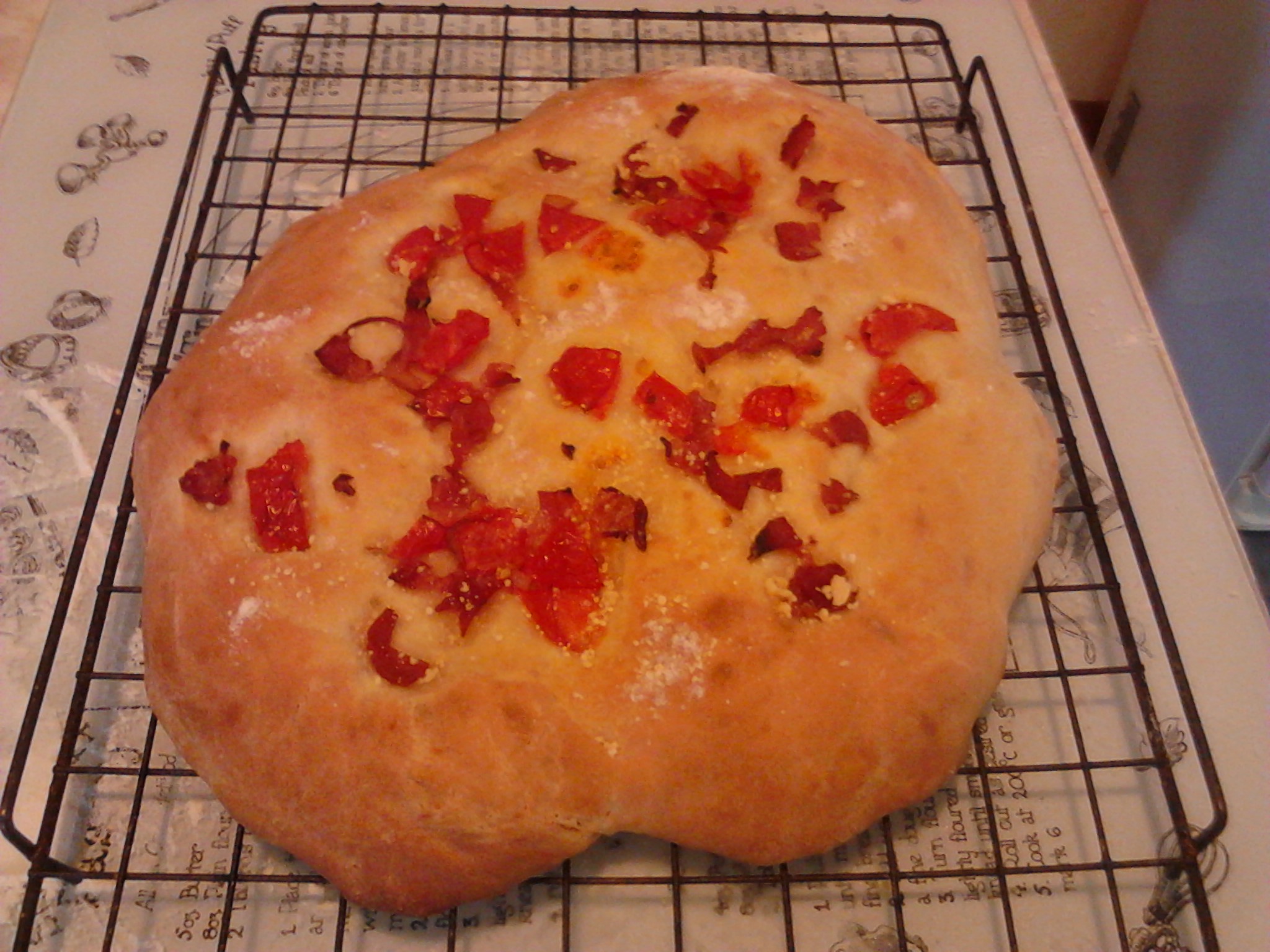
Focaccia with bacon and tomato

I have previously cooked Focaccia and blogged about it. That was a pretty simple bread recipe and I added nothing to it, so I decided to have another go and add a few frills.

The original recipe uses Rosemary and Parmesan cheese and I added neither of these to my first try at the recipe, purely because both were in short supply. This time I decided to forgo the Rosemary as once again there was none to hand. However there was bacon! Also, I thought that some tomato would brighten it up a little. So I had a recipe.

The first rising was done in the usual way, in a warm spot. For the second rising, the recipe says to put the bread into a cold oven with a dish of hot water. I decided instead to put the bread into the grill which sits above our oven, with the oven on and the actual grill off. This worked splendidly.

After the second rising I added chopped bacon and chopped tomato and dusted it all with ground parmesan. If it looks a bit “rustic”, some visitors arrived as I cooking so I was short of time, but I reckon it looks pretty good anyway!
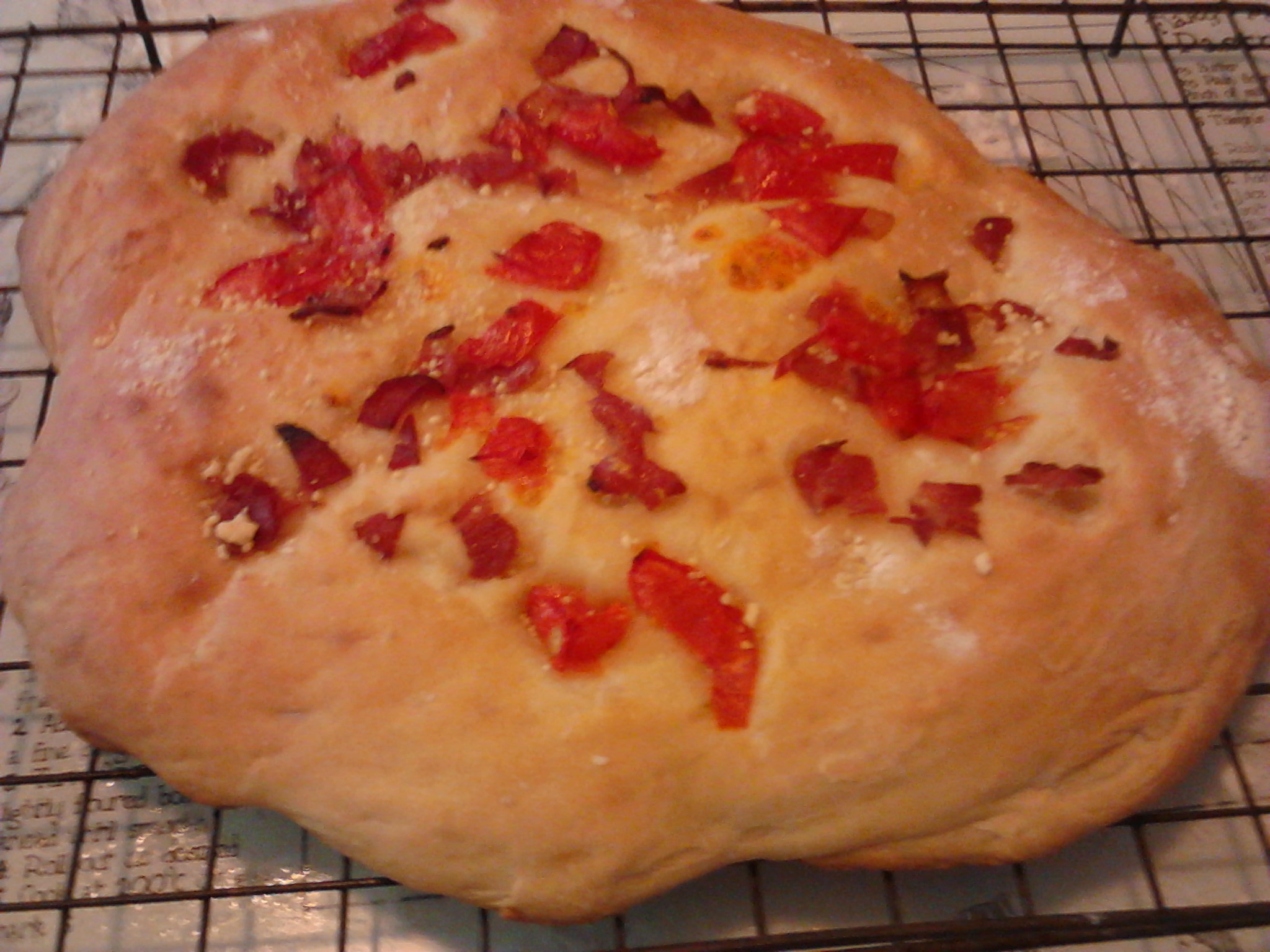
IMG_20130408_161255
Focaccia with bacon and tomato
IMG_20130408_161301
Focaccia with bacon and tomato

By the way, it tasted good too!

Hot Cross Buns

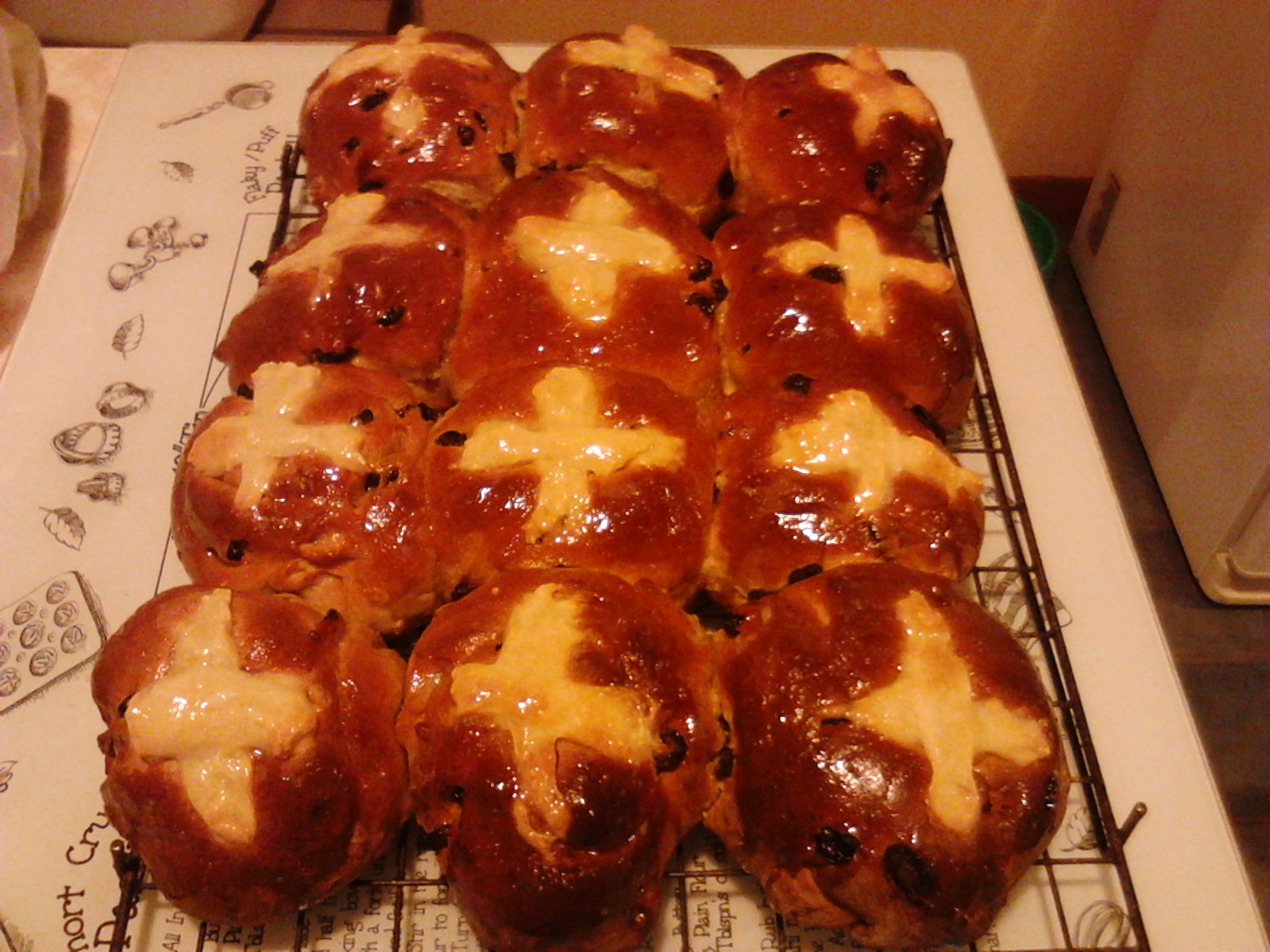
I thought about cooking “Hot Cross Buns” for a while, but finally decided to make an attempt at cooking some. There are three components to Hot Cross Buns, firstly the buns themselves, secondly the cross on the top, and thirdly the glaze. I used this recipe from the New Zealand Herald. Here’s the result.

IMG_20130328_230231
Hot cross buns

The dough was straightforward, but included extra ingredients like sultanas. An interesting observation was that the sultanas seemed to pop out of the dough if they came to the surface during kneading!

After the usual kneading and rising the dough was divided into buns and the cross was put onto them. The cross was a simple mixture of flour and water but piping it onto the buns was a challenge. Unlike frosting or icing I didn’t find it easy to finish a line. I snipped the line of ‘cross’ with kitchen scissors to end it. A wet finger tidied up, but I wasn’t completely happy with the crosses (and they turned out to be chewy. The dog benefited!)

As a final step, when the buns were cooked, the glaze was applied. It’s a simple gelatine glaze, but I’ve not done one before, so I was pleased with the results. The glaze gave, as intended, a nice shiny, sticky finish to the buns.

The buns tasted great, so I consider this a great success.

IMG_20130328_230239
Hot cross buns

Stuffed Baked Potatoes

Found at https://i0.wp.com/i-cdn.apartmenttherapy.com/uimages/kitchen/2011-09-28-BakedPotato.jpg
Unfortunately these are not my baked potatoes. Click to see the source page.

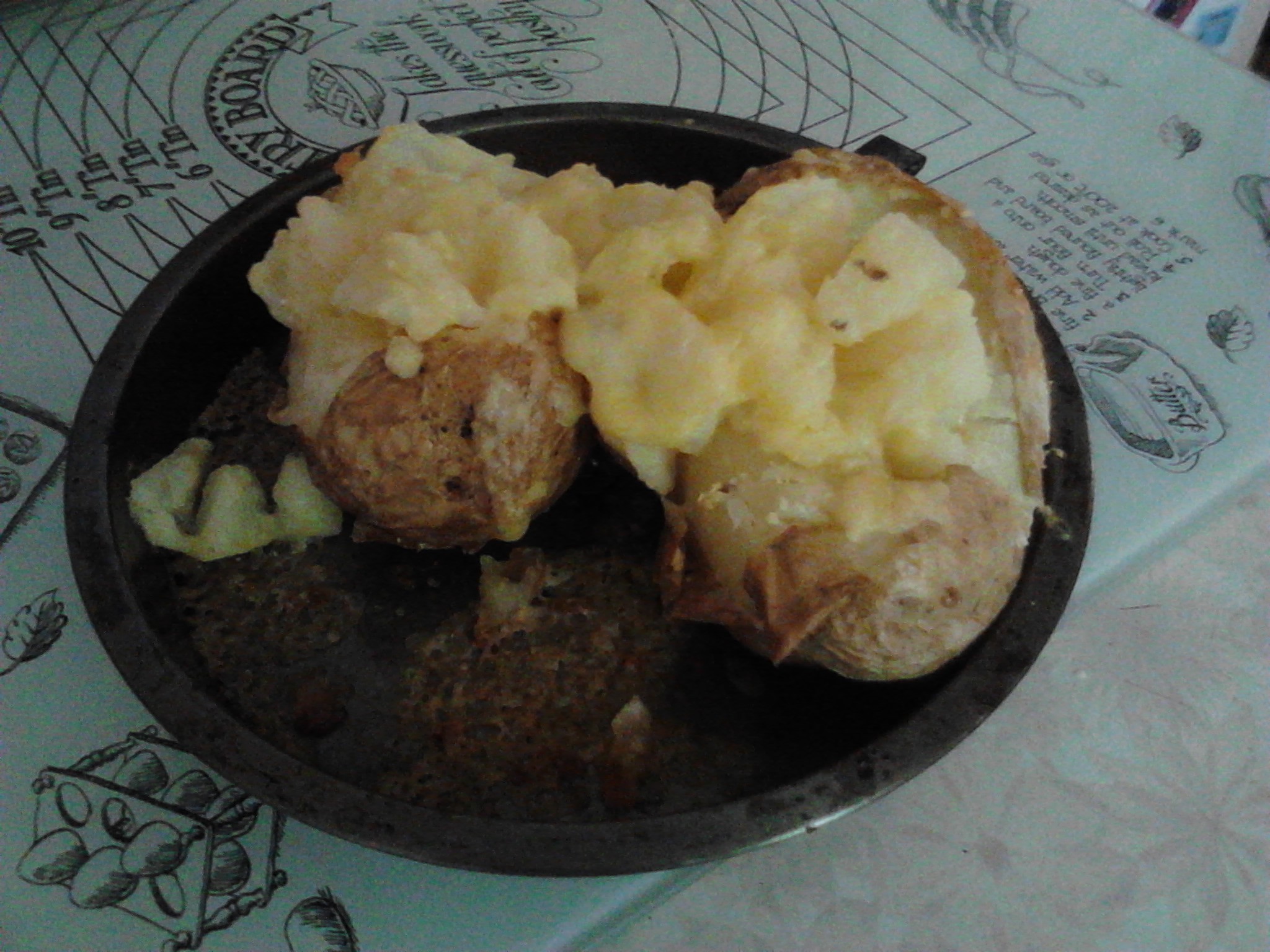
Well, cheesy baked potatoes would be more accurate. I took two large potatoes, washed them and pierced them, and stuck them in the oven at 220 degrees centigrade. I checked them at 30 minutes, at 45 minutes, and one hour and still they weren’t completely done! Maybe they were too big. Almost certainly they were too big.

When they were done (I thought) I hollowed out the potatoes and mashed the innards and added the cheese. Then I put the cheesy mix back into the potatoes and put the potatoes back in the oven for 15 minutes.

As it turned out, while the top part of the potatoes was fully cooked, the bottom parts were OK, but could have done with a bit more cooking. Who would have thought that simple baked potatoes could have been such an issue?

IMG_20130317_132901
Baked potatoes with cheese

The lessons I’ve learned is to use smaller potatoes – large ones take a long time. Also, I think I should have turned the potatoes at least once.

IMG_20130317_132910
Cheesy potatoes

As usual I looked on the Internet for advice. To summarize the advice there, I could have wrapped the potatoes in foil, or zapped them in the microwave. If I take either of these approaches in the future, I could finish them off in the oven to crisp the skin before removing the innards and stuffing them.

Stuffed Marrow (a dismal failure)

I nearly didn’t post this, since it didn’t really work! All my previous “culinary experiments” have been passable or better, but this attempt was barely eatable. The marrow was under-cooked and the mince was well-cooked. Anyway, on with the story!

First, I cooked the onions in a frying pan with a little olive oil, and added the mince, browned it off, and added some stock. The usual thing. I cooked some carrots in another saucepan and added them to the mince, and added some sliced mushrooms towards the end.

Secondly, I sliced the marrow into two 10 centimetre sections and peeled them and removed the seeds leaving two rings of marrow flesh. Some people cook marrow with the skin on, like courgettes, but I’m used to removing the skin. Some time I will try them with skin on.

I then lightly oiled the marrow rings and placed them on a baking tray and filled them with the mince. They then went into the over for 30 minutes at 200 degrees centigrade. The result looked like this:

Marrow rings stuffed with beef mince

Here is a marrow ring plated up:

IMG_20130313_182927
Stuffed marrow rings plated up with spaghetti

OK, as you can see from the above the marrow rings look very white, whereas they should have been a translucent green. Indeed they proved to be under-cooked. The mince stuffing was very dry on top and it should have been moist.

So, where did I go wrong? Firstly, I didn’t look up a recipe before I started to cook, since I thought that I could wing it. Bad idea! Secondly, had I read a recipe, I would have wrapped the stuffed marrow in foil before I put it into the oven. (Although this other recipe doesn’t use foil. It does cook at a slightly lower temperature.) I would probably still have created the rings, just for the look of it, but many recipes recommend halving the marrow to make a boat shape. Another options would be change the stuffing to something moister eg with added rice.

Oh well, next time…

A note on Silver Beet (Swiss Chard)

chard
Silver Beet AKA Swiss Chard (Photo credit: Garden Club2011)

I’ve seen recipes for Silver Beet which use only the green leafy part of the plant. What a tragedy! The stalk part (white or red) is the best part. I usually pull off a stalk from the bunch then slice it into 10 – 15 cms length, all the way to the top of the leaf. Then the whole lot is dumped into boiling salted water for a few minutes. When cooked the green parts wilt down like spinach and the stalks become translucent and creamy.

In the picture below the cook has sliced the silver beet (swiss chard) into 2 – 3 cms lengths. I prefer them sliced into longer pieces.

Chard rice soup / Olleta de bledes vegana
Chard rice soup / Olleta de bledes vegana (Photo credit: Lablascovegmenu) The cook has sliced the stalks into short lengths.

Silver Beet Quiche

I had a couple of large bunches of silver beet and while I love silver beet I wanted to try something a bit different. I haven’t yet made much pastry so I thought I’d give it a try. I went looking for a quiche recipe and came across this Bacon and Leek Quiche recipe which I used as a basis.

Silver beet
Silver beet

So, first of all I made some pastry, using the food processor, and put it into the fridge for 30 minutes. Then I started on the filling.  I put the silver beet on to cook, in salted water. I cut the silver beet into length of 10 – 15 cms. I know that there are people who slice it up small and maybe add it to a stir-fry, but I very much prefer it cooked by itself. Silver beet cooks very quickly so it is also very easy to cook it this way.

A little butter, some milk, cheese and eggs were called for and I used the proportions as in the recipe. However I should have read the recipe more closely – the butter was used to cook the leeks in the original recipe, so I should have melted it before adding to the milk cheese and eggs. Instead I blended the whole lot and it didn’t look too nice, sort of curdled. I reasoned that the cooking process would sort it out. I had no option, apart from ditching the lot!

I retrieved the pastry from the fridge and rolled it out and lined the dish with it. I put some paper in the dish and put some lentils in the paper, I then put the pastry on to cook blind for 10 minutes as instructed in the recipe. Well, it took a lot longer than that to cook, probably because I’d rolled it out a little thickly, I suspect. I’d say about 30 minutes before the pastry was lightly browned at the edges and not too soft in the middle. I’ve looked at various recipes for baking pastry blind since, and they vary tremendously. Some people recommend up to 30 minutes, and some say that it is not necessary to use lentils or beans while baking pastry blind.
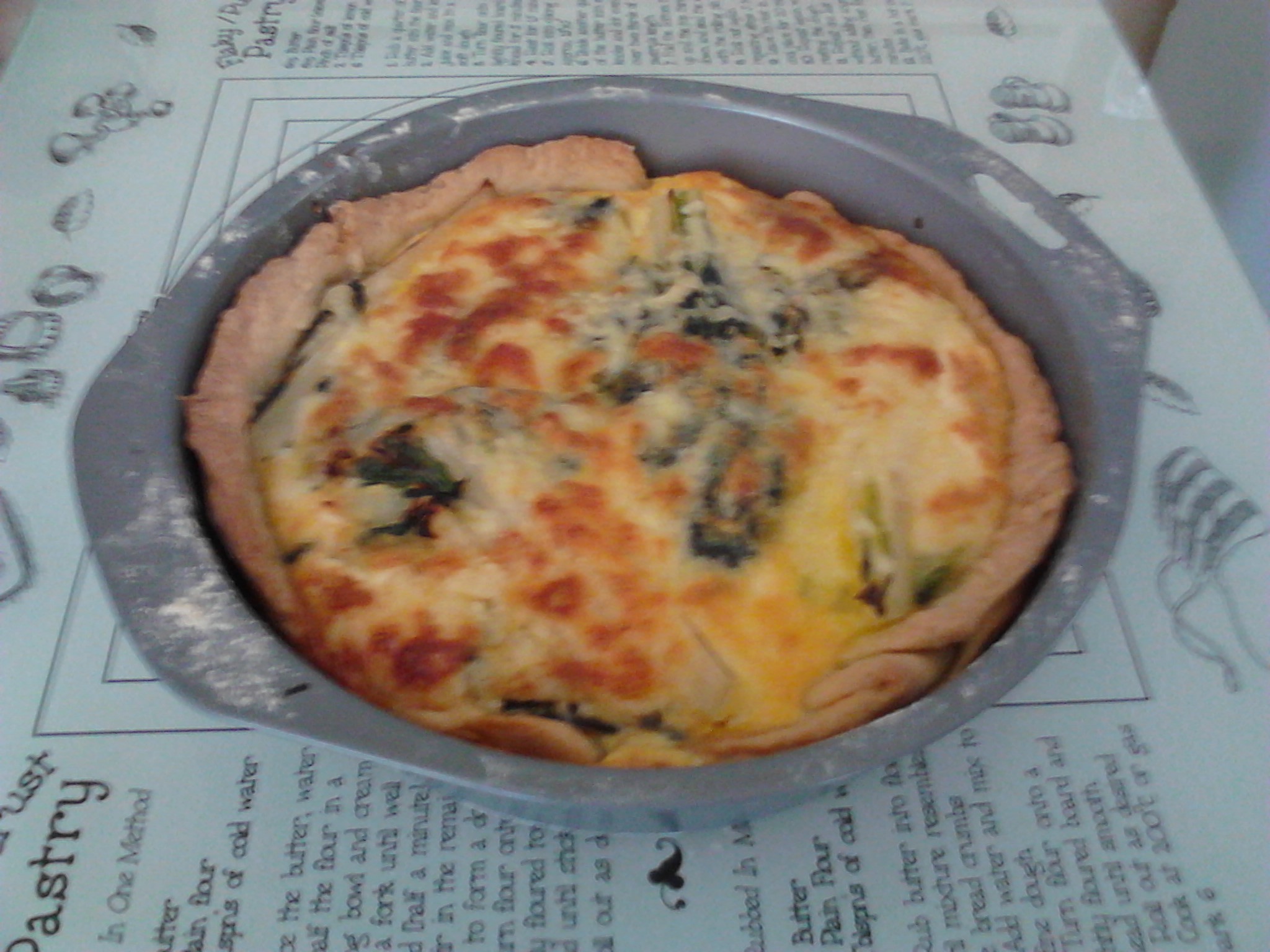
So I took the lentils and paper out and filled the case with layers of silver beet and milk cheese and eggs mixture, topped it with some more cheese and put it back in the oven for the recommended 30 minutes. I was a little worried that the pastry edges would burn, but they didn’t and the quiche browned up nicely! Here it is, straight from the oven!

IMG_20130304_133417
Straight out of the oven

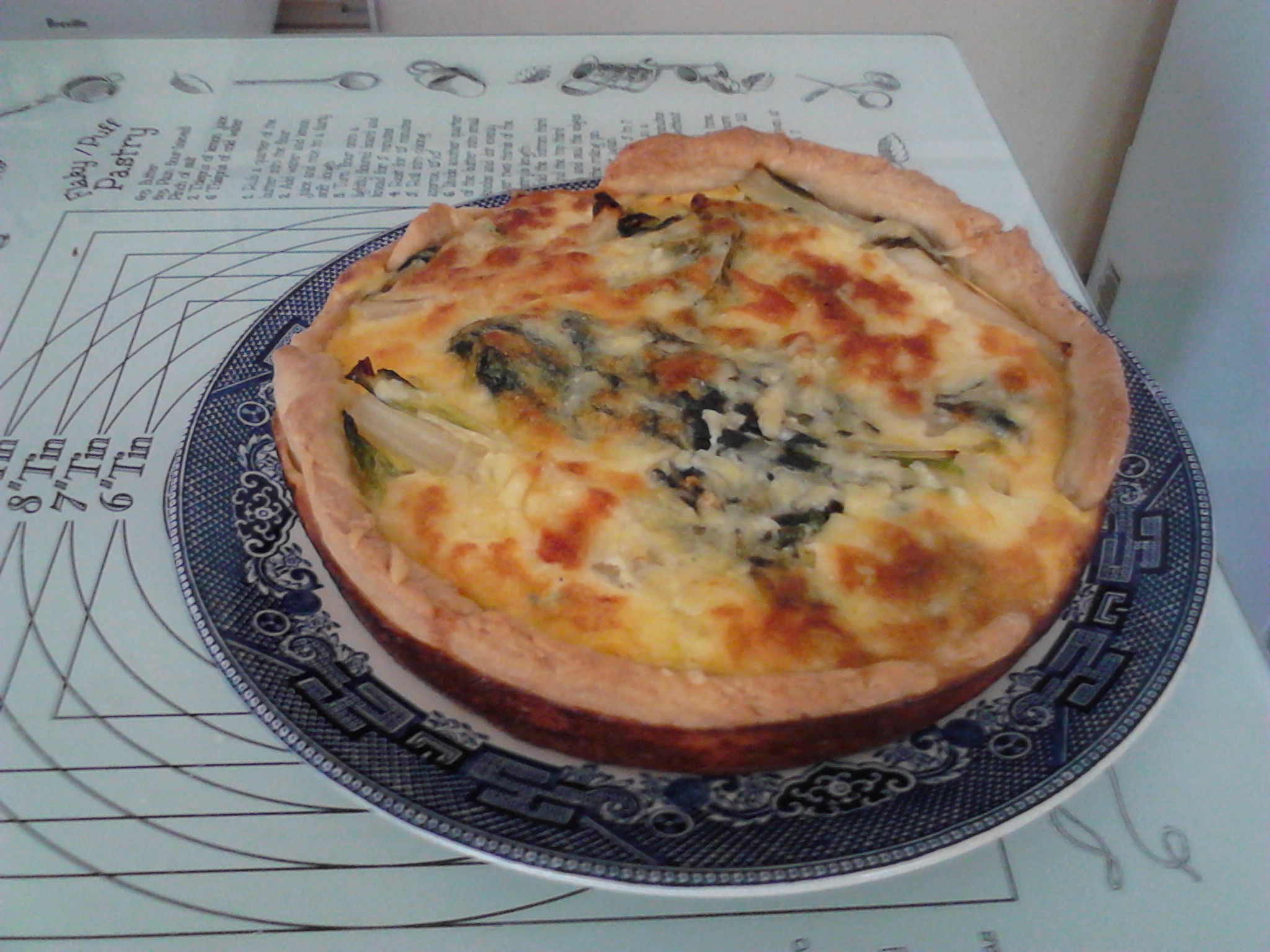
When I took it out of the dish it came out fine and didn’t break up, thank goodness.

IMG_20130304_133545
Out of the dish

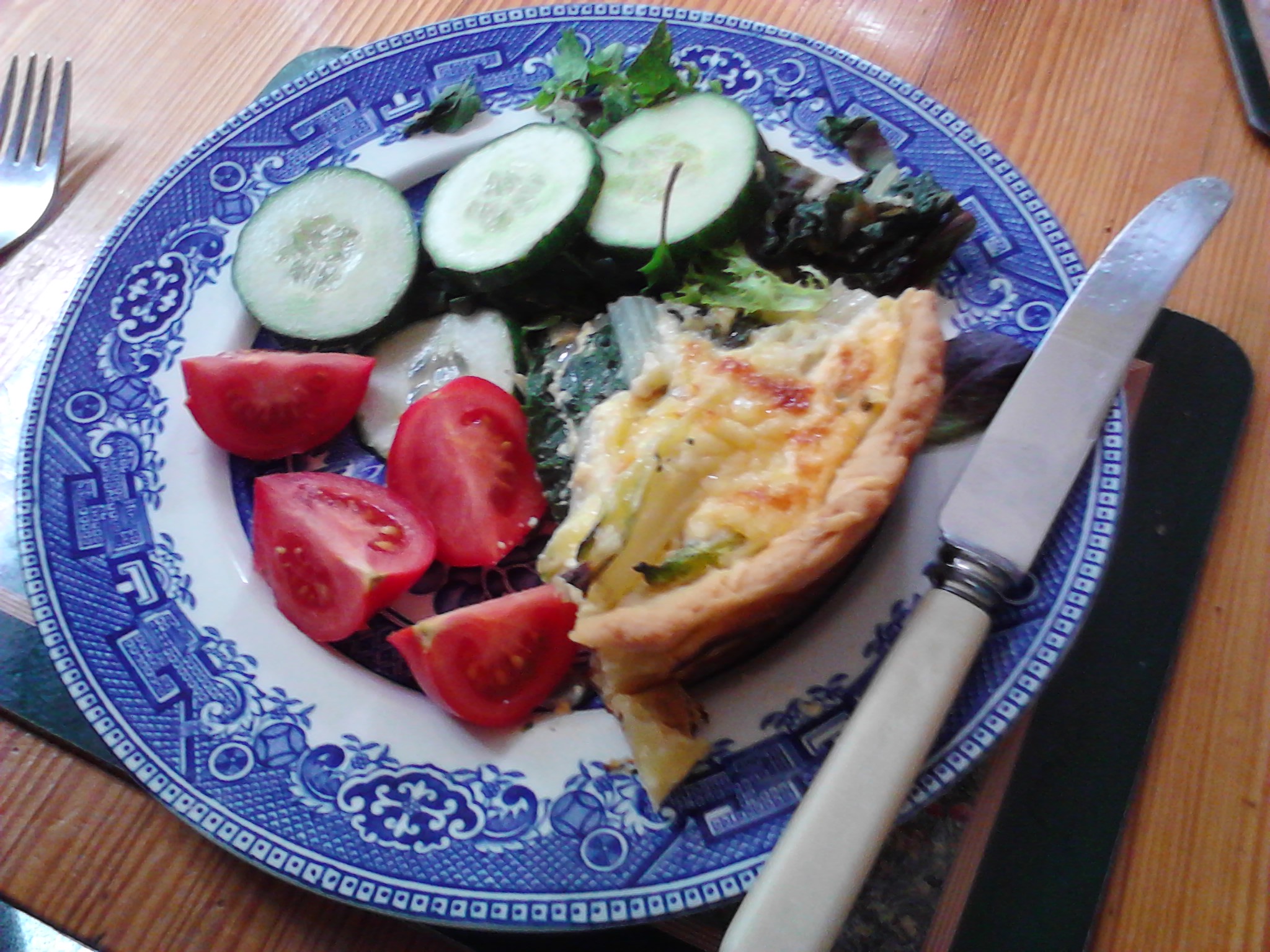
Here it is plated up with a rustic salad!

IMG_20130304_133944
Plated up with a rough salad!

Cauliflower cheese

I found a recipe on the “Strands of my life” blog for Jamie Olivers’ 30 minute Cauliflower Macaroni Cheese and I decided to make a variation of it without the Macaroni. I didn’t try to do it in 30 minutes.

(Note: the recipe is lifted from his book, to which there is a link on the blog. Of course, you don’t have to buy the book to use the recipe, so the ethics of posting a recipe from a book might be a bit dodgy. On the other hand, the blog entry does act as an advertisement for the book.)

Jamie's 30 minute meals
Jamie’s 30 minute meals

Anyway, I did as the recipe suggests and put the bacon into the dish that I was going to use and put the dish in the oven, then started the cauliflower cooking. I actually needed to cut the cauliflower a little smaller than the recipe suggests as I was only cooking a small amount of cauliflower so used a smaller pan.

I grated the cheese, mixed it with the crème fraîche and some garlic powder. As the recipe directs, I took the dish with the bacon from the oven and processed the bacon with the bread and some rosemary leaves. I had expected the bacon to be crunchy, bit it was still soft, but I pressed on. The recipe calls for a little olive oil, which I added and which serves to cause the topping to crisp up nicely.

At this stage the cauliflower was cooked and I strained it, keeping the liquor as directed. Then it was just a matter of putting it together. The cauliflower went into the dish that the bacon had been cooking in. There was a fair bit of juice from the bacon in the dish, then in went some of the liquor from cooking the cauliflower, then the cheese/crème fraîche mixture. The mixture was a little too liquid, though the recipe calls for it to be “loose”, so next time I will add a little of the liquor first, then more after I see what it looks like.

Finally I covered the top with the bacon, breadcrumb and oil topping and cooked it as directed by the recipe. It came out of the oven like this. It could have been a little crisper on top.

IMG_20130226_190640
Cauliflower cheese with bacon and breadcrumb topping

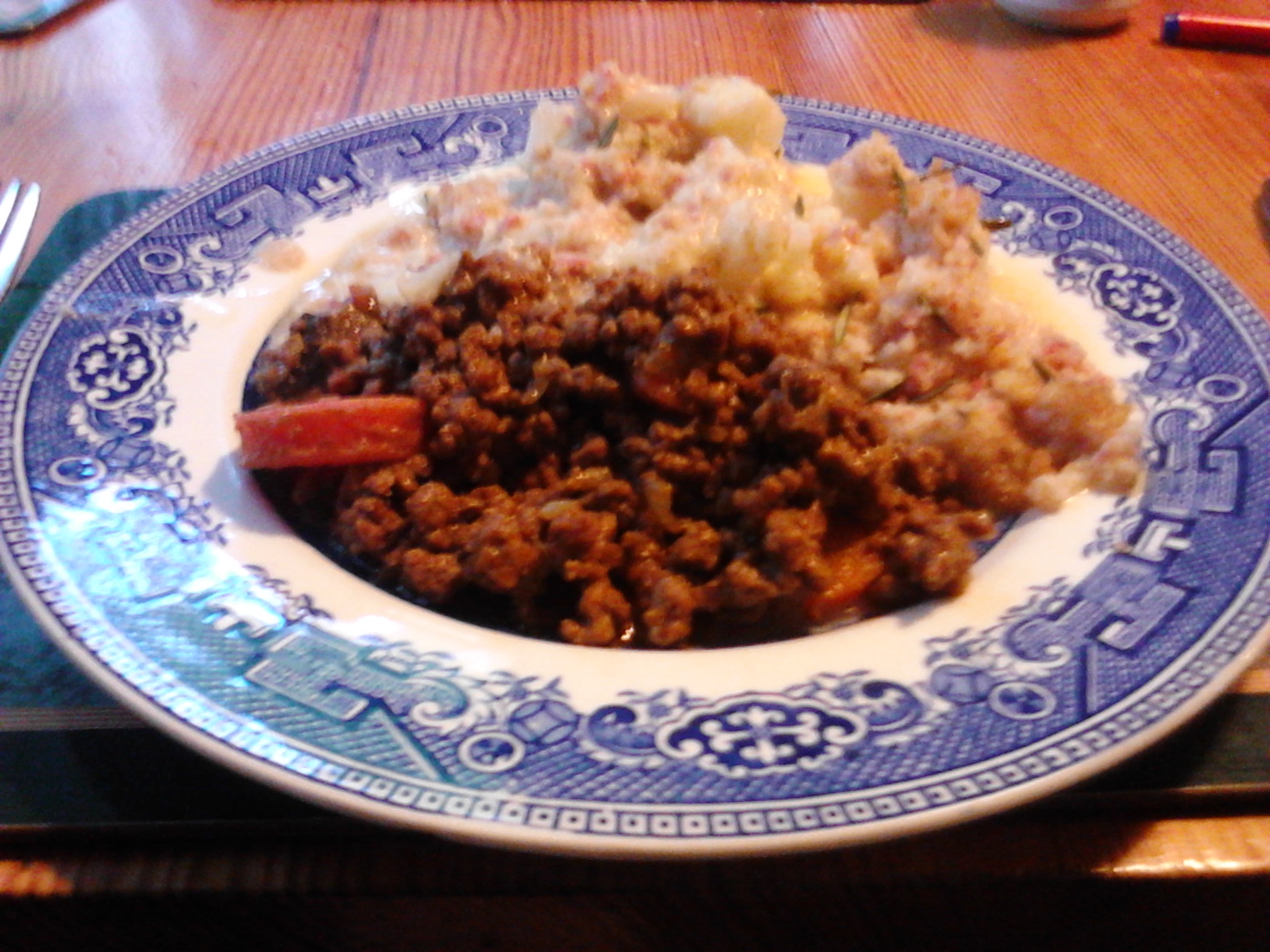
Here’s a picture of it on a plate. The mince was cooked the other day!

IMG_20130226_190955
Cauliflower cheese and mince

Hoki and parsley fish cakes with Béchamel sauce

I had some left over mashed potatoes so I decided to get creative and make some fish cakes using some frozen hoki fillets. For added points I decided to make a Béchamel sauce. That’s a fancy name for a white sauce.

I started off by cooking the Hoki fillets in a little milk with a few herbs. (Did I mention that I’d thawed it first?) I used “Tuscan seasoning” by MasterFoods, which the label says contains salt, sugar, garlic, pepper, rosemary and parsley. The fish was cooked in about 15 minutes (at 180 degrees C) to the point where it flaked when poked with a fork.

Meanwhile I chopped some fresh parsley from the garden and added it to the mashed potato and stirred in two eggs. The mixture looked a little stiff so I added some of the liquid that the fish was cooked in. That was a mistake! I added too much and it went sloppy. Oh well. I added the cooked fish and put dollops of the mixture on a baking tray and cooked it at 200 degrees C for 20 minutes. “Dollops” is the right word. It was far too sloppy to form proper fish cakes.

I then made a roux. A “roux” is a fancy name for a 50-50 fat/flour mix which is cooked for a while. It is made into a white sauce (Béchamel) by slowly adding milk and cooking it (stirring all the time) until it is the desired consistency. I used the liquor that the fish was cooked in.

Here’s the “fish cakes”. I didn’t brush them with milk or egg, so they are a little palid. They are cooked though.

IMG_20130224_180921
Fish “cakes”

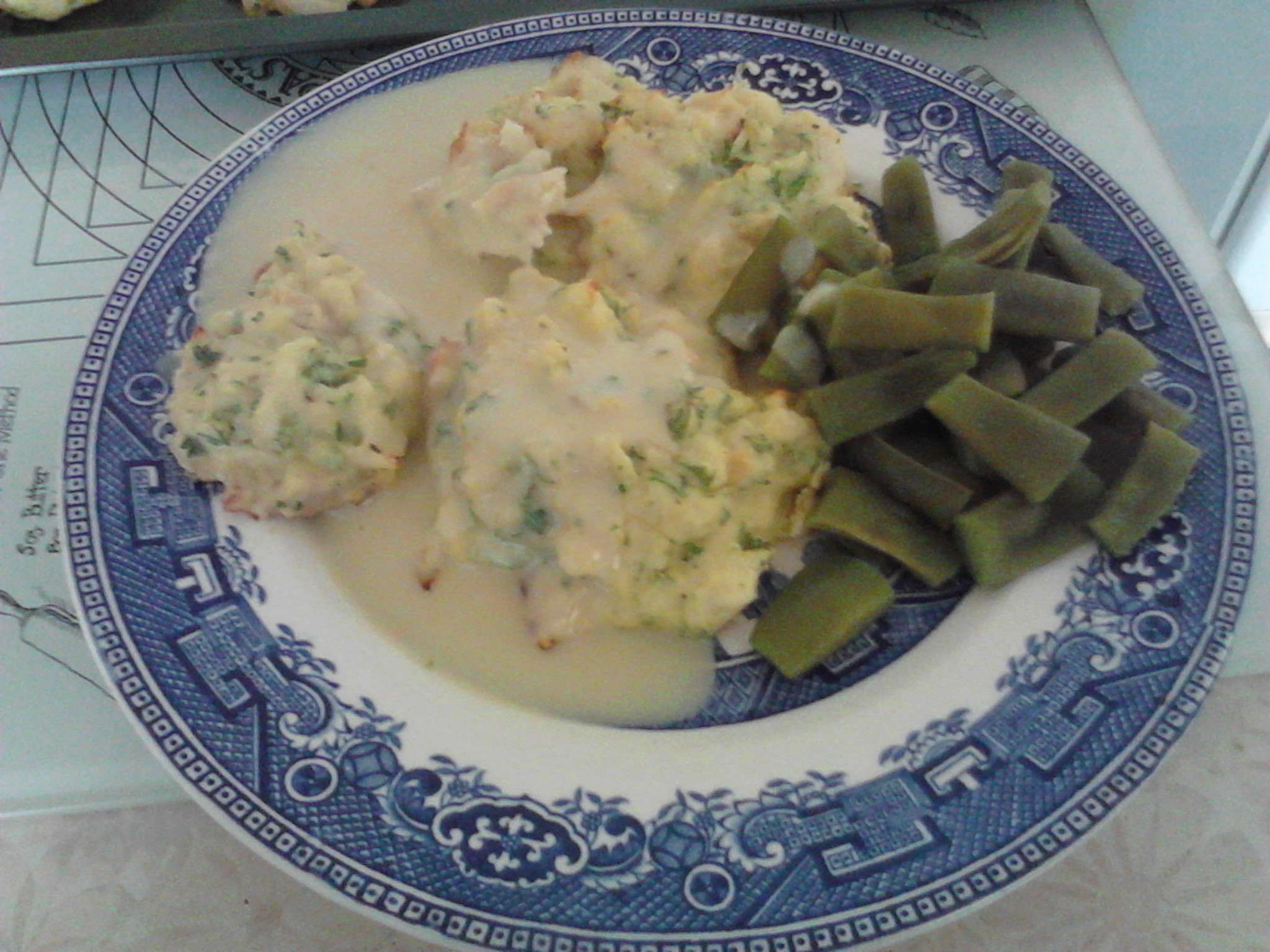
This is what it looked like on my plate.

IMG_20130224_181157
Plated up

Well, they tasted OK, but could have looked better! I’ve had enough runner beans for a while, but thankfully they seem to be taking a rest at the moment. Only one or two beans today.

Bangers and mash (with onion gravy)

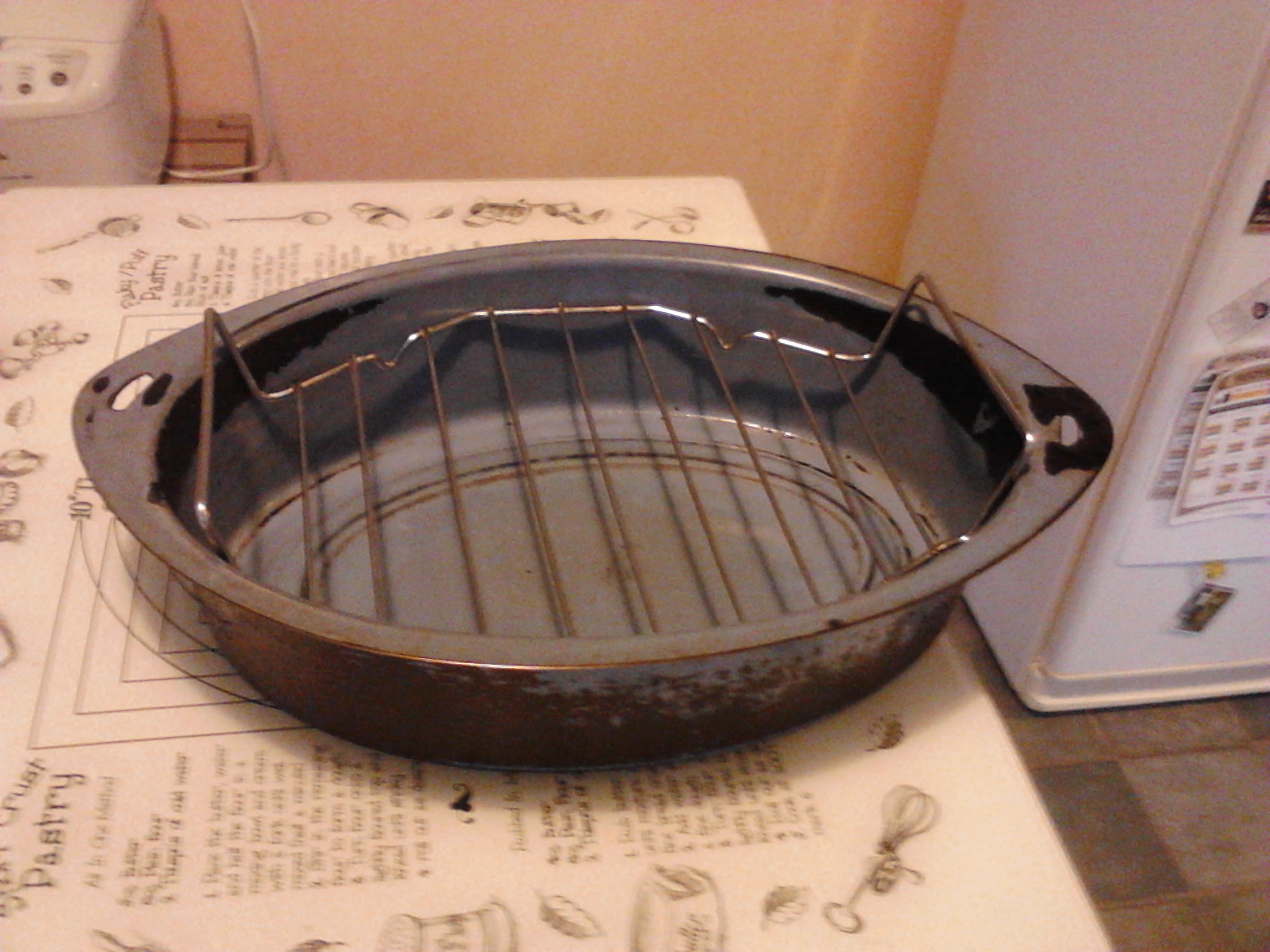
I think I mentioned how to cook sausages in the oven the Jamie Oliver way before. Maybe not. Anyway the way to do it is to cook them on a wire rack. I didn’t have a suitable one so I made do with a roasting pan and the rack from another roasting pan that has long gone.

IMG_20130220_193354
Makeshift sausage rack!

It didn’t quite fit but it worked. In summary Jamie’s method is to cook the sausages on 180 degrees C for 20 minutes, turning once.

The mash was no problem. I boiled the potatoes, drained them and mashed them with a little low fat milk and olive margarine. Of course, you could use full cream milk and butter if you wish!

The onion gravy was a new venture for me, but there are plenty of recipes on the Internet. I referred to this one. The basic idea is to cook the onions on a low heat, then add stock and then thicken as required. You have to watch the onions carefully, even on a low heat to ensure that they don’t caramelise. Of course a little colour doesn’t hurt. I put too much thickening in and the result was paler than I’d prefer, but it still tasted good. I used flour and water, so I had to cook the gravy a bit. If you use cornflower it isn’t necessary, according to the Internet anyway. I’ve not tried it.

IMG_20130220_190057
Bangers and mash with onion gravy

Cheese straws

OK, I ran out of snacks for Hamish and Duncan so I decided to try some cheese straws. I used the recipe here. The Guardian’s recipe promised “perfect Cheese straws”. Sounded good. The article actually goes into the topic of cheese straws in some depth quoting various chefs, but has its recipe towards the bottom of the main article, above the comments.

I made half quantities again, but even so, it only took a few minutes before my hands started to ache as I rubbed the butter in. I abandoned the manual approach and used a food mixer. This was the first time I’d seriously used a food mixer, so I’m not sure if I used the right blades or not. They were sharp-edged metal things.

I discovered a couple of things about processing stuff in food mixers.

Firstly, if you have to add a lot of an ingredient, a quantity of cheese for example, it’s a lot easier to add bulk ingredients by stopping the mixer and taking the top off and dumping it all in. Shoving it through the tiny hole at the top doesn’t really hack it! Doh!

Secondly, the recipe says to add water slowly until the dough ‘comes together in a firm dough’. What this means is that the dough suddenly goes from a breadcrumb-like consistency to a single sizeable lump and the mixer leaps about the work surface.

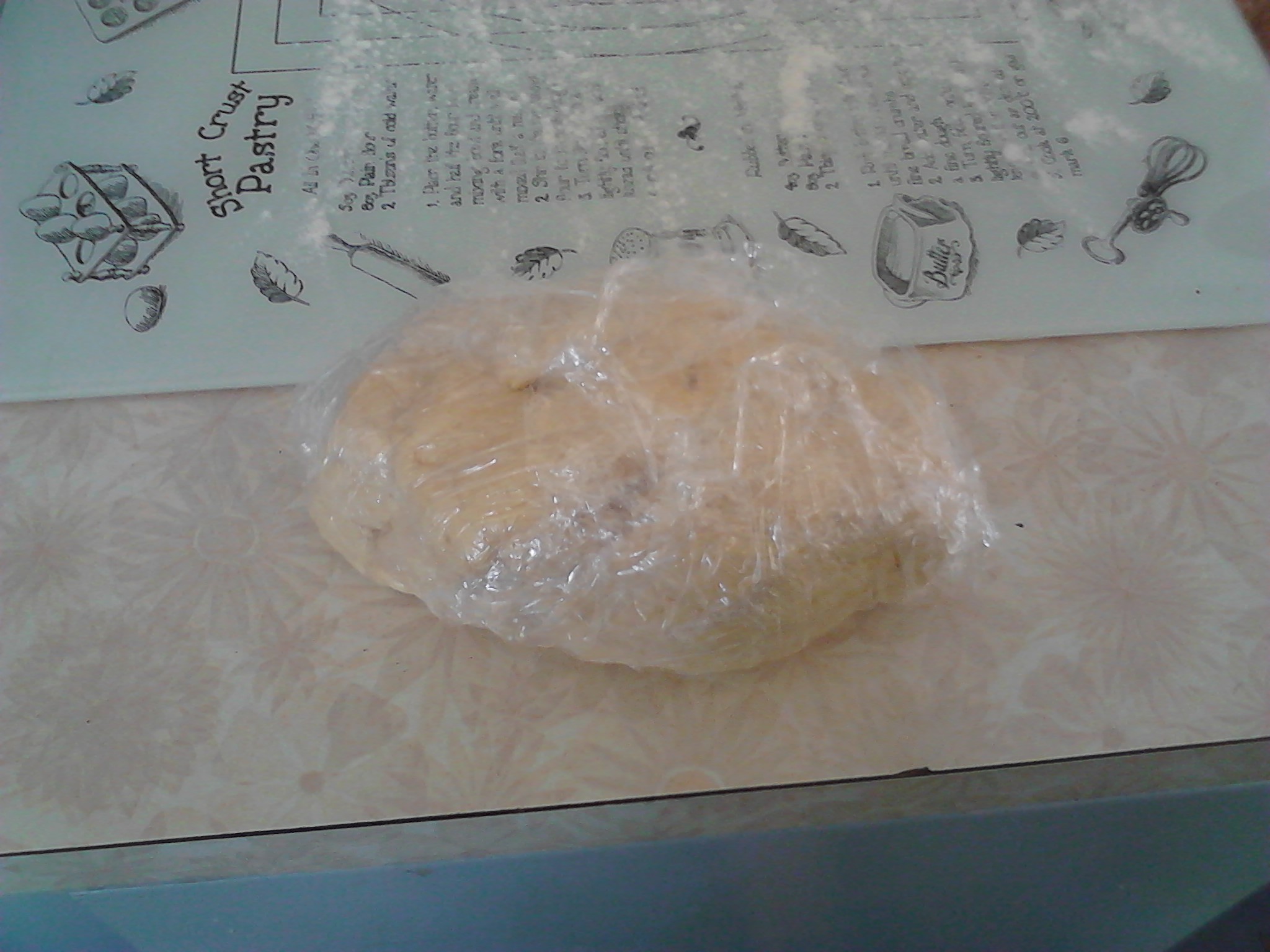
Anyway, here’s the dough in cling film ready for the fridge.

straws4
The dough ready for putting into the fridge for 30 minutes

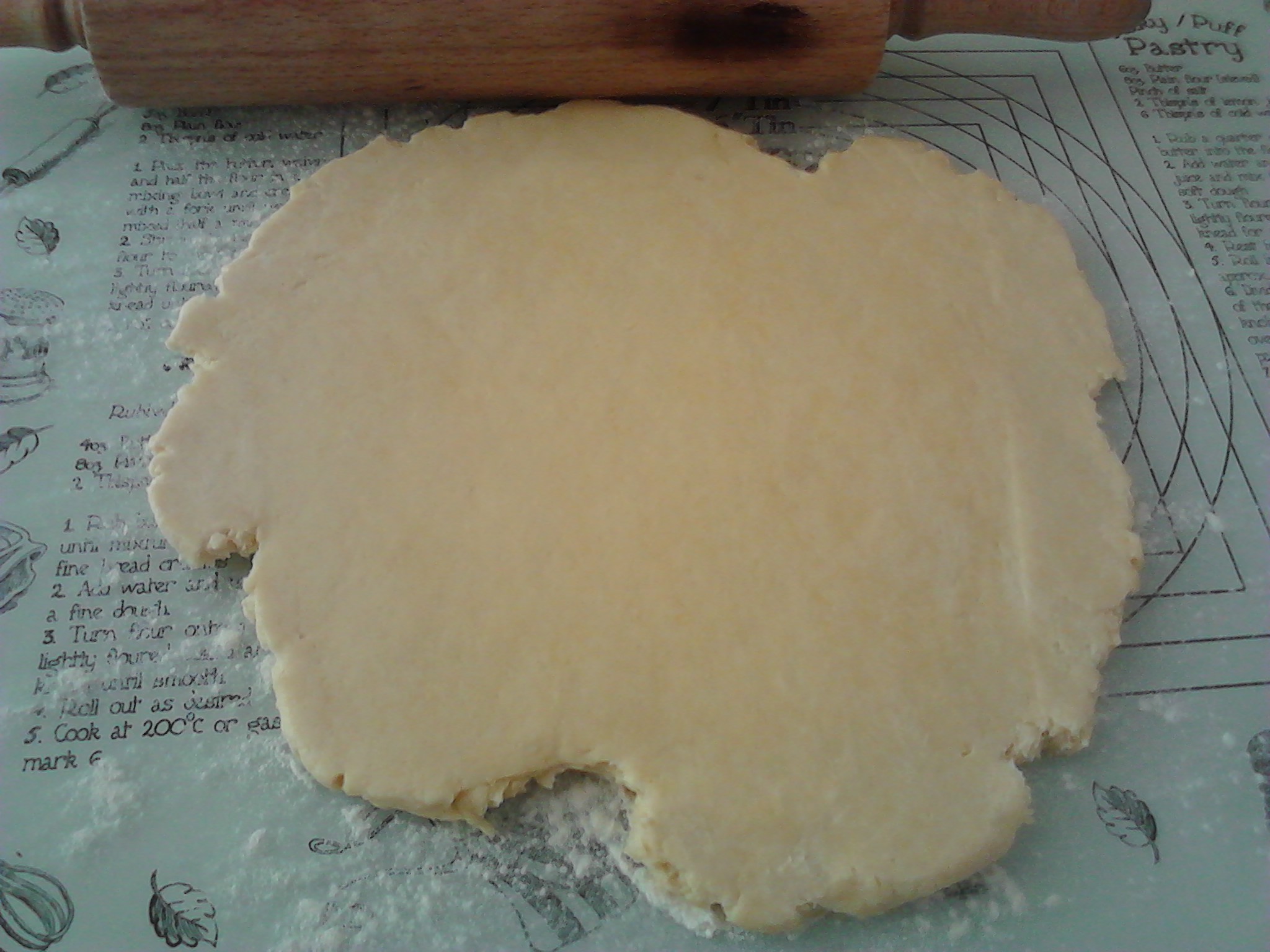
After the dough had been in the fridge for 30 minutes, it was just a matter of making the straws and cooking them.

straws3
The dough rolled out

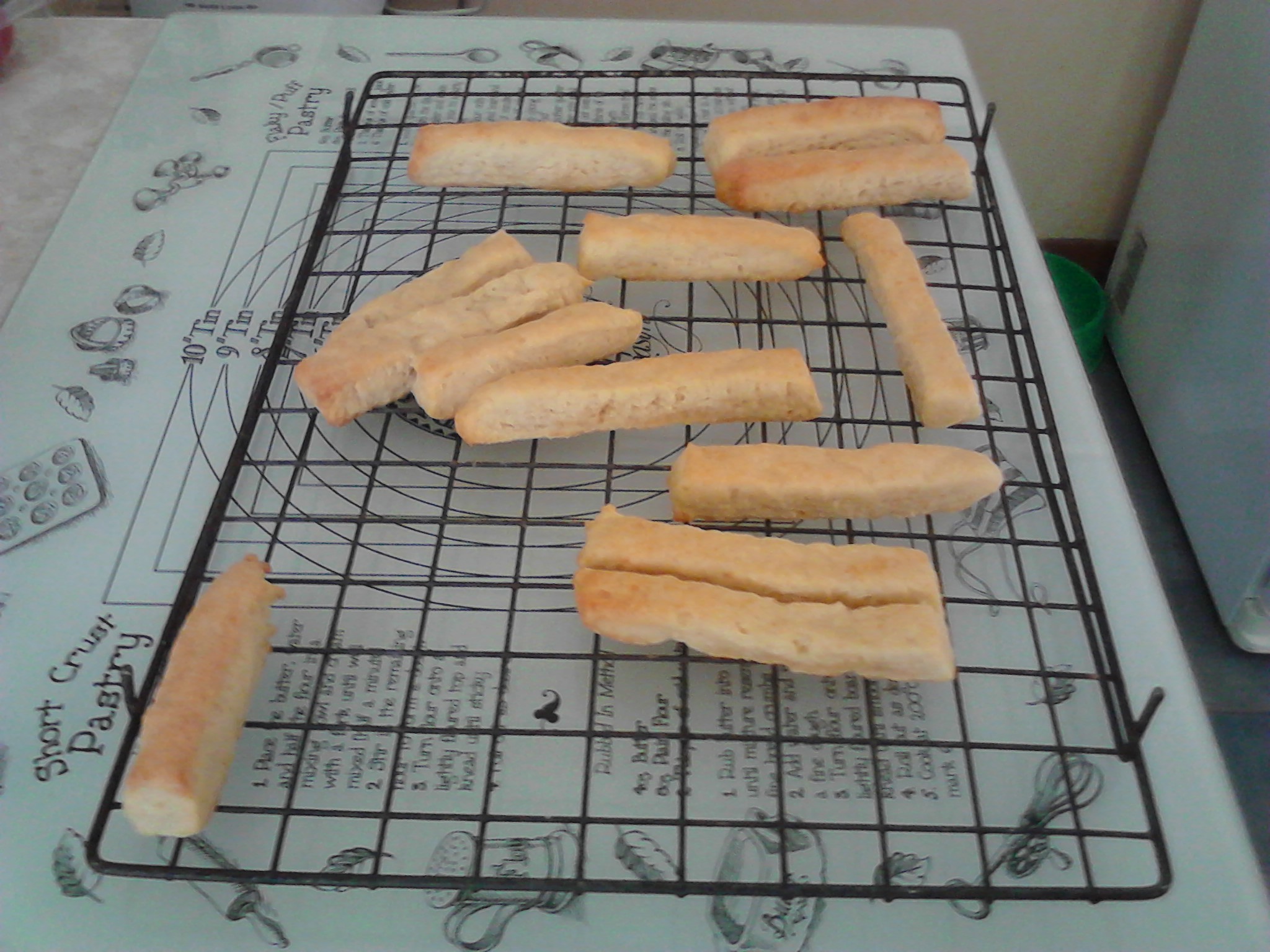
Making them was simple enough, but I misread the instructions and cooked them for only 5 minutes instead of 20 minutes! So I put them in for 5 minutes at a time until they were cooked. Actually they tasted a bit doughy so perhaps I should have cooked them longer. Here’s the finished product.

The end result
The end result. They are a little pallid as I misread the recipe!